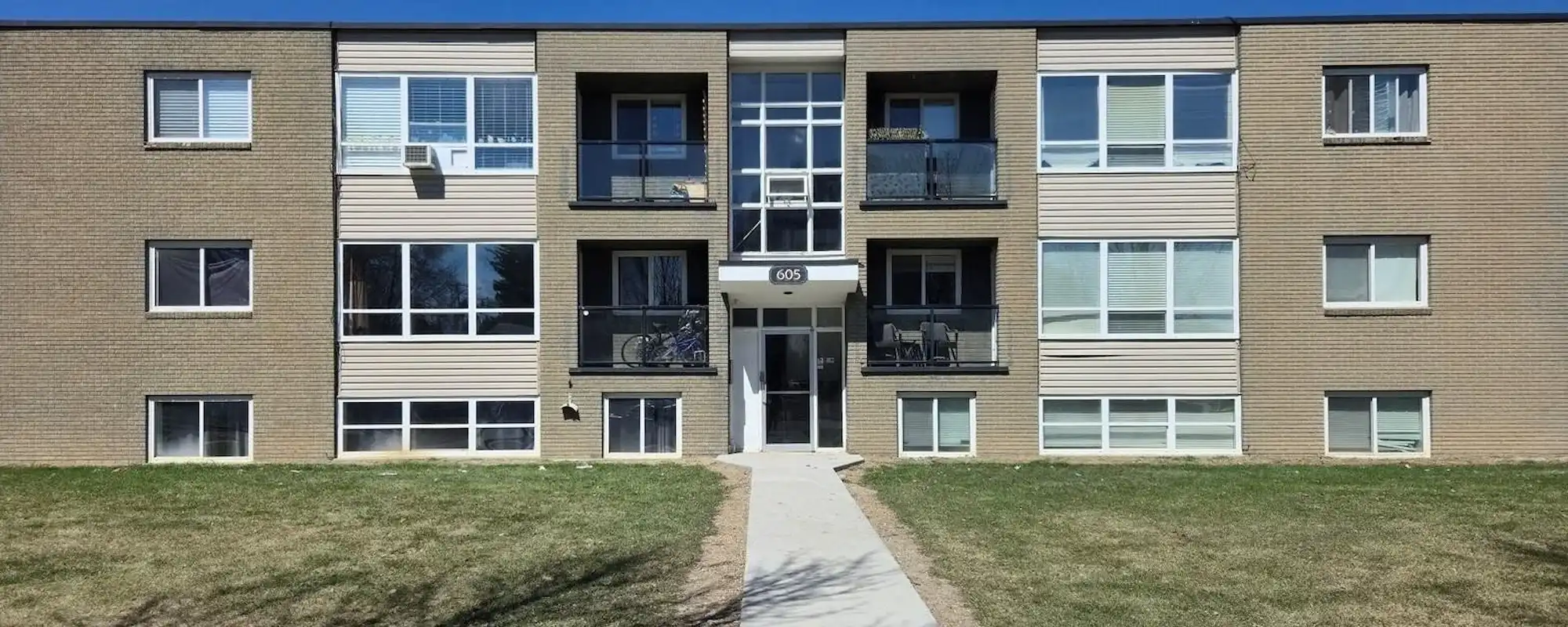
When the temperature climbs past 30°C along Assiniboine Drive and the cool air you expect from your vents is replaced by a blast of lukewarm nothing, the problem is rarely minor. River Heights homeowners deal with AC systems that have been pushed through decades of Saskatchewan’s brutal thermal extremes, and summer failures tend to arrive without much warning. The neighbourhood’s proximity to the South Saskatchewan River means evening humidity can settle into basements and ductwork, adding stress to equipment that is already fighting aging components, cracked seals, and the cumulative fatigue of cycling from -40°C winters to +35°C summers year after year.
River Heights developed primarily between the early 1960s and the early 1980s, which means the majority of homes here sit in a specific and challenging repair window. Air conditioning was rarely original equipment in these builds; most central AC units were added or replaced in the 1990s and early 2000s, putting many systems at or well beyond the 15-to-20-year expected lifespan for Saskatchewan conditions. When your system stops cooling on a July afternoon near Miwon Park, you need a fast, honest diagnosis, not a sales pitch. Pro Service Mechanical has been handling exactly these calls across Saskatoon’s established south-side neighbourhoods, and our technicians understand the specific failure patterns common to River Heights homes of this era.
River Heights Air Conditioner Units Installed Around 2000–2010 Are Peaking
The warning signs of a failing air conditioner in River Heights homes tend to cluster in recognizable patterns, and catching them early can mean the difference between a $200 capacitor swap and a $2,500 compressor job. The most immediate red flag is warm air from supply vents when the thermostat is set well below room temperature. In homes built to 1960s and 1970s construction standards, ductwork often runs through unconditioned crawl spaces, but if the unit itself is running and the air still feels warm, you are most likely looking at a refrigerant leak or a compressor struggling under thermal load.
Ice forming on the refrigerant lines or on the evaporator coil is another symptom homeowners in River Heights should take seriously. It looks counterintuitive, but frozen coils are a sign that airflow has been restricted or refrigerant levels have dropped, both of which are common in systems that have spent multiple winters contracting and expanding in Saskatchewan cold. Once ice forms, the system loses the ability to cool effectively and the compressor works harder to compensate, accelerating further wear.
Unusual sounds deserve immediate attention in older equipment. A grinding or squealing noise from the outdoor condenser unit typically points to fan motor bearings that have seized or worn, a failure mode the research data flags as moderate in frequency in 1960s-to-1980s era systems. A banging or rattling from the compressor compartment is more serious and often signals internal mechanical stress. Brief, repeated on-off cycling, sometimes called short-cycling, is a strong indicator of a failing capacitor or contactor, both of which rank among the highest-frequency failures in this equipment cohort.
Energy bills that spike 20 to 30 percent without an obvious explanation are worth investigating before the system fails outright. River Heights homes with original or near-original ductwork already lose efficiency through leakage and poor insulation; when the AC unit itself starts working harder due to degraded components, those bills climb fast. If you are seeing two or more of these symptoms at the same time, a AC repair services diagnostic call is warranted before the system stops working entirely.
Component-by-Component: Where River Heights, Saskatoon AC Systems Actually Fail
Understanding which part is failing, and what it will cost to fix, is the foundation of any honest repair conversation. River Heights homes built between 1961 and 1980, which represent roughly 82 percent of the neighbourhood’s construction, face a fairly predictable failure sequence shaped by equipment age and Saskatoon’s climate extremes. The research data for this housing cohort identifies compressors as the highest-frequency failure overall, accounting for an estimated 40 to 50 percent of major repairs in systems of this era.
Compressor failures in older River Heights systems typically result from years of overheating during hot, dry Saskatoon summers combined with the startup strain that follows cold winter storage. At -40°C, compressor oil thickens, seals crack, and moisture can enter the refrigerant circuit. When the unit powers up for the first time in May or June, all of that winter damage surfaces under load. Compressor repair or replacement runs $1,500 to $3,000 in this market, which is the point where the repair-versus-replace conversation becomes important. We cover that decision framework in a dedicated section below.
Capacitors are the second most common failure point, with an estimated 20 to 30 percent of service calls in this era cohort tracing back to a failed start or run capacitor. Saskatoon’s dry heat degrades the electrolytic compounds inside capacitors faster than in humid or moderate climates, and the freeze-thaw cycle can crack the housing itself. The good news is that capacitor replacement is one of the more straightforward repairs, typically ranging from $150 to $350 including parts and labour, and it is often what stands between a homeowner and a $3,000 misdiagnosis. Contactors fail at a similar rate, around 15 to 20 percent of calls, and present with symptoms like the outdoor unit not starting or audible clicking without the compressor engaging. Contactor replacement typically costs $150 to $300.
Fan motor failures account for 10 to 15 percent of calls in this cohort. Dry Saskatoon air carries fine dust that accumulates on motor windings and bearings, and the winter freeze-thaw cycle causes bearing moisture to expand and seize. A failed outdoor fan motor will cause the compressor to overheat rapidly because heat cannot escape the condenser, which can turn a $400 fan motor repair into a $2,000 compressor replacement if left running. Evaporator coil corrosion accounts for roughly 5 to 10 percent of failures and is more common in River Heights than in drier inland neighbourhoods, partly because the river proximity increases basement humidity and introduces more moisture cycling through the air handler.
Refrigerant leaks deserve a separate discussion because of where River Heights homes stand relative to the R-22 phaseout. An estimated 70 to 90 percent of systems installed in 1960s-to-1980s era homes were originally charged with R-22, which Canada phased out of new production in 2020. Reclaimed R-22 is still legal to use for servicing existing equipment, but it now costs $200 to $500 per pound or more, and a typical leak repair requiring a recharge of 5 to 20 pounds can run well past $1,000 in refrigerant costs alone before factoring in labour and the leak repair itself. If your River Heights system is running R-22, a leak is often the event that makes replacement more financially rational than repair. Our technicians will always tell you which refrigerant your system uses before any work begins. For more background on AC system maintenance timing, see our guide on the best time to service your system in Saskatoon.
How Our Technicians Diagnose an AC Repair Call in River Heights
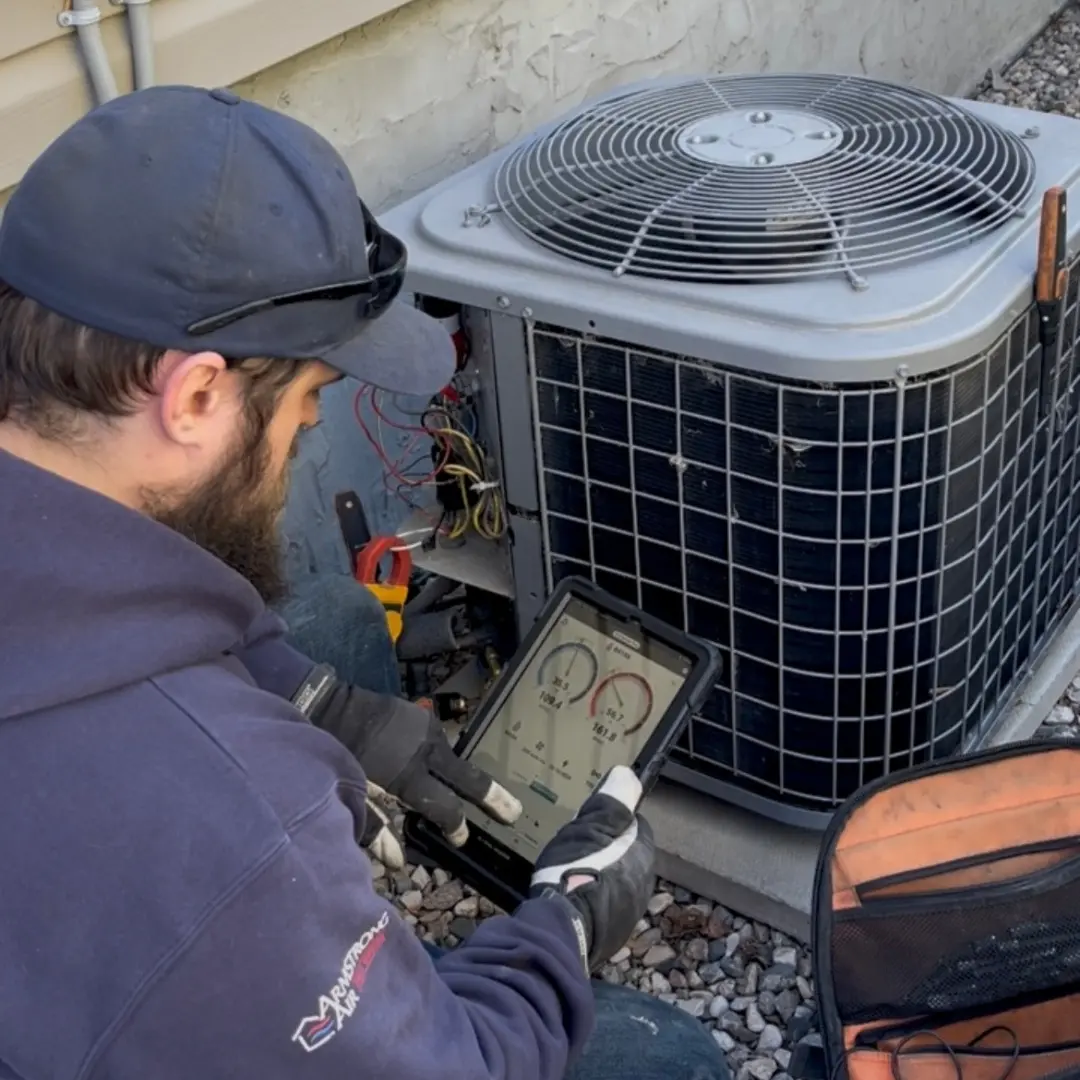
Every repair call from River Heights begins with a structured diagnostic process rather than a parts-swapping approach. When a technician arrives, the first checks are electrical: capacitor capacitance is tested with a meter, contactor contacts are inspected for pitting and burning, and the disconnect and breaker are verified. These components fail most frequently in this equipment era and are the quickest to rule in or out. If electrical components test within spec, the technician moves to refrigerant pressures, checking both suction and discharge side to identify whether the system is undercharged, overcharged, or showing a pressure pattern consistent with a compressor fault. The evaporator coil and air filter are inspected for icing, restriction, or corrosion. Fan motor amp draw is measured and compared against the nameplate rating. The diagnostic fee for a standard service call ranges from $75 to $200 depending on system complexity, and that fee is communicated clearly before work begins. Nothing is replaced without your approval, and the technician will explain exactly what was found and why each repair is or is not recommended.
A Repair Call on Ravine Drive That Saved a River Heights Family $2,800
Last July, Sandra K. called us from Ravine Drive after her central AC stopped cooling overnight with two days of forecast heat ahead. She had already been told by another company that her compressor was gone and replacement was the only option. Our technician ran a full diagnostic and found that the run capacitor had failed completely, causing the compressor to hum but not start, which mimics the symptom pattern of compressor failure. The capacitor was replaced for $275 including parts and labour. The compressor tested within normal operating parameters once the capacitor was supplying proper voltage. Sandra’s system ran the rest of the summer without issue. A bad capacitor misread as a dead compressor is one of the most common and costly diagnostic errors in older AC systems, and it is exactly why our process tests electrical components first, every time.
Why River Heights Homeowners Trust Pro Service Mechanical for AC Repairs
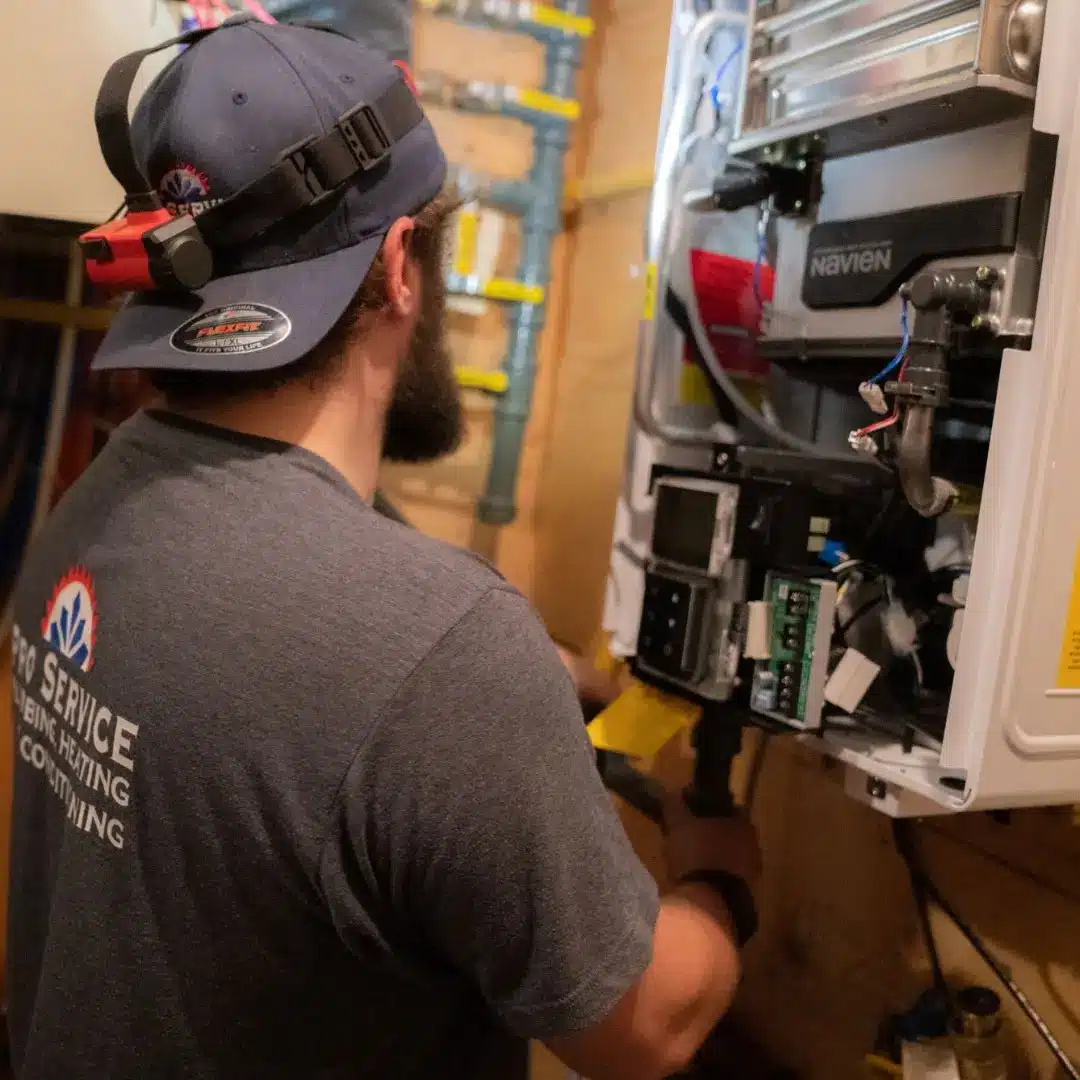
Pro Service Mechanical technicians hold TSASK gas fitter licences and carry provincial refrigerant handling certification, which is required by law for any work involving R-22 or R-410A systems. In River Heights, where the majority of AC equipment predates the refrigerant phaseout, working with a certified technician is not optional; it is a legal and safety requirement. Unlicensed technicians cannot legally handle refrigerant, which means any diagnosis involving a refrigerant leak or recharge by an uncertified person puts your warranty, your insurance, and your equipment at risk.
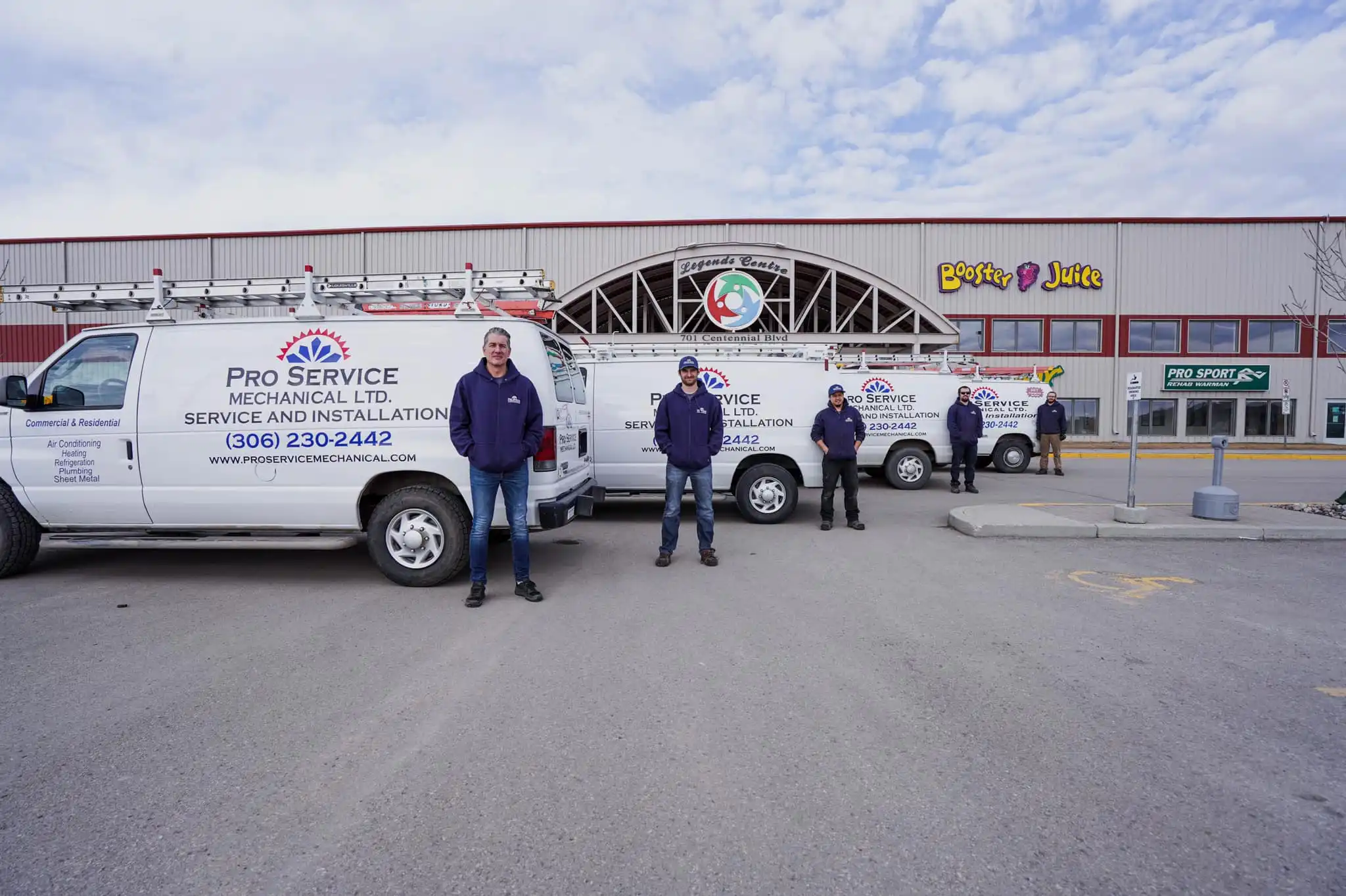
Our service vehicles carry a comprehensive inventory of commonly needed parts for this era of equipment, including capacitors, contactors, fan motors, and control boards for older systems. In most cases, a repair that would take two visits with another company is completed in a single trip, which matters when Saskatoon is sitting at 33°C and your home is heating up fast. Transparent diagnostic pricing means you know the cost before any repair begins, and our technicians are required to explain the reasoning behind every recommendation.
Response times for standard (non-emergency) calls in River Heights during normal summer periods run one to two hours from dispatch. During heat wave conditions, when demand across Saskatoon spikes, we triage calls by urgency, with households containing elderly residents, infants, or medical conditions receiving priority scheduling. Our emergency AC repair line operates around the clock during summer months, and a real person answers, not a voicemail system.
We also provide honest guidance on situations where repair is not the right answer. If a diagnostic reveals that a system is beyond economical repair, we will say so clearly and refer you to our AC installation services team for a separate conversation. Those are two different decisions, and we treat them that way. For a broader look at what we offer across the cooling and heating systems spectrum, visit our air conditioning services page.
Applying the 50% Rule to River Heights AC Systems
The 50 percent rule is a practical framework for deciding whether to repair or replace an aging air conditioner: if the cost of repair exceeds 50 percent of the current replacement value of the system, replacement is generally the more economical long-term decision. In River Heights, where most AC systems are running at or past their expected lifespan under Saskatchewan climate conditions, this threshold is reached more often than homeowners expect, and it is reached most frequently when a compressor fails.
A more specific version of the rule uses a simple formula: multiply the system’s age in years by the cost of the proposed repair. If the result exceeds $5,000, replacement tends to be the better investment. For a 20-year-old system facing a $1,800 compressor repair, the calculation gives $36,000, well past the threshold. For a 10-year-old system with a $250 capacitor failure, the result is $2,500, comfortably within repair territory. This formula accounts for the fact that older systems are likely to face additional failures within the same season or the following year, particularly in Saskatoon’s climate, where the research data suggests that the extreme thermal range causes 25 to 40 percent faster wear than in milder markets.
River Heights systems from the 1961-to-1980 cohort that are still running original or first-generation replacement equipment are, in most cases, past the point where a major repair makes financial sense. The exception is a single low-cost component failure in a system with no other apparent issues. A capacitor or contactor replacement on a system with a healthy compressor and no refrigerant concerns can still buy several useful seasons. The key is getting an honest diagnostic before committing to either path.
It is also worth noting that an R-22 refrigerant leak on a system of this era almost always pushes the calculation toward replacement. The combination of expensive reclaimed refrigerant, the underlying leak repair cost, and the remaining lifespan of the equipment rarely adds up in favour of repair. Our technicians will walk through the numbers with you after the diagnostic, without pressure in either direction. If replacement turns out to make sense, a Request for Service conversation with our installation team starts that process separately.
Same-Day AC Emergency Service When River Heights Homes Heat Up Fast
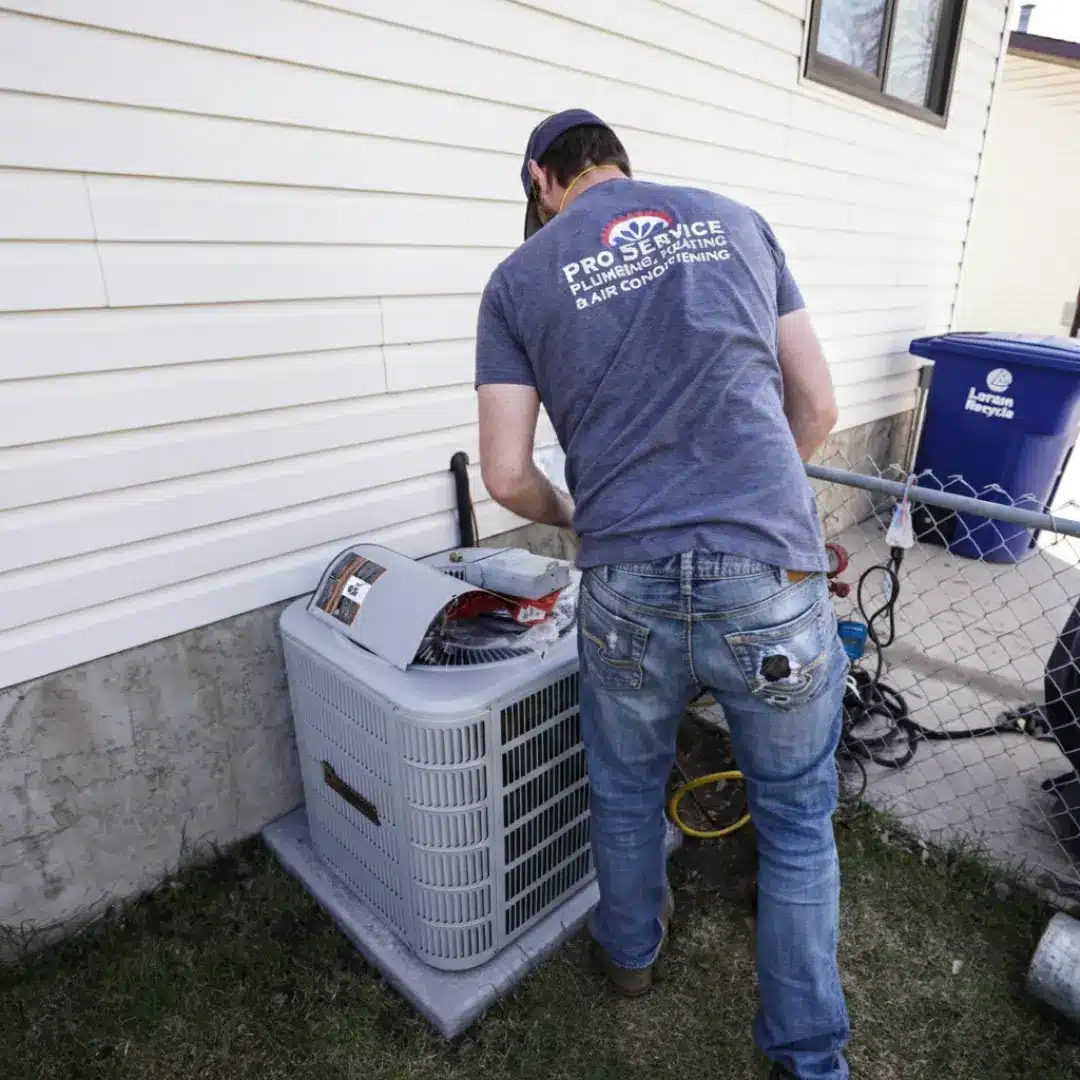
Saskatoon’s summer heat events can push indoor temperatures in River Heights homes past 35°C within a few hours of an AC failure, particularly in south-facing 1970s bi-levels with limited shading and poor attic insulation. When that happens, same-day response is not a convenience, it is a health matter. Call Pro Service Mechanical directly at 306-230-2442 for emergency service. Our summer emergency line operates 24 hours a day, and calls are answered by a dispatcher who can give you an accurate estimated arrival window rather than a vague four-hour service block.
During heat waves, response times across Saskatoon’s established neighbourhoods extend due to demand volume. River Heights typically falls within the priority service area given its concentration of older systems and higher call density during peak summer weeks. If you are in a vulnerable household, please mention that when you call 306-230-2442. We also service College Park and Parkridge, so if you have family or neighbours in those areas dealing with the same heat event, the same dispatch line covers them.
The most important thing River Heights homeowners can do is not wait. An AC system that is short-cycling, producing warm air, or making unusual noises at the start of a hot stretch is not likely to self-correct. Catching a capacitor failure before it kills the compressor, or finding a refrigerant leak before the coil freezes solid, keeps the repair cost in a manageable range and keeps your home comfortable through the season. Our AC repair services page outlines the full scope of what we diagnose and repair across Saskatoon.
Frequently Asked Questions About AC Repair in River Heights
How much does an AC repair typically cost for a River Heights home built in the 1960s or 1970s?
Repair costs in River Heights vary significantly depending on which component has failed. At the lower end, a capacitor or contactor replacement runs $150 to $350 including parts and labour, and these are the most common failures in systems of this era. Fan motor repairs typically fall between $300 and $600. Refrigerant recharges are where costs escalate sharply if your system runs R-22, since reclaimed refrigerant now costs $200 to $500 per pound or more. Compressor repairs or replacements sit at the high end, ranging from $1,500 to $3,000. The diagnostic fee of $75 to $200 is charged upfront and applied toward any repair work that proceeds the same day.
Is it worth repairing a 20-year-old AC system in River Heights, or should I just replace it?
The answer depends entirely on what has failed and what the diagnostic reveals about the rest of the system. A single low-cost failure like a capacitor on an otherwise healthy unit can reasonably justify repair even at 20 years. However, in Saskatoon’s climate, a 20-year-old system has typically experienced 25 to 40 percent faster wear than equivalent systems in milder regions, which means additional failures are statistically likely in the same or following season. Apply the 50 percent rule: if the repair cost exceeds half the system’s replacement value, replacement is usually the better financial decision. Our technicians will give you the honest numbers after the diagnostic, with no obligation to proceed in either direction.
What does the R-22 refrigerant phaseout mean for River Heights homeowners with older systems?
R-22 was phased out of new production in Canada in 2020, which means the only supply available for servicing existing systems is reclaimed refrigerant. That drives the cost per pound to $200 to $500 or higher, compared to roughly $100 to $300 per pound for R-410A. An estimated 70 to 90 percent of systems installed in River Heights homes from the 1961-to-1980 cohort were originally charged with R-22, and many have never been converted. If your system has a refrigerant leak and uses R-22, the recharge cost alone, before the leak repair is factored in, often pushes the total past the point where repair makes financial sense. Our technicians will identify your refrigerant type as part of the initial diagnostic and explain your options clearly.
How quickly can Pro Service Mechanical respond to an AC emergency in River Heights during a heat wave?
Under normal summer conditions, response times to River Heights run one to two hours from dispatch. During heat wave periods, when call volume across Saskatoon spikes, we triage by urgency and vulnerability of the household. Calling 306-230-2442 directly connects you to a live dispatcher who can give you a realistic estimated arrival time rather than a vague window. We operate a 24-hour emergency line through summer months specifically because AC failures in River Heights homes can cause indoor temperatures to reach dangerous levels within hours given the area’s older construction and limited shading on many properties.
What is the most common AC failure in River Heights homes from the 1960s and 1970s, and what are the warning signs?
Capacitor failure is the most frequently occurring repair call in this equipment cohort, accounting for an estimated 20 to 30 percent of service visits, though compressor issues represent the costliest failures at 40 to 50 percent of major repairs. The warning signs for a failing capacitor include the outdoor unit humming but not starting, the system short-cycling, or the unit taking unusually long to start when temperatures are high. Importantly, a dead capacitor can mimic compressor failure symptoms, which is why proper diagnostic testing before condemning the compressor is critical. In River Heights, Saskatoon’s dry heat and freeze-thaw cycles accelerate capacitor degradation, making this a more frequent early-summer failure than homeowners expect.