
When the temperature climbs past 30°C on a July afternoon in North Park, the last thing you want is warm air blowing from your vents. This compact, tree-lined neighbourhood along the South Saskatchewan River stays surprisingly cool in the shade of Marriott Park and Horn Park, but once your AC quits, those mature homes on Spadina Crescent and Empress Avenue can heat up fast. The brick and stucco bungalows that define North Park were built for Prairie winters, not for trapping summer heat, and when a failing capacitor or leaking refrigerant line takes your system offline, you need help the same day.
North Park’s homes tell a specific repair story. With 43% of properties built before 1960 and another 38% dating from 1961 to 1980, the vast majority of AC systems in this neighbourhood carry decades of Saskatchewan’s brutal thermal cycling on their compressors and coils. That means R-22 refrigerant concerns, aging electrical components, and parts that wear faster than they would in gentler climates. At Pro Service Mechanical, we’ve worked in mature Saskatoon neighbourhoods long enough to know exactly what breaks first in these homes, and we come prepared. Our AC repair services are built around fast diagnostics and honest recommendations, not upselling.
North Park’s Split-Era Air Conditioners: R-22 Risk Meets R-410A Age
The earliest warning signs of AC trouble are easy to dismiss in a North Park home. You might notice the rooms at the back of the house staying warmer than the front, or the system running longer than usual without the temperature dropping. These are not minor annoyances. In homes built before 1980, reduced cooling output is almost always a symptom of a deeper electrical or refrigerant problem, and in Saskatoon’s short but intense summers, ignoring it for even a week can push a repairable failure into a full system breakdown.
Ice forming on the evaporator coil is one of the most misread symptoms homeowners encounter. It looks harmless, even cold in the right way, but a frozen coil signals either a refrigerant leak or a severe airflow restriction. In North Park’s 1960s and 1970s bungalows, the combination of aging ductwork and decades of dust accumulation in Prairie conditions means restricted airflow is a constant threat. When coils freeze and then thaw, the water can damage surrounding insulation and wiring, turning a straightforward repair into a more complicated service call.
Strange noises deserve immediate attention in any AC system, but especially in older equipment. A grinding or rattling sound from the outdoor unit typically points to a failing fan motor or a contactor that’s on its last legs. A high-pitched squealing often means the motor bearings are dry. Clicking sounds that repeat without the compressor starting are a classic sign of a failed capacitor. These are all repairable faults, but only if you catch them before the compressor is forced to strain against them long enough to fail itself.
Unexplained spikes in your electricity bill during cooling season are another reliable indicator. North Park’s older homes already work their systems harder because of duct leakage and insulation gaps common in pre-1980 construction. If your hydro costs jump without a clear reason, your system is likely working overtime to compensate for a component that’s no longer doing its job efficiently. Booking a diagnostic call at that point, rather than waiting for a complete shutdown, almost always means a less expensive repair outcome. You can also review the best time to service your system to avoid being caught in the peak summer rush.
What AC Failures Actually Look Like in North Park’s 1950s,1970s Homes
Capacitors are the most common single-point failure in AC systems of any age, and in North Park’s pre-1980 cohort, they’re essentially a wear item. A capacitor helps start and run the compressor and fan motors. Saskatoon’s extreme thermal cycling, from deep winter cold to intense summer heat, accelerates capacitor degradation faster than in milder Canadian markets. Capacitor replacement is one of the least expensive AC repairs, typically ranging from $150 to $350 including the diagnostic fee, and in most cases a technician can complete it the same day with a part already on the truck.
Contactors, which are electromechanical switches that control power to the compressor and fan, burn out regularly in systems that have been running for 20 or more years. Pitting on the contactor’s contact points causes the system to draw excess current, which in turn stresses the compressor. Replacement costs generally run $200 to $400. Fan motor failures come next in frequency. The outdoor condenser fan motor in a North Park home that’s been exposed to decades of Prairie winters sees lubricant breakdown and bearing wear that technicians from milder climates don’t encounter at the same rate. Fan motor replacement typically falls between $350 and $600.
Refrigerant leaks are where repair costs escalate sharply, and this is the issue that defines AC repair in North Park more than any other. Because 81% of homes in this neighbourhood predate 1980, the majority of AC systems installed or last replaced before 2010 use R-22 refrigerant, which Canada fully phased out of production in 2020. Recharging an R-22 system from reclaimed stock now costs between $1,500 and $3,000 for a typical 5 to 10 pound recharge, and that’s before factoring in leak detection and repair. If the leak is at a coil joint or fitting, the repair may extend the system’s life. If it’s a pinhole in the evaporator coil itself, the economics shift quickly toward replacement. Systems installed after 2010 in the small 2011-2016 construction cohort use R-410A, which remains available at far lower cost.
Compressor failure is the most serious and expensive failure mode in any residential AC system, and in North Park’s oldest units it is often terminal. Compressors in 20-plus-year-old R-22 systems suffer from oil thickening during Saskatchewan’s prolonged cold periods. When the compressor restarts in spring after months at sub-zero temperatures, that thickened lubricant accelerates internal wear. Compressor replacement on a system of this age typically costs $1,200 to $2,500, and that figure does not include refrigerant. In most cases, a compressor failure on a system older than 15 years triggers a serious repair-versus-replace conversation.
Evaporator coil damage rounds out the major failure categories. Coils in pre-1980 homes corrode over time from humidity cycling, and replacement parts for older systems can be difficult to source. Evaporator coil replacement ranges from $800 to $1,500 depending on access and coil size. Combined with the R-22 refrigerant cost if the system uses that refrigerant, coil replacement on an older North Park system can easily exceed what makes financial sense to repair. A thorough diagnostic will tell you whether the coil damage is localized and repairable or systemic.
How Pro Service Mechanical Diagnoses Your AC Repair in North Park
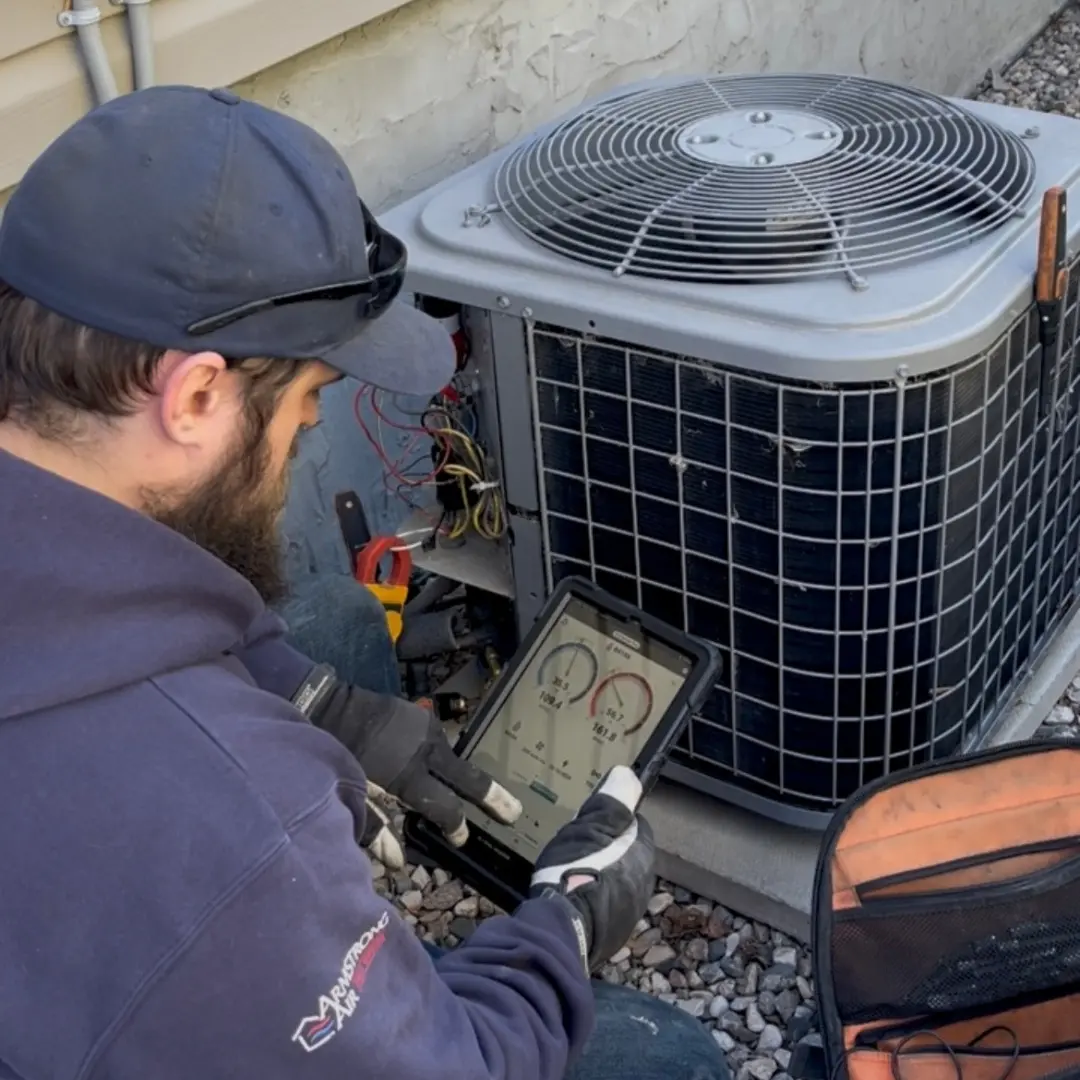
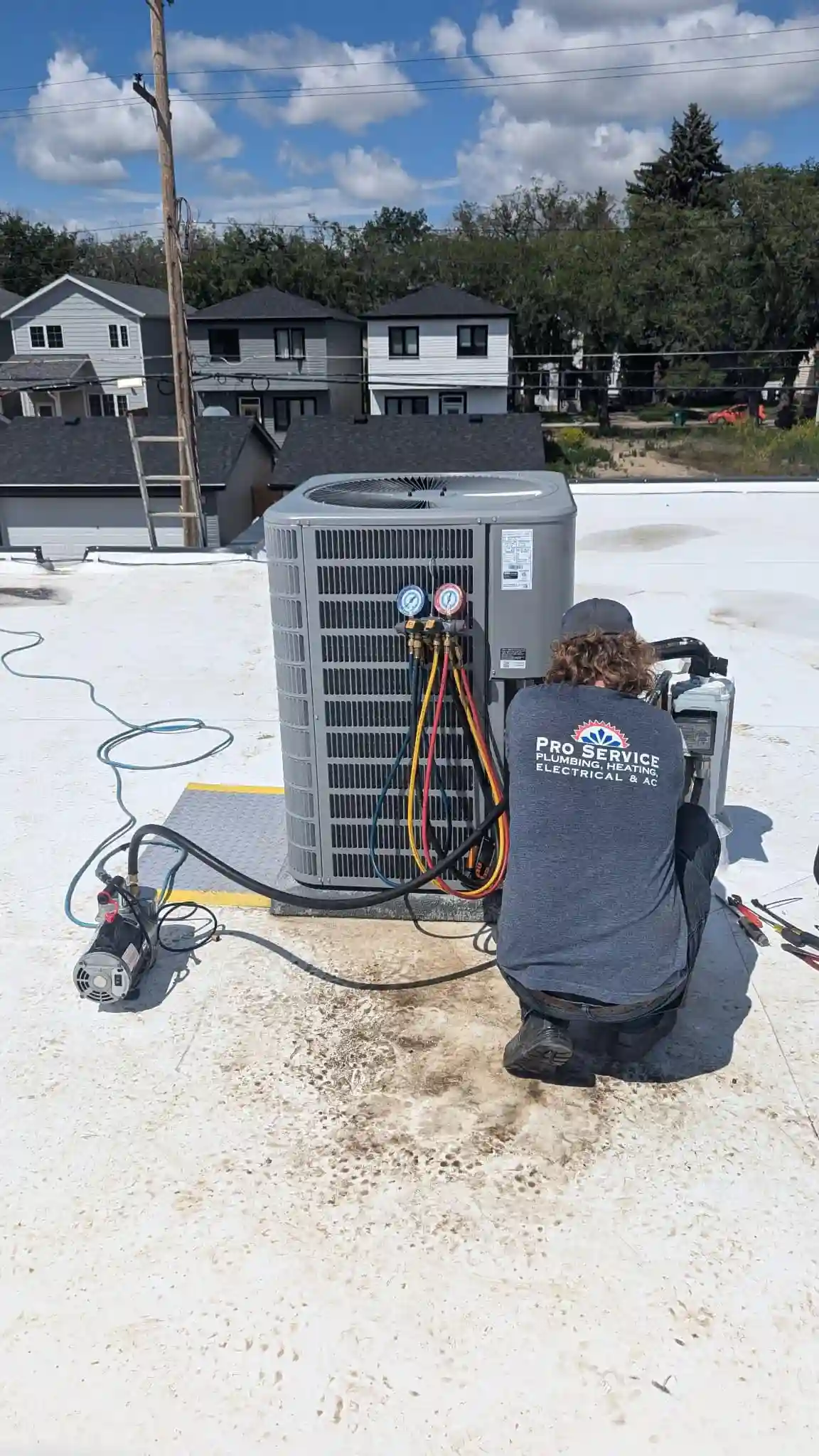
When a Pro Service Mechanical technician arrives at your North Park home, the diagnostic follows a deliberate sequence designed to identify the real failure without unnecessary part swaps. The technician starts at the thermostat and electrical panel, confirming the system is receiving correct signals and power. From there, the outdoor unit is inspected: capacitor and contactor condition are checked first because they’re the most common failures and the quickest to confirm. Refrigerant pressure readings come next, which tell us immediately whether the system is holding charge or leaking. If pressures are correct, the inspection moves to airflow, coil condition, and motor amp draws. This order matters because it prevents misdiagnosis and ensures the simplest, least expensive fix is identified before any recommendation is made.
Our diagnostic fee ranges from $75 to $200 depending on system complexity and time required. That fee is disclosed before work begins, and it is applied toward the repair cost if you proceed with us. For North Park homes with older systems, we document refrigerant type and system age as part of the report so you have a complete picture of what the repair means for the system’s remaining service life. We don’t leave you with a quote and a shrug. Our technicians explain exactly what failed, why it failed in a Prairie climate context, and what to realistically expect from the repaired system going forward.
A North Park Repair Call That Saved a Homeowner Over $3,000
Earlier this summer, we received a call from Karen V. on Empress Avenue. Her 2003-vintage central AC system had stopped cooling entirely, and a neighbour had suggested the compressor was likely gone. Karen was bracing for a costly replacement. Our technician arrived within two hours, ran the diagnostic sequence, and found the compressor was healthy but completely unable to start because both the run capacitor and the contactor had failed simultaneously. The electrical faults were causing the system to try and fail on every cycle, putting the compressor under repeated start stress without ever completing a cycle. Both components were replaced the same afternoon for just under $500, including the diagnostic fee. The system has been cooling reliably ever since. A compressor assumption without a proper diagnostic would have cost Karen several thousand dollars she didn’t need to spend.
What Sets Pro Service Mechanical Apart for AC Repair in North Park
Pro Service Mechanical technicians hold TSASK gas fitter licensing and refrigerant handling certification, which matters for any repair involving pressurized refrigerant lines, whether the system uses R-22 or R-410A. In North Park, where the majority of systems still carry R-22, proper certification isn’t optional. Mishandled refrigerant is both an environmental violation and a safety hazard. Our technicians are equipped and licensed to recover, test, and recharge refrigerant correctly, and we document every service for your records.
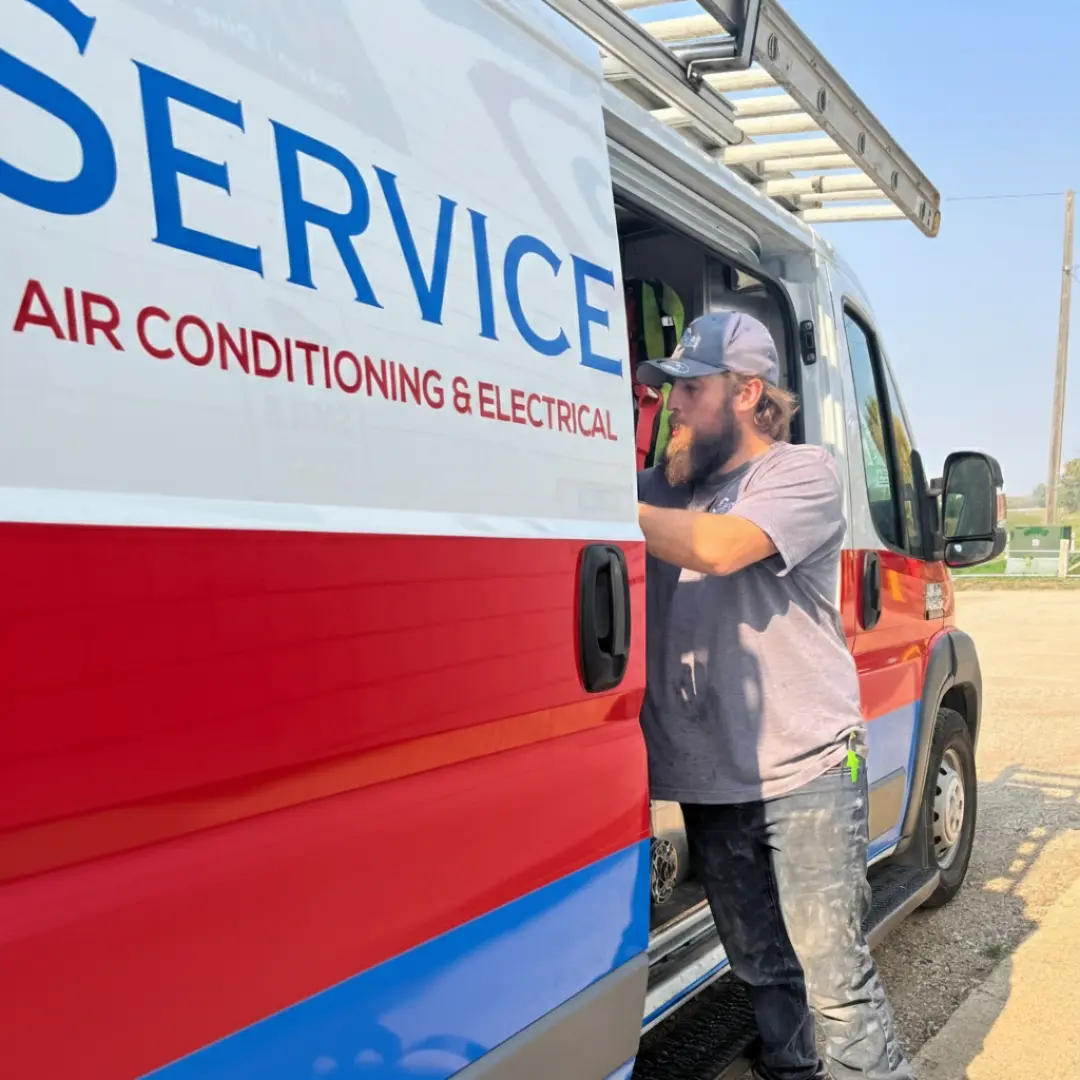
We stock the most commonly failed components for Prairie-climate AC systems on our service vehicles. Capacitors, contactors, fan motors, and common control boards are carried on every repair call, which means a same-day fix in most cases rather than a return visit after parts arrive. For North Park homeowners dealing with a system that quit on a Wednesday afternoon, waiting three days for a part to be ordered is not an acceptable outcome.
Transparent pricing is a commitment we make before any work starts. Our diagnostic fee is quoted upfront, and every repair estimate is itemized so you know exactly what you’re paying for. There are no hidden refrigerant surcharges added after the fact. If we diagnose a fault and you decide not to proceed with the repair, you pay the diagnostic fee and nothing else. We think that’s the baseline of honest service, and it’s how Pro Service Mechanical has built its reputation in mature Saskatoon neighbourhoods.
Our normal response window in non-emergency conditions is one to two hours for North Park, given the neighbourhood’s proximity to central Saskatoon. During peak summer demand, we prioritize calls where the home has vulnerable residents, elderly occupants, or infants, and we communicate wait times honestly. For urgent situations, our emergency AC repair line connects you to a real person, not a voicemail system. You can also learn more about our broader air conditioning services and how they extend beyond emergency repair to seasonal maintenance.
The 50% Rule and When AC Repair Makes Sense for North Park Systems
The repair-versus-replace decision doesn’t have to be a guessing game. The industry standard “50% rule” provides a straightforward framework: if the cost of a repair exceeds 50% of the cost of a replacement system, and the existing system is more than half its expected lifespan, replacement is typically the better financial decision. For a standard residential AC system with a 15-year lifespan, that inflection point arrives around year eight. In North Park, where pre-1980 systems are commonly 30 to 40 years old, this calculation is often already answered before the technician leaves the driveway.
A simpler version of the formula: multiply the system’s age by the repair cost. If that number exceeds $5,000, replacement is generally the more economical path. A 25-year-old system requiring a $300 capacitor replacement: 25 times $300 equals $7,500, which suggests the system is living on borrowed time even though this specific repair is inexpensive. That doesn’t necessarily mean you replace it today, but it means you should plan for replacement in the near future rather than being caught off-guard. A 25-year-old system requiring a $2,000 refrigerant repair: 25 times $2,000 equals $50,000, which makes the decision straightforward.
Saskatoon’s climate compresses these timelines compared to milder Canadian markets. The freeze-thaw thermal cycling that North Park systems endure every year accelerates compressor wear, coil corrosion, and seal degradation. A system that might last 18 years in Vancouver realistically reaches end of life at 12 to 15 years in Saskatchewan. This is why our technicians frame repair recommendations with remaining lifespan estimates, not just current repair costs. If a repair restores the system for what’s likely two more summers, you deserve to know that before you spend $800 on it.
Even when the numbers clearly favour replacement, we still begin with a diagnostic. A fair assessment of what actually failed, documented in writing, gives you accurate information to take to your next decision. We are not in the business of pushing replacements when a repair is the right answer, and we are not in the business of propping up systems that will fail again before the summer ends. Our AC installation services exist for situations where replacement genuinely makes sense, but that conversation only starts after an honest repair assessment. If your heating systems also need attention while we’re in your mechanical room, we can assess those as well in the same visit.
Same-Day Emergency Air Conditioner Repair Across North Park When You Need It Most
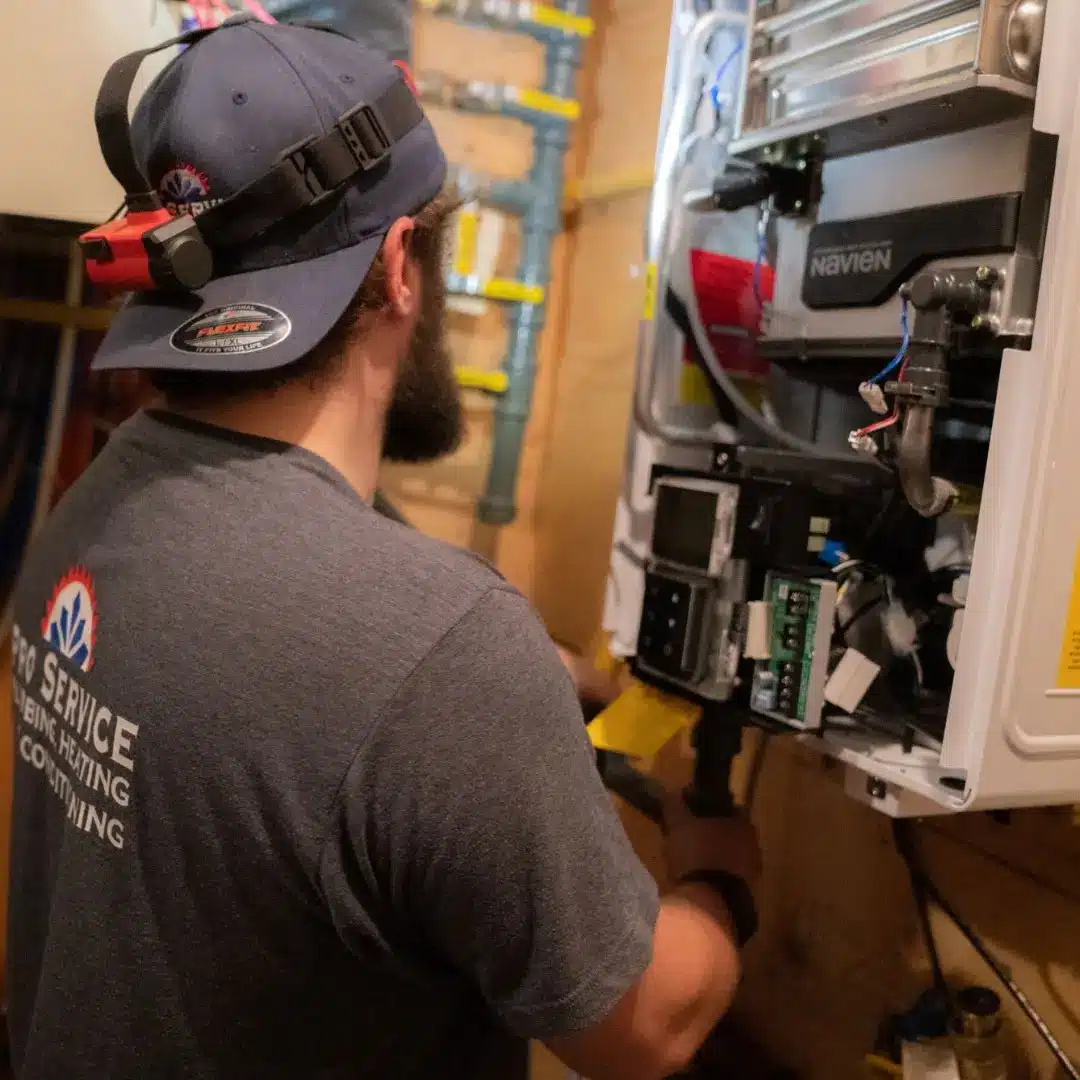
Saskatoon heat waves don’t follow business hours. When a sustained stretch of 32°C days hits the city in late July, AC repair demand spikes across every neighbourhood simultaneously, and North Park is no exception. During these peak periods, our dispatch prioritizes calls based on urgency, including household vulnerability factors. We also keep extended summer hours specifically to handle the volume surge that comes with Prairie heat waves. If you call 306-230-2442 and describe your situation, our team will give you an honest estimated arrival window rather than a vague commitment.
For calls outside business hours, our emergency AC repair line at 306-230-2442 connects to a live dispatcher. We do not operate with an answering service that takes a message and calls back in the morning. A real person answers, gathers your information, and dispatches accordingly. In genuine emergencies involving elderly residents or infants in a home that’s heating to dangerous levels, we treat those calls as the priority they are. North Park’s compact geography and proximity to central Saskatoon means response times are typically at the lower end of our service window even on busy days.
If you’re in a nearby neighbourhood also dealing with a system failure, our repair coverage extends throughout the area. Homeowners in Meadowgreen and Hudson Bay Park face similar mid-century housing repair patterns and can reach us through the same channels. A Request for Service through our website is available around the clock for non-emergency bookings, and our team will confirm your appointment within the hour during business periods. For urgent summer failures in North Park, the phone is always the fastest path to a same-day repair.
Frequently Asked Questions About Air Conditioner Repair in North Park
How much does an AC repair typically cost for a North Park home built before 1980?
Repair costs in North Park’s older homes vary significantly depending on the component that’s failed. Simple electrical repairs like capacitor or contactor replacement generally run between $150 and $400, including the diagnostic fee. Fan motor replacement typically falls between $350 and $600. The costs escalate sharply if refrigerant is involved. Because most pre-1980 systems in North Park use R-22, which was phased out of production in 2020, recharging a leaking system now costs $1,500 to $3,000 for the refrigerant alone. Compressor replacement on an older system ranges from $1,200 to $2,500. Our diagnostic fee of $75 to $200 is applied toward the repair cost, and all pricing is disclosed before any work begins.
What is R-22 refrigerant, and what does it mean if my North Park AC system uses it?
R-22 is the refrigerant used in virtually all residential AC systems installed before approximately 2010, which covers the overwhelming majority of systems in North Park given that 81% of homes here predate 1980. Canada completed the phaseout of R-22 production and importation in 2020, meaning the only supply available now comes from reclaimed and recycled stock. That scarcity has driven the price far above what R-410A costs, and it continues to rise. If your system has a refrigerant leak, the repair bill for an R-22 recharge can easily exceed $2,000 even before addressing the source of the leak. Our technicians always confirm refrigerant type during the diagnostic so you understand the full cost picture before deciding whether to repair or replace.
Is it worth repairing a 25-year-old AC system, or should I just replace it?
The answer depends entirely on what has failed. A 25-year-old system that needs a capacitor or contactor is a simple, low-cost repair that makes sense even on a system of that age, as long as you understand that other components may follow within a season or two. However, a 25-year-old system with a refrigerant leak, a failed compressor, or a damaged evaporator coil is a different situation. Applying the age-times-repair-cost formula to these larger repairs almost always points toward replacement. Saskatchewan’s extreme climate also accelerates wear compared to milder provinces, so systems here tend to reach their practical end of life sooner than the manufacturer’s rated lifespan would suggest. Our technicians give you a realistic remaining-lifespan estimate alongside any repair quote.
What is the most common AC failure in North Park’s mid-century bungalows?
Capacitor failure is the single most common AC repair call in homes of any age, and North Park’s 1950s and 1960s bungalows are no exception. Capacitors help start and run the compressor and fan motors, and they degrade faster under Saskatchewan’s wide temperature swings than they do in gentler climates. After capacitors, contactor wear and fan motor failure are the next most frequent faults in this era of equipment. Refrigerant leaks become increasingly common once systems pass the 20-year mark, as coil fittings and seals deteriorate from decades of thermal cycling. Compressor failure, while less frequent, is the most serious outcome and typically the point at which repair becomes uneconomical on a pre-1980 system.
How quickly can Pro Service Mechanical respond to an AC emergency in North Park during a heat wave?
Under normal summer conditions, our response window for North Park is one to two hours from the time of your call. During sustained heat waves, when repair demand spikes across Saskatoon simultaneously, response times can extend, and we communicate those wait times honestly rather than making promises we can’t keep. We prioritize calls involving elderly residents, infants, or individuals with medical vulnerabilities. For after-hours emergencies, calling 306-230-2442 connects you to a live dispatcher, not a voicemail. North Park’s location near central Saskatoon generally works in your favour for response time compared to outer neighbourhoods. If the situation is urgent, tell us clearly when you call and we will tell you exactly where you fall in the dispatch queue.