

College Park East sits on Saskatoon’s eastern edge, bounded by College Drive to the north, McKercher Drive to the west, 8th Street to the south, and the CP Railway tracks to the east. It is a neighbourhood of wide, sidewalk-lined streets, crescent-shaped loops, and mature tree canopy that speaks to its origins as part of Saskatoon’s First Community Planning Scheme, developed between 1966 and 1982. Streets like DeGeer Street, Harrington Street, Rennie Drive, and Champlin Crescent give the area its distinctive residential rhythm, while Sidney L Buckwold Park anchors the community at its centre. Roland Michener School on DeGeer Street and École College Park School on Harrington Street draw families who tend to put down deep roots here, reflected in an ownership rate above 75 percent.
What that history also means, practically speaking, is that the overwhelming majority of homes in College Park East were built between 1961 and 1980, and are now 45 to 65 years old. Most were constructed in an era when Saskatchewan summers were simply endured with a box fan and an open window. Central air conditioning was rarely standard. Today, with July temperatures regularly climbing past 30°C and humidity making the heat feel considerably sharper, that original omission matters more than ever. Pro Service Mechanical works with College Park East homeowners every season to bring these well-loved homes into the era of reliable, efficient cooling, and the page below explains exactly what that process looks like.
Built in the 1970s, Cooling in the 2020s: What College Park East Homes Require
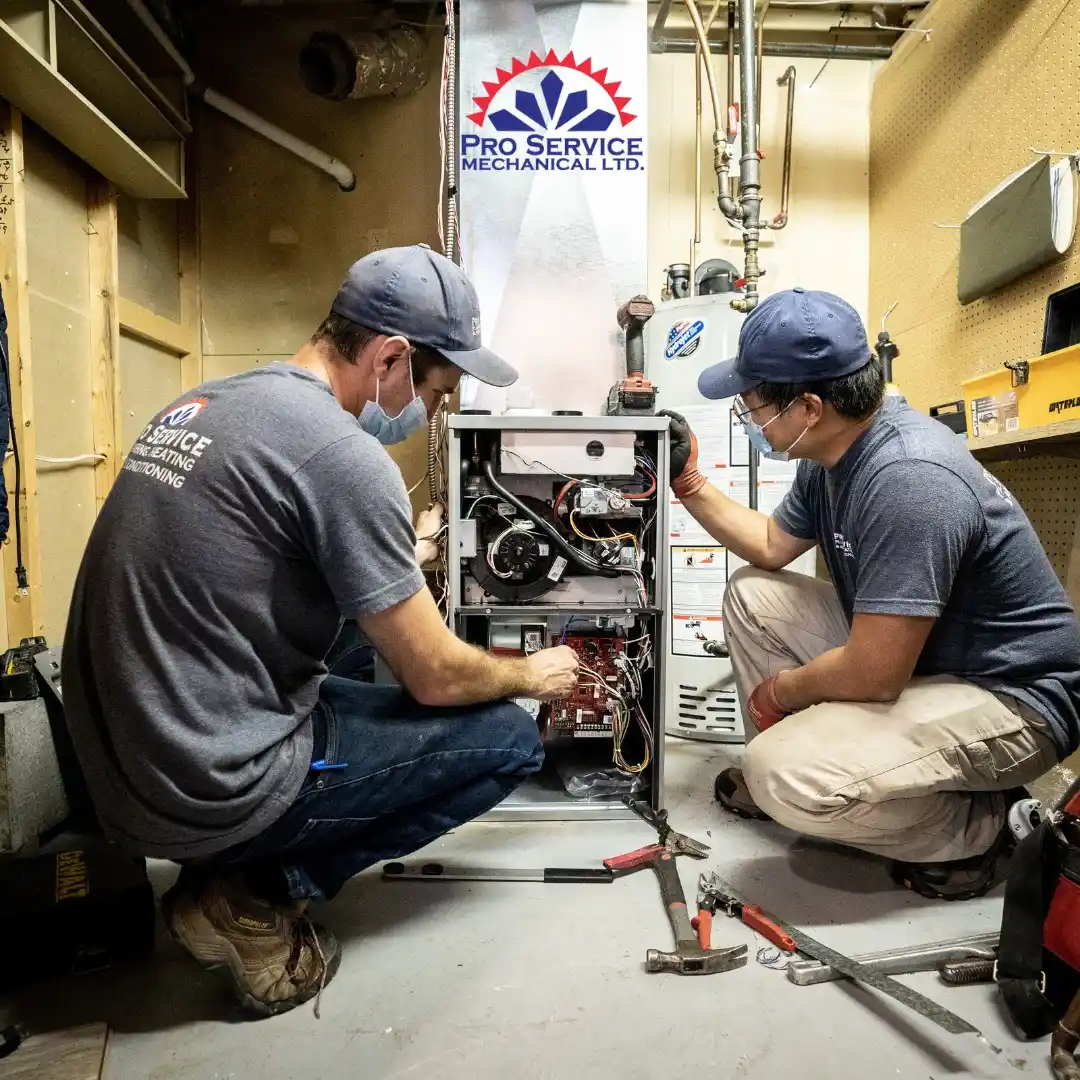
The homes that make College Park East so appealing to families, their solid construction, generous lot sizes, and established neighbourhood feel, also come with mechanical realities that matter the moment you decide to add air conditioning. Homes built in the 1960s and 1970s were designed around natural ventilation and gravity-fed or early forced-air heating. Ductwork, where it existed, was sized and routed for heating only. Cooling requirements are fundamentally different, and a furnace duct system that works perfectly in January may be entirely mismatched to what an air conditioner needs to move cool air effectively in July.
Insulation is another factor. Saskatoon’s building codes from the 1970s called for insulation levels that look modest by today’s standards. Attic R-values in this era were commonly around R-20 to R-24, compared to the R-50 or higher that modern energy codes recommend. When the sun beats down on a south-facing roof all afternoon and the attic becomes a heat battery, an undersized or improperly matched AC system will run continuously without ever getting the house to the set temperature. Proper load calculation before installation is therefore essential, not optional.
The electrical panels in many College Park East homes are also a consideration. A home built in 1972 may have a 100-amp service panel, and adding a central air conditioner typically requires a dedicated 240-volt circuit with adequate amperage. In some cases, a panel upgrade runs alongside the AC installation to ensure the home can handle the additional load safely. This is work that should be assessed up front, not discovered on installation day.
None of this makes College Park East homes poor candidates for central air conditioning. In fact, the opposite is true. Homes with full basements, existing forced-air furnace systems, and established lot landscaping that provides natural shade are often excellent candidates. The key is matching the equipment and installation approach to the specific home rather than applying a one-size-fits-all solution. That neighbourhood-specific understanding is exactly what experienced local installers bring to the table.
Ductwork, Electrical, and Lot Layout: AC Installation Realities on Crescent Streets
College Park East’s crescent-heavy street design creates a variety of lot configurations that affect how an AC installation unfolds. Corner lots at places where Champlin Crescent meets collector roads have different exposure and access conditions than mid-block homes on Rennie Drive. Detached garages, rear lanes, and mature trees along property lines all factor into where the outdoor condenser unit gets placed, how refrigerant lines are run, and how the system is protected from prevailing winds or afternoon sun.
Ductwork assessment is consistently the most involved part of retrofitting central air into a home that did not originally have it. A trained technician will trace every existing duct run, measure static pressure, check for leaks at joints and connections, and evaluate whether the supply and return balance will support cooling. In many 1970s-era College Park East homes, the return air side is particularly undersized, because heating systems can tolerate a tight return but cooling systems cannot. Adding a return air plenum or enlarging return pathways is common work that makes the difference between a system that cools well and one that struggles all summer.
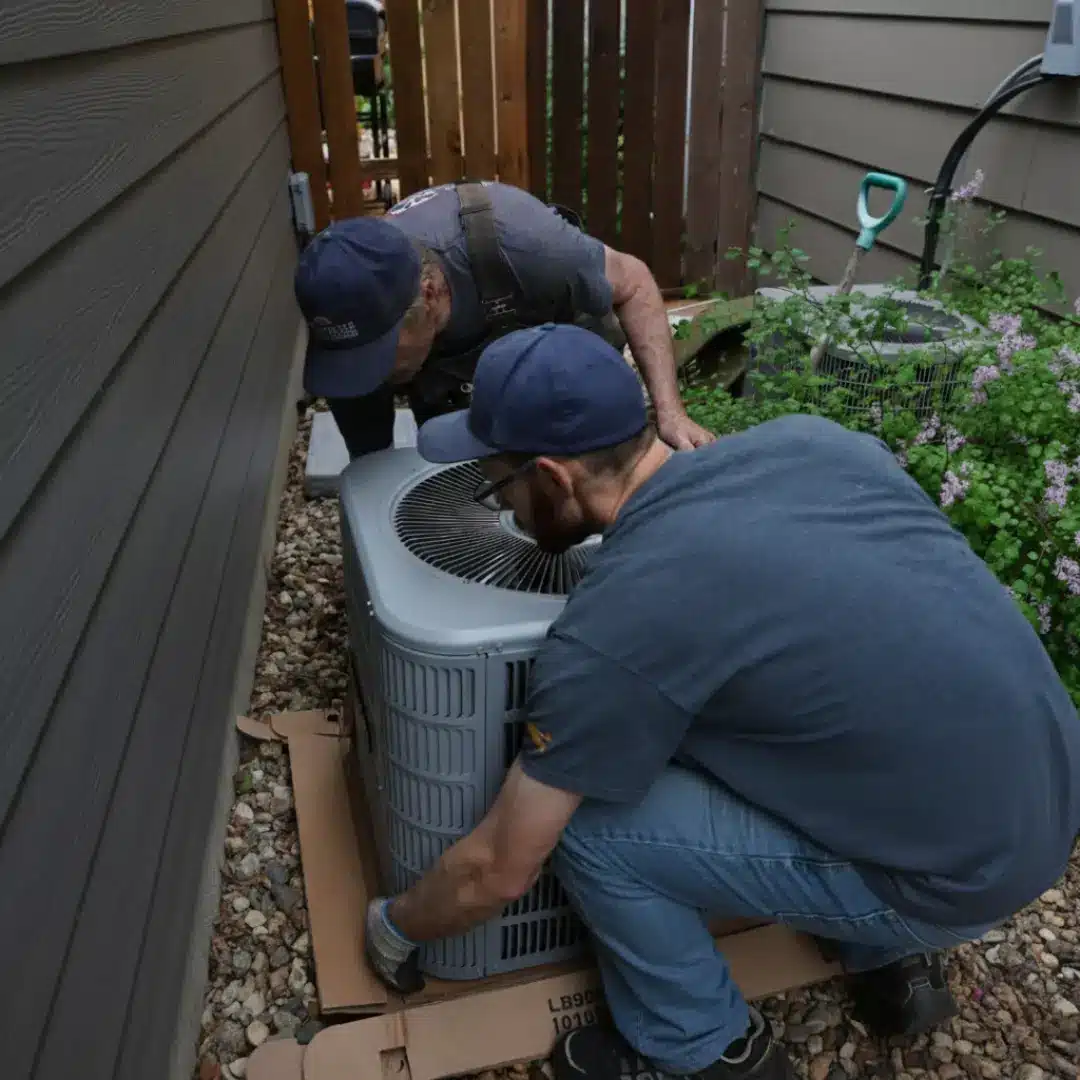
Refrigerant line sets, which connect the outdoor condenser to the indoor evaporator coil, need to be routed from the mechanical room through the house structure to the exterior. In homes with brick or stucco exteriors, this penetration requires care. In homes with finished basements, it may require creative routing. These are not insurmountable challenges, but they are details that a technician unfamiliar with this era of construction may underestimate. College Park East homes reward installers who have worked in the neighbourhood before and know what to expect inside the walls.
The outdoor condenser placement deserves specific attention in this neighbourhood. College Drive and 8th Street generate meaningful traffic noise, and many homeowners on streets adjacent to these corridors prefer to have the condenser placed on a side yard rather than the front. Adequate clearance from fences, vegetation, and neighbouring structures must be maintained for the unit to breathe properly and to allow service access. A professional site assessment will identify the optimal location before any work begins.
Finally, many homes in College Park East have had additions, sunrooms, or finished attic spaces added over the decades, and these spaces are often left out of the original duct plan entirely. When sizing and designing an AC system, these areas need to be included in the load calculation so the whole home is served, not just the original 1970s footprint. Overlooking these additions is one of the most common reasons a newly installed system fails to meet homeowner expectations.
What Professional AC Installation Delivers That a DIY Approach Cannot
Choosing professional AC installation services in College Park East is not simply about having the right tools, it is about having the right knowledge applied to a specific type of home. A professional installer performs a Manual J load calculation that accounts for your home’s square footage, ceiling height, insulation levels, window orientation, and local climate data. This calculation determines the correct equipment size, and getting this wrong is the single most common cause of poor AC performance. An oversized unit short-cycles, leaving the air humid and uncomfortable. An undersized unit runs endlessly and never achieves the set temperature.
Professional installation also includes commissioning, which means verifying refrigerant charge, airflow, and electrical connections meet manufacturer specifications before the technician leaves. A properly commissioned system runs more efficiently, lasts longer, and is far less likely to require early repairs. When you book through Pro Service Mechanical, you receive documentation of the installation, warranty registration support, and a clear explanation of what the system needs to stay in top condition year after year. That is a fundamentally different outcome than a system that was simply connected and turned on.
A College Park East Family Gets Their First Central Air Conditioner
A family on Harrington Street contacted Pro Service Mechanical in early June after enduring several summers in a 1974 split-level that turned genuinely uncomfortable by late July. The home had a natural gas forced-air furnace, original ductwork, and a 100-amp electrical panel. The assessment identified that the return air system was undersized for cooling and that the panel needed a service upgrade to accommodate the new circuit. Both items were handled before installation day, so the actual equipment installation went smoothly and was completed in a single day.
“We knew we needed AC eventually, we just kept putting it off,” the homeowner explained. “What surprised us was how straightforward the whole process was once we had a clear plan laid out. The team explained everything before they touched anything, and the house was noticeably more comfortable within the first hour of the system running.” The family noted that bedrooms on the upper level, which had previously been unusable in peak summer heat, were now consistently cool by evening. For families in similar 1970s split-levels and bungalows throughout College Park East, this kind of whole-home transformation is entirely achievable with the right installation approach.
Why College Park East Homeowners Call Pro Service Mechanical First
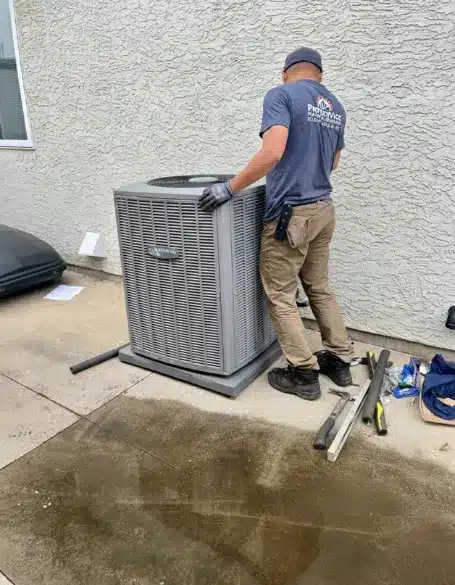
Pro Service Mechanical has built its reputation in established Saskatoon neighbourhoods by understanding that no two older homes are identical and that cookie-cutter installation approaches produce disappointing results. When a technician arrives at a College Park East property, they bring experience with the specific duct configurations, panel types, and structural layouts common to homes of this era. That familiarity shortens assessment time, reduces surprises during installation, and produces a better finished result for the homeowner.
Transparent pricing is a consistent theme in feedback from College Park East clients. Before any work begins, homeowners receive a detailed written quote that covers equipment, labour, any required ductwork modifications, and electrical work. There are no hidden fees added at the end of the job. If the scope changes based on something discovered during installation, homeowners are consulted and must approve the change before work proceeds. That approach to pricing builds the kind of trust that turns a first-time customer into a long-term client.
The service relationship does not end at installation. Pro Service Mechanical provides ongoing maintenance visits, seasonal check-ups, and responsive support when something does not feel right with a system. Knowing the best time to service your air conditioner, typically in April or early May before the heat arrives, helps College Park East homeowners avoid the peak-season backlog and ensures their system is running efficiently when they need it most. Annual maintenance also preserves manufacturer warranties and catches small issues before they become expensive repairs.
When problems do arise outside of scheduled maintenance, College Park East homeowners can reach Pro Service Mechanical at 306-230-2442 for prompt assistance. The team understands that a failed air conditioner in late July is not an inconvenience that can wait a week, and response times reflect that understanding. Whether it is a refrigerant leak, a failed capacitor, or a compressor issue, emergency AC repair service is available to get families back to comfortable as quickly as possible.
Year-Round Comfort: How Cooling and Heating Work Together in College Park East
One of the less obvious benefits of adding central air conditioning to a College Park East home is how it integrates with the existing forced-air furnace system. When an evaporator coil is installed on the furnace and the system is properly commissioned, the furnace blower circulates air through both the heating coil in winter and the cooling coil in summer. This shared infrastructure means that upgrading to central AC also gives homeowners the opportunity to evaluate and improve their overall ventilation, filtration, and air distribution.
Air quality is a genuine concern in homes built in the 1960s and 1970s. Older ductwork accumulates decades of dust, and older construction techniques left more opportunities for outdoor air infiltration. A central AC system paired with a quality air filter significantly reduces airborne particulates, pollen, and humidity levels inside the home. For families with allergy sufferers or young children, this air quality improvement can be just as meaningful as the temperature control benefit.
Energy efficiency is another compelling argument. Modern high-efficiency air conditioners carry SEER2 ratings of 15 or higher, meaning they deliver substantially more cooling per dollar of electricity consumed compared to older or lower-rated equipment. In a College Park East home that runs the AC for three or four months of the year, the efficiency difference translates to real savings on Saskatoon Light and Power bills. Over the typical 15-year lifespan of a well-maintained system, those savings accumulate to thousands of dollars.
College Park East homeowners who are also evaluating their heating systems will find that Pro Service Mechanical can assess both in a single visit, providing a comprehensive view of the home’s mechanical condition and helping prioritize investments logically. Replacing an aging furnace and adding air conditioning at the same time, for example, eliminates the need to open up the ductwork twice and often results in a better overall system design than doing each project separately. That kind of integrated thinking is what separates a knowledgeable HVAC partner from a company that simply sells equipment.
Taking the Next Step Toward a Cooler College Park East Home
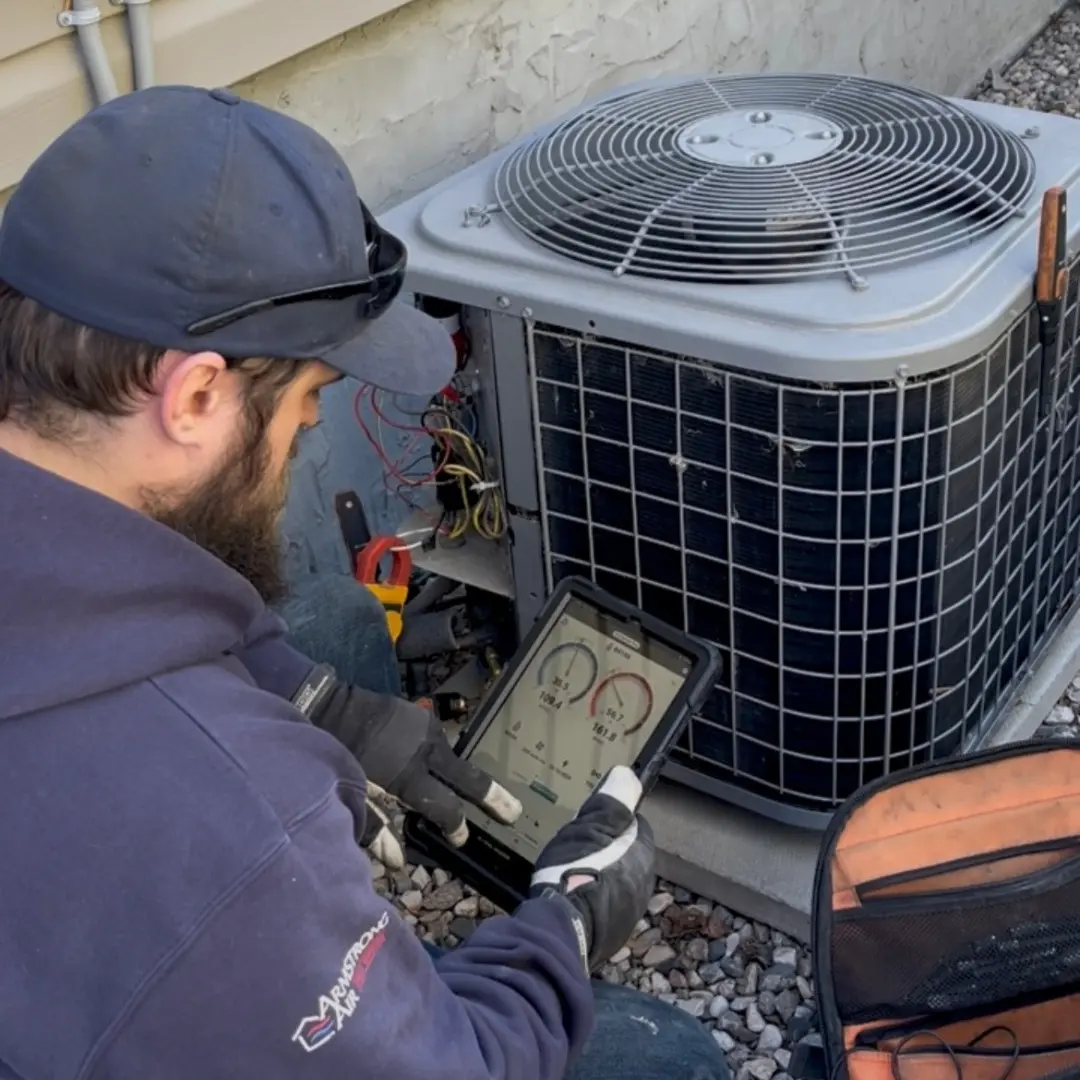
If you live on DeGeer Street, Rennie Drive, Champlin Crescent, or any of the other well-kept streets that make College Park East such a livable neighbourhood, the summer heat question is one you have probably been thinking about longer than you would like to admit. The good news is that the path from uncomfortable July evenings to reliable whole-home cooling is shorter and more straightforward than most homeowners expect, particularly when you work with a team that knows what to expect inside homes of this era and size.
The process starts with a Request for Service, which allows Pro Service Mechanical to schedule an in-home assessment at a time that works for your family. During that visit, a technician will evaluate your existing ductwork, electrical capacity, and mechanical room layout, then provide a clear and detailed installation plan with transparent pricing. There is no pressure and no obligation, simply an honest evaluation of what your home needs and what it will cost. You can also call directly at 306-230-2442 to speak with someone on the team and get initial questions answered right away.
College Park East neighbours who make the move to central air conditioning consistently say the same thing: they wish they had done it sooner. Connecting with the broader community of homeowners who have already made this upgrade is easy, and Pro Service Mechanical clients in adjacent neighbourhoods including Grosvenor Park, Greystone Heights, and Haultain have been through the same process in homes of similar age and character. Their experience, and the team that helped them, is available to College Park East families right now.
Frequently Asked Questions: Air Conditioning in College Park East
My College Park East home was built in the early 1970s and has never had AC. Is it too old to retrofit?
Not at all. Homes built in the 1970s are actually among the most common candidates for central AC retrofits in Saskatoon, and the majority of them are very workable. The key requirements are an existing forced-air furnace with ductwork, a basement or utility room with space for an evaporator coil, and an electrical panel that can support the additional load. Most College Park East homes meet at least the first two criteria, and panel upgrades, where needed, are a straightforward part of the overall project. A professional assessment will identify exactly what your specific home requires and what the total cost will look like before any work begins.
How long does a typical AC installation take in a 1970s-era College Park East bungalow or split-level?
For a home that already has a compatible forced-air furnace and a panel with adequate capacity, a central AC installation typically takes one full day. This covers installing the outdoor condenser on a concrete pad, mounting the evaporator coil on the furnace, running refrigerant lines and electrical connections, and commissioning the system to verify it is operating correctly. If ductwork modifications or panel work are required, those may be completed in a separate visit prior to installation day, or the overall timeline may extend by a day depending on the scope. Pro Service Mechanical will give you a clear timeline at the assessment stage so there are no surprises.
What size air conditioner does a typical College Park East home need?
Equipment sizing is determined by a Manual J load calculation, which takes into account the home’s square footage, ceiling heights, insulation levels, number and orientation of windows, and local climate data for Saskatoon. For a typical 1970s College Park East bungalow in the 1,000 to 1,400 square foot range, a 2-ton or 2.5-ton unit is common, but this varies significantly based on the specific home. An undersized unit will run continuously without reaching the set temperature, while an oversized unit will short-cycle and leave the air humid. Getting this calculation right at the outset is the most important step in the entire installation process.
Will adding air conditioning significantly increase my electricity bill?
A modern high-efficiency air conditioner will add to your monthly electricity costs during the cooling season, but the amount depends on how often you run it, at what temperature, and how well your home is insulated. In a College Park East home with typical 1970s insulation, improving attic insulation before or alongside AC installation can meaningfully reduce how hard the system has to work. Modern units with SEER2 ratings of 15 or higher are substantially more efficient than older equipment, and using a programmable or smart thermostat to avoid cooling an empty house during the day further reduces operating costs. Most homeowners find the comfort gain worth the electricity cost, particularly during the hottest weeks of July and August.
What happens if my new AC system stops working in the middle of summer?
Pro Service Mechanical provides ongoing support for every system it installs, and emergency AC repair service is available when problems arise unexpectedly. Many common issues, including failed capacitors, refrigerant leaks, or thermostat faults, can be diagnosed and resolved in a single service visit. Staying current with annual maintenance significantly reduces the likelihood of mid-season failures, because technicians catch developing issues before they become complete breakdowns. Homeowners who want to understand what regular upkeep involves can review information on the best time to service their system and what each seasonal check-up covers. The team at Pro Service Mechanical is reachable at 306-230-2442 whenever you need support.