
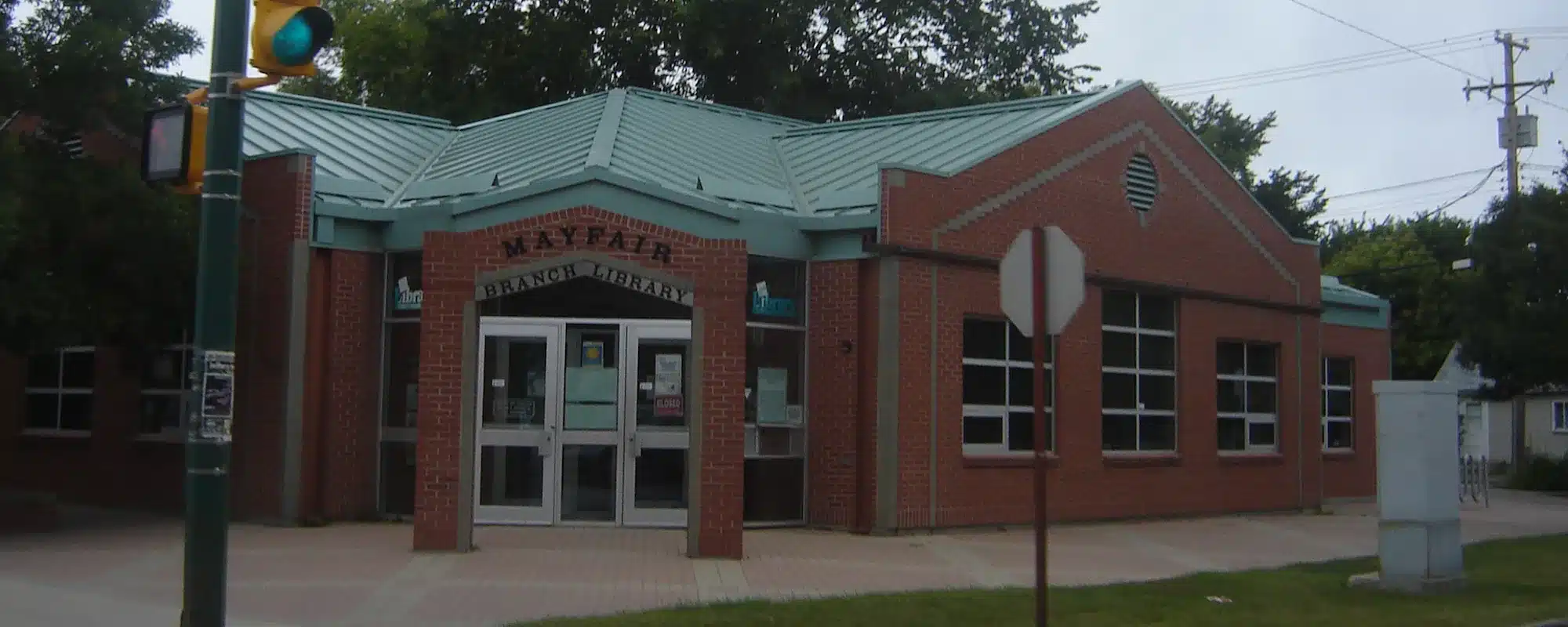
When Saskatoon’s temperature climbs past +30°C and the air inside your Mayfair home stops moving, the discomfort sets in fast. Mayfair is a neighbourhood built for people who value solid, unpretentious living, and on a July afternoon with the sun hammering down on 34th Street West near Mayfair School, a broken air conditioner shifts quickly from an inconvenience to a genuine health concern. Unlike newer subdivisions on the city’s fringes, Mayfair’s older homes carry decades of wear on their mechanical systems, and when an AC fails here, the causes are almost always predictable once you know what to look for.
More than one-third of Mayfair’s homes were built between 1946 and 1960, and a meaningful portion predate that era entirely. Systems that were retrofitted into these post-war bungalows in the 1970s and 1980s are now pushing 40 to 50 years of service, well past the standard 12 to 15 year lifespan for central air conditioning equipment. On a hot afternoon near A.H. Browne Park on 37th Street, you should not have to choose between sweating through the night and gambling thousands on a repair you are not sure you need. Pro Service Mechanical has been diagnosing and repairing AC systems in Mayfair’s older homes long enough to know exactly which components fail first, what they cost to fix, and when a repair genuinely makes sense versus when it does not.
R-22 Air Conditioner Retrofits Still Running in Mayfair Won’t Last
In homes built between 1946 and 1960, the symptoms of AC failure tend to follow a familiar pattern. The most common early sign is warm air blowing from registers even when the thermostat is set correctly. In Mayfair’s tightly built post-war bungalows, where ductwork runs through crawlspaces and attics that see temperature extremes year-round, this often points to a refrigerant leak or a failing compressor rather than a thermostat issue. Do not adjust the thermostat and wait it out. Call for a diagnostic before a manageable component failure becomes a full system loss.
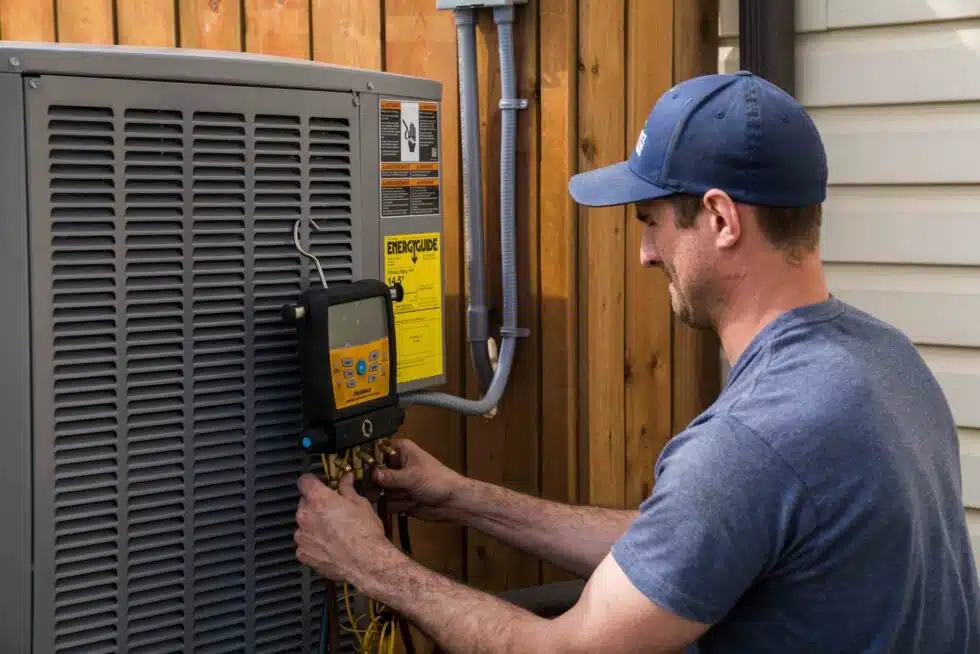
Weak or restricted airflow is another early warning that Mayfair homeowners should take seriously. When your system is blowing but not actually cooling the space, the evaporator coil may be partially frozen or the blower motor may be losing efficiency. Both problems are repairable, but they tend to worsen quickly in Saskatoon’s dry summer heat. Ice on the coil, visible near the air handler unit, is a specific sign that refrigerant levels are low or that airflow is being blocked, two conditions that put compressor health at risk if left uncorrected.
Strange noises deserve immediate attention in systems of this age. A hard-start hum when the unit tries to kick on points to a failing capacitor or contactor, which are among the least expensive repairs in the HVAC world but among the most commonly ignored. A hissing or bubbling sound coming from the refrigerant lines almost always means a leak, and in an older R-22 system, a refrigerant leak is a serious cost event. Grinding or screeching from the outdoor unit usually signals a fan motor bearing failure. Each of these sounds has a specific cause and a specific repair cost range.
Unexpectedly high hydro bills in summer are a quieter symptom but no less telling. When a compressor is working harder than it should to compensate for low refrigerant or a worn contactor, electricity consumption rises noticeably. Mayfair residents in older homes who notice their power bills climbing without an obvious reason should consider an AC diagnostic before the bill gets worse and the system fails entirely on the hottest day of the year. For information on proactive maintenance that can prevent these situations, see our guide on the best time to service your air conditioner.
Component Failures in Mayfair, Saskatoon’s Older Air Conditioning Systems
Capacitor and contactor failures account for a large share of AC repair calls in Mayfair’s older homes. These are electrical components that handle the high-voltage switching and startup energy that compressors and fan motors need to run. In systems that have cycled through 30 or more Saskatchewan winters, capacitors degrade from thermal stress and the extreme cold that causes oil thickening in R-22 systems. The good news is that capacitor and contactor replacements typically cost between $200 and $500 including labour, making them among the most cost-effective repairs available. They recur in aging units, but catching them early prevents the downstream damage that leads to compressor failure.
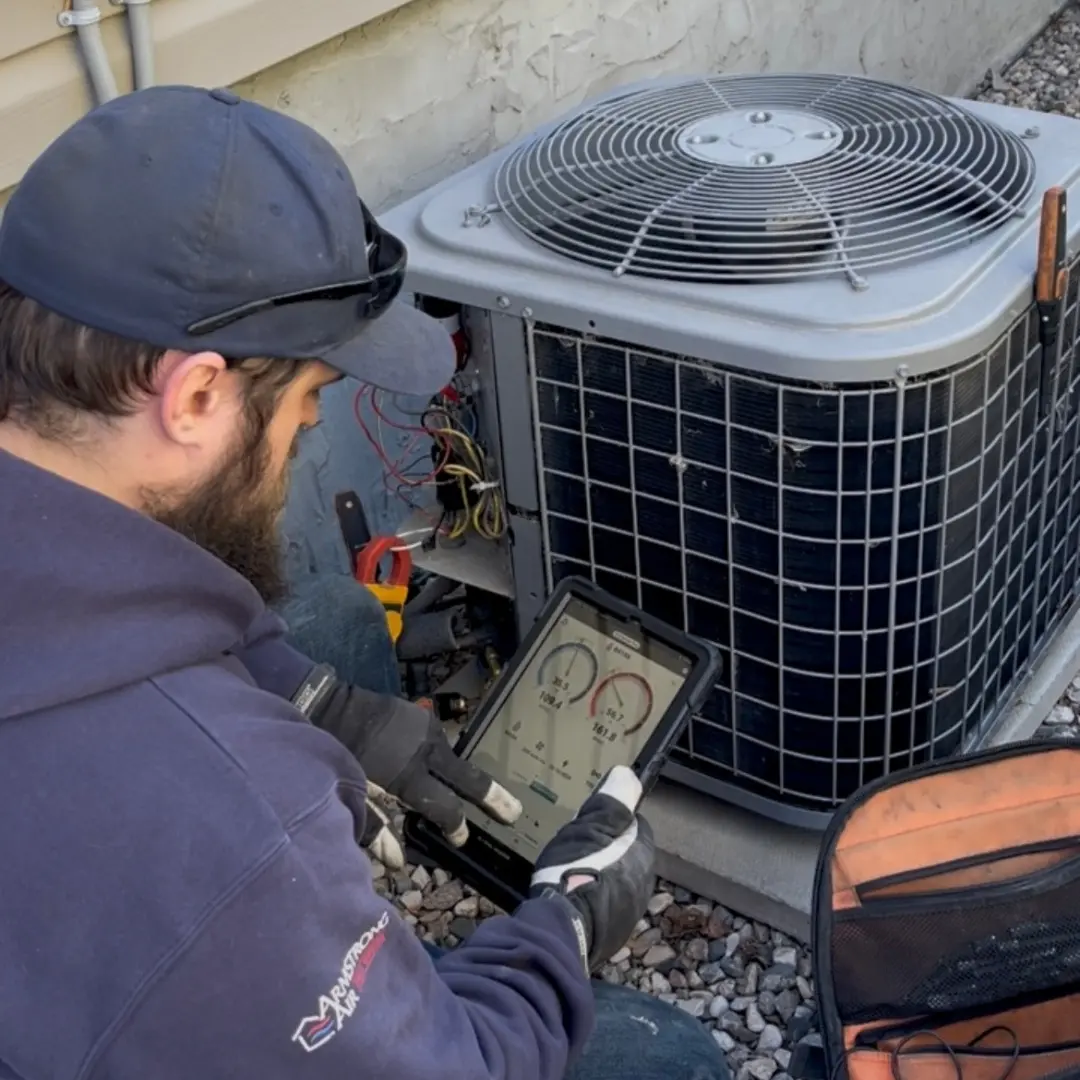
Refrigerant leaks are the defining repair challenge for Mayfair’s housing cohort. An estimated 80 to 90 percent of AC systems in pre-1990 Mayfair homes are still running on R-22 refrigerant, which was phased out from production and importation in 2020. What remains in the market comes from reclaimed stockpiles, and the cost reflects that scarcity. Where R-410A refrigerant costs approximately $20 to $50 per pound to add, R-22 now runs $100 to $300 per pound, pushing a typical leak repair and recharge into the $1,000 to $3,000 range. If a Mayfair home has a confirmed R-22 refrigerant leak, that repair cost needs to be weighed very carefully against system age before proceeding.
Fan motor failures are common in systems that have been exposed to Saskatoon’s full climate range. The condenser fan motor on the outdoor unit and the blower motor on the air handler both see thermal cycling from -40°C winters to +35°C summers, and that range accelerates bearing wear and winding degradation by roughly 20 to 30 percent compared to systems in milder climates. Fan motor replacements typically run $300 to $600 and are straightforward repairs when the rest of the system is in reasonable condition. Evaporator coil corrosion is a related concern in Mayfair’s older units, where dry prairie summers cause coils to crack and pit over time, leading to slow refrigerant losses that go undetected until cooling capacity drops noticeably.
Compressor failure is the most serious and costly failure mode in this housing era. The compressor is the mechanical heart of the cooling system, and in a 30 to 50 year old unit, compressor failure is often the endpoint rather than a mid-life repair. Compressor replacements can run $1,500 to $2,500 or more, and in older R-22 systems, a failed compressor frequently reveals underlying refrigerant contamination or line corrosion that compounds the cost. In most cases involving a compressor failure on a system over 15 years old, the repair-versus-replace conversation becomes necessary. The compressor rarely fails in isolation on an aged system; it is usually the last symptom in a sequence that includes low refrigerant, thermal stress, and electrical degradation.
Contactor wear is worth mentioning separately because it is so consistently overlooked. A contactor is a relay that closes the circuit to power the compressor and condenser fan motor when the thermostat calls for cooling. In Mayfair’s climate, where hard startup conditions are created by extreme cold during the off-season and the system is then asked to perform immediately during a summer heat wave, contactors wear faster than in moderate climates. A failed contactor can mimic a compressor failure, which is one reason that professional diagnostics matter. A $200 to $400 contactor repair versus a $2,000 compressor replacement is a decision that starts with correctly identifying which component has actually failed. Our AC repair services include full component-level diagnostics before any repair is recommended.
How Pro Service Mechanical Diagnoses an AC Problem in Mayfair
When a technician arrives at a Mayfair home for an AC diagnostic, the process follows a deliberate sequence rather than guessing at the most expensive component first. The first check is always electrical: supply voltage, thermostat operation, and the condition of the capacitor and contactor. These are the most common and least expensive failure points, and confirming or ruling them out takes minutes. If the electrical components check out, the technician moves to refrigerant pressure readings, which quickly reveal whether the system is holding a proper charge or losing refrigerant through a leak. Airflow across the evaporator coil is checked next, followed by compressor amp draw, which shows whether the compressor is working within normal parameters or straining against an underlying problem. The diagnostic fee ranges from $75 to $200 depending on the complexity of the system, and that fee is applied toward the repair if you proceed. No component is condemned without testing, and no repair is recommended without a clear explanation of what failed and why.
The sequence matters because skipping steps leads to misdiagnosis, and misdiagnosis in an older R-22 system can result in expensive refrigerant being added to a system that has a leak, which wastes both money and a dwindling resource. Pro Service Mechanical technicians carry refrigerant certification and handle R-22 in compliance with all current regulations governing its use and disposal. For more detail on the broader scope of our air conditioning services in Saskatoon, including maintenance programs that can catch these failures before they happen, visit our main air conditioning page.
A Repair Call on 37th Street: How a Capacitor Swap Saved a Mayfair Homeowner Thousands
Last July, Karen M. on 37th Street called Pro Service Mechanical when her 22-year-old central AC stopped cooling on a +33°C afternoon. She had already been quoted a compressor replacement by another service provider and was preparing to spend over $2,000. Our technician ran through the full diagnostic sequence and found the compressor itself was healthy. The actual failure was a blown run capacitor, a $240 repair that had the system cooling again within the hour. Karen’s system had the classic symptom profile: the unit was humming on startup but tripping off without completing the cooling cycle, a pattern that sounds like compressor failure but is often a capacitor issue. A proper diagnostic sequence told the difference. That capacitor swap saved Karen approximately $1,800 and bought her aging system additional useful life while she plans for a future replacement on her own timeline.
Why Mayfair Homeowners Call Pro Service Mechanical for AC Repairs
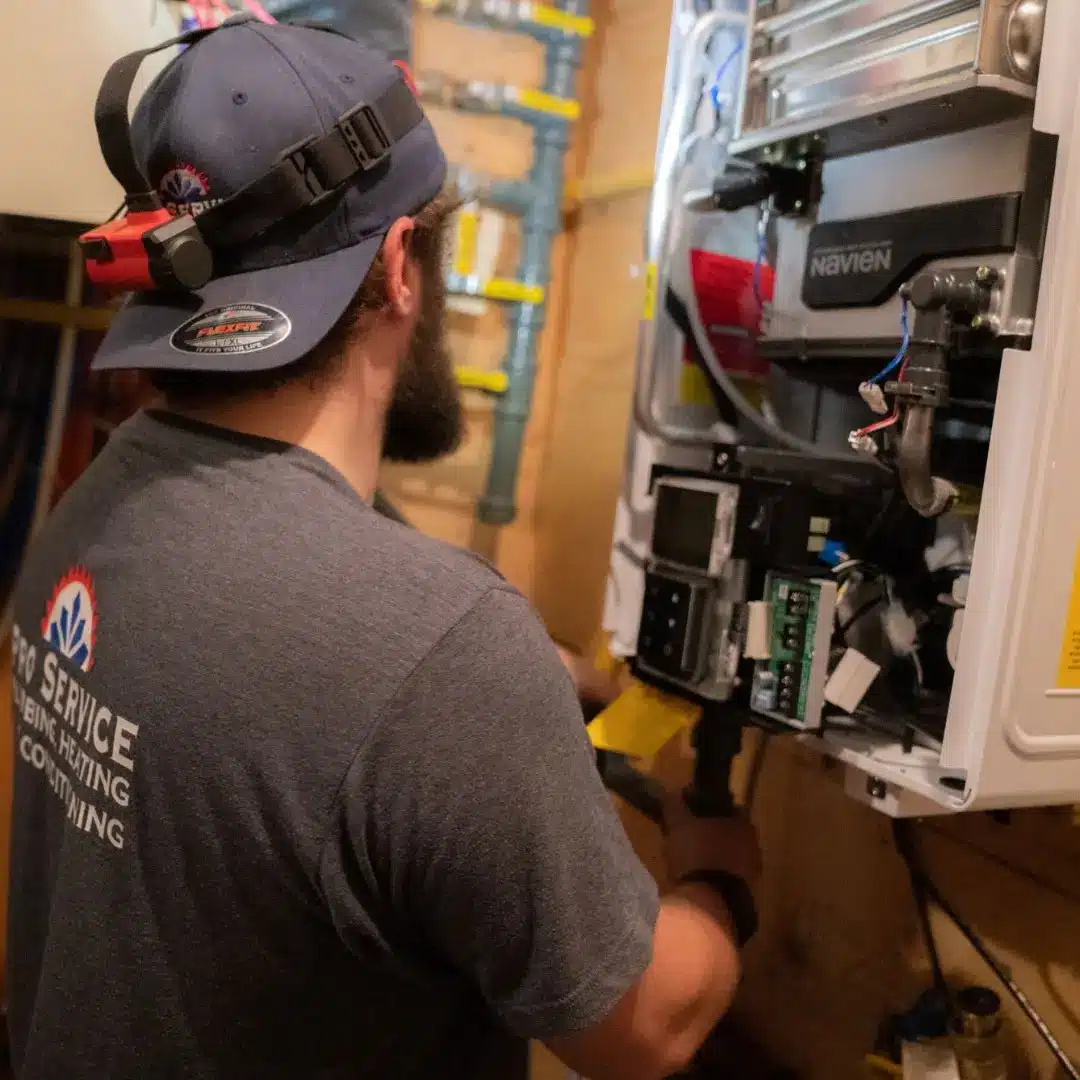
Every technician dispatched by Pro Service Mechanical to Mayfair holds TSASK gas fitter licensing and refrigerant handling certification. In an older neighbourhood where R-22 systems are still the majority, proper refrigerant certification is not a formality. It determines whether a technician can legally and safely handle the refrigerant in your system, test for leaks, and advise accurately on whether a recharge makes economic sense. Working with an uncertified technician on an R-22 system creates legal and safety risks that no cost saving justifies.
We maintain in-stock inventory of the most common repair components for Saskatoon-era HVAC equipment, including capacitors, contactors, and fan motors sized for the units commonly found in Mayfair’s post-war homes. This means same-day repairs are possible in the majority of cases rather than waiting days for parts to arrive. When your AC fails during a Saskatoon summer heat wave, the difference between a same-day fix and a three-day wait is significant.
Diagnostic pricing at Pro Service Mechanical runs between $75 and $200, and the fee is credited toward the repair when work proceeds. There are no hidden charges, and no repair is recommended without first showing you what failed, what the repair involves, and what it will cost. For Mayfair homeowners who are price-conscious and want a clear picture before committing, that transparency matters. You will not receive a vague estimate followed by a surprise invoice.
Our response time for standard AC repair calls in Mayfair is typically one to two hours during normal operating conditions. Mayfair’s central location, just inside Circle Drive and close to the Idylwyld corridor, means our service vehicles can reach most addresses quickly. For more on how we maintain and repair the full range of home mechanical systems, including the heating systems that carry Mayfair homes through Saskatchewan winters, visit our heating services page.
The 50% Rule for Repair-vs-Replace Decisions on Mayfair’s Older AC Systems
The standard industry guideline for repair-versus-replace decisions is the 50% rule: if the cost of the repair exceeds 50% of the value of a replacement system, replacement is generally the wiser long-term investment. A related formula multiplies the age of the system by the proposed repair cost. If that number exceeds $5,000, replacement typically makes more financial sense than continuing to invest in an aging unit. For a 25-year-old system facing a $300 repair, the math clearly favours repair. For a 20-year-old system facing a $1,500 R-22 refrigerant leak repair, the calculus shifts considerably toward replacement.
For Mayfair specifically, these numbers matter because the neighbourhood’s pre-1980 homes have systems that are in many cases already beyond their design lifespan. A unit that was retrofitted into a 1955 bungalow in 1985 is now 40 years old. Even if a capacitor replacement brings it back to life today, the compressor and evaporator coil on a system of that age are candidates for failure within the next one to two seasons. Saskatoon’s climate accelerates this timeline. Thermal cycling from -40°C winters to +35°C summers fatigues compressors and contactors 20 to 30 percent faster than in moderate climates, shortening effective system lifespan by two to four years compared to national averages.
The repair-versus-replace decision also depends on refrigerant type. If your system is R-22 and has a confirmed refrigerant leak, you are facing the most expensive repair scenario in the current market. A leak repair plus recharge on an R-22 system can run $1,000 to $3,000, and that cost applies to a system with limited remaining life and no guarantee that the repaired leak will be the last one. In that scenario, the 50% rule almost always points toward replacement, and a fair diagnostic will tell you so clearly. For those ready to explore that path, our AC installation services page covers the options available for Mayfair’s older homes.
Even when the numbers clearly favour replacement, a proper diagnostic comes first. No responsible technician recommends replacement without confirming which component has failed and ruling out a simple, inexpensive fix. The capacitor story above is a real example of what happens when that step is skipped. A $240 repair nearly became a $2,000 misdiagnosis. Pro Service Mechanical runs the diagnostic before making any recommendation, and we will tell you honestly whether a repair makes sense or whether your money is better directed elsewhere.
Same-Day Emergency Air Conditioning Response in Mayfair and Nearby Neighbourhoods
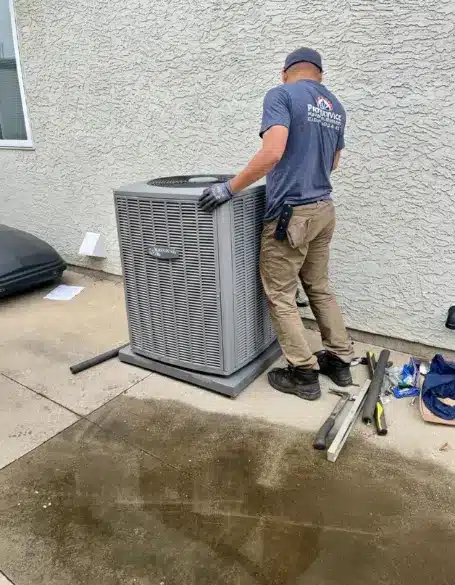
Saskatoon’s summer heat arrives quickly and concentrates demand on HVAC service providers across the city. When a heat wave pushes temperatures past +33°C for several consecutive days, service call volume climbs sharply and response times across the industry stretch out. Pro Service Mechanical maintains 24/7 emergency AC repair availability, and calls to 306-230-2442 are answered by a real person, not a voicemail. During normal summer conditions, we reach most Mayfair addresses within one to two hours. During peak heat events, we are transparent about realistic arrival windows and prioritize households with elderly residents or medical concerns. For a emergency AC repair situation, calling rather than submitting an online form gets you on the dispatch list faster.
Mayfair’s position within the older core of Saskatoon means its homes share many of the same repair patterns seen across adjacent neighbourhoods. If you have friends or family in nearby areas who are also dealing with aging AC systems, Pro Service Mechanical serves Fairhaven and Lakeview as well, with the same same-day service commitment and the same transparent diagnostic process.
If your AC has stopped cooling, is making unusual noises, or is running constantly without bringing the temperature down, do not wait to see if it resolves on its own. In Mayfair’s older systems, those symptoms almost always reflect a real component failure that will worsen with continued operation. Call 306-230-2442 to speak with a Pro Service Mechanical dispatcher, or use our Request for Service form to describe what your system is doing and schedule a diagnostic visit. Catching the problem early is nearly always cheaper than diagnosing it after a full shutdown on the hottest day of the summer.
Frequently Asked Questions About AC Repair in Mayfair
How much does an AC repair typically cost in a Mayfair home?
Repair costs in Mayfair vary significantly by component and refrigerant type. Capacitor and contactor replacements, the most common repairs in homes of this era, typically run $200 to $500 including labour. Fan motor replacements fall in the $300 to $600 range. The most expensive repair scenarios involve R-22 refrigerant, which now costs $100 to $300 per pound due to the 2020 production phaseout, pushing leak repairs and recharges into the $1,000 to $3,000 range. Compressor replacements on older systems can reach $1,500 to $2,500. The diagnostic fee at Pro Service Mechanical runs $75 to $200 and is credited toward the repair if you proceed, so you always know the full cost before committing.
Is it worth repairing a 25 to 30 year old AC system in Mayfair?
It depends entirely on what has failed. A $250 capacitor repair on a 28-year-old system may well be worth doing if the compressor and coil are in reasonable condition and there are no refrigerant leaks. However, the 50% rule provides a useful guide: if the repair cost exceeds half the cost of a replacement system, replacement is usually the better investment. The age-times-repair-cost formula is also helpful. Multiply the system age by the proposed repair cost. If the result exceeds $5,000, replacement typically makes more financial sense. In Mayfair specifically, Saskatoon’s extreme climate accelerates system wear by an estimated two to four years compared to moderate Canadian markets, which shifts the math toward earlier replacement for systems already beyond 20 years.
My Mayfair home has an older AC unit. How do I know if it uses R-22 refrigerant?
If your central AC was installed before 2010 and you have not had a major refrigerant system replacement since, there is a strong likelihood it operates on R-22. For homes built before 1980 in Mayfair, an estimated 80 to 90 percent of still-operating original AC systems use R-22. The refrigerant type is printed on a label attached to the outdoor condenser unit. Look for “HCFC-22” or “R-22” on that label. If it reads R-410A, your system uses the newer refrigerant and repairs involving recharges are considerably less expensive. R-22 was phased out from production and import in 2020, so any repair involving refrigerant on an R-22 system draws from dwindling reclaimed stockpiles at significantly higher cost. A technician can confirm the refrigerant type during the diagnostic visit.
What is the most common AC failure seen in Mayfair’s post-war bungalows?
Capacitor failure is the single most common repair call in homes of this era. The capacitor provides the startup and run energy that compressors and fan motors need, and in systems that have cycled through 30 or more Saskatchewan winters, thermal stress degrades capacitors over time. The symptom is usually a unit that hums on startup but trips off without completing a cooling cycle, which is often mistaken for compressor failure. That distinction matters enormously because a capacitor replacement costs $200 to $400, while a compressor replacement runs $1,500 to $2,500. The second most common issue in Mayfair’s older systems is refrigerant leaks, which are far more costly to address given the current R-22 supply situation. A proper diagnostic sequence identifies which of these is actually the cause before any work is recommended.
How quickly can Pro Service Mechanical respond to an AC emergency in Mayfair during a summer heat wave?
During normal summer conditions, Pro Service Mechanical typically reaches Mayfair addresses within one to two hours of a service call. Mayfair’s central location inside Circle Drive, close to the Idylwyld Drive corridor, makes it one of the more accessible areas in the city for our service vehicles. During extended heat waves when demand across Saskatoon spikes sharply, we are upfront about current wait times and prioritize emergencies involving elderly residents or medical conditions. Calling 306-230-2442 directly connects you to a live dispatcher around the clock, which gets you on the schedule faster than an online form submission during high-demand periods. If your system has completely stopped cooling and temperatures inside the home are rising, calling immediately rather than waiting gives you the best chance at same-day service.