
When the temperature climbs past 30°C along Saskatchewan Crescent and the humidity off the South Saskatchewan River settles into every corner of your home, a failing air conditioner stops being an inconvenience and becomes an urgent problem. City Park’s older character homes, many of them built in the decades following the Yorath Plan era of 1913 to 1930, were never designed with central cooling in mind. When a retrofit system quits on a July afternoon near Kinsmen Park, you need a technician on-site quickly, not a sales pitch about replacement equipment.
At Pro Service Mechanical, we understand what makes City Park’s cooling challenges distinct. With 76% of dwellings in this neighbourhood predating 1980, and 41% built before 1960, the systems running in these homes carry decades of thermal stress, refrigerant wear, and deferred maintenance. Our repair-focused approach means we arrive, diagnose the actual fault, and fix it, so you can get back to enjoying Saskatoon’s summer rather than sweating through it. For AC repair services that respect the age and character of your home, City Park residents know who to call.
City Park’s 1980s–2000s Retrofits: How Many Cooling Seasons Remain?
The most common complaint we hear from City Park homeowners is warm air blowing from vents even though the system is running. In a pre-1980 home, this symptom nearly always points to one of three causes: low refrigerant from a slow leak, a failing compressor struggling to move heat, or a dirty evaporator coil that has lost its ability to absorb warmth from indoor air. None of these conditions fix themselves, and in our climate, every day you delay a diagnostic call is another day of compressor strain that can turn a $300 repair into a $1,500 one.
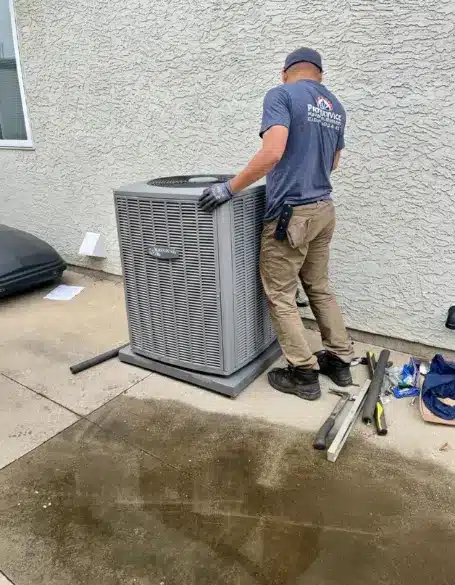
Ice forming on the coil or the refrigerant lines is another signal that older City Park systems show regularly. This sounds counterintuitive, but frozen coils mean the system is starved for either refrigerant or airflow, causing the coil temperature to drop below the dew point and lock up. Once ice forms, airflow collapses completely and the compressor overheats. If you see frost on any part of your outdoor unit or on the copper lines running into your home, shut the system off and call for same-day service before the compressor is damaged.
Strange noises deserve the same urgency. A grinding or rattling sound from the outdoor unit typically signals a failing fan motor bearing. A clicking that repeats on start-up but never leads to cooling usually means the contactor is stuck or worn. A hissing or gurgling sound near the indoor unit often indicates refrigerant escaping through a cracked brazed joint, something that happens frequently in City Park’s older retrofitted systems after decades of Saskatchewan’s extreme freeze-thaw cycling.
Unexpectedly high power bills in July and August without a change in usage habits are a softer but equally important warning. When an aging system’s coils are dirty or refrigerant is slightly low, the unit runs far longer cycles to reach the thermostat setpoint, driving up electricity consumption well before the system fails outright. This is the kind of slow-burn failure mode that shows up disproportionately in City Park’s 1960s and 1970s homes, where maintenance histories are often incomplete and coil cleaning has been skipped for years at a stretch.
Component-by-Component AC Failures in City Park’s Pre-1980 Homes
City Park’s cooling systems are, in aggregate, among the oldest in Saskatoon. Understanding which part fails first, and why, is the difference between a $200 service call and a surprise $2,000 bill. Here is how the failure patterns break down across the main components in homes of this era.
Capacitors and contactors are the most frequent repair we complete in pre-1980 City Park homes. Dual-run capacitors weaken with every heat cycle, and after 10 to 15 years of Saskatoon summers, they lose the ability to start the compressor or fan motor reliably. The fix is straightforward: parts are stocked locally, and the repair typically runs $150 to $350 all-in. Contactors, the electrical switches that engage the compressor, pit and burn with repeated cycling and are similarly inexpensive to replace. If your system hums but does not start, a capacitor or contactor is the first thing a technician will check.
Refrigerant leaks are the dominant repair issue in this neighbourhood’s housing cohort. Brazed copper joints in systems installed before 2000 have been subjected to decades of thermal contraction and expansion between -40°C winters and +35°C summers, and pinhole leaks develop at fittings and coil bends over time. In a system still running R-22, a leak becomes an expensive problem: R-22 refrigerant now costs $180 to $300 per pound because production was phased out in 2020. A system that needs four pounds of R-22 just to recharge, before the leak is found and repaired, can reach $720 to $1,200 in refrigerant cost alone, with total repair bills often landing between $1,200 and $1,800. Systems on R-410A, found in post-2010 retrofits, stay far more affordable, with leak repairs typically running $350 to $800.
Fan motors on outdoor condenser units and indoor air handlers wear out from accumulated dust, heat, and vibration. City Park’s large elm trees, while beautiful along the boulevard streets, shed debris that works its way into outdoor units and coats fan blades and motor windings. A failing fan motor typically makes noise first, then runs hot, then seizes. Replacement costs run $150 to $350 depending on the unit type. Catching a motor early from a noisy bearing saves the compressor, which relies on the condenser fan to stay cool.
Compressor failures are the costliest repair in this cohort and usually follow a chain of smaller ignored problems: low refrigerant running the compressor without adequate oil circulation, overheating from a failed condenser fan, or electrical damage from a failed capacitor forcing repeated hard starts. Compressor replacement runs $350 to $800 for the part alone, and in a system that is 20 or more years old, the decision to repair or replace the entire unit becomes a real conversation. Evaporator coil problems, including corrosion from acidic condensate and dirt bridging between fins, reduce cooling capacity progressively and eventually cause freeze-up cycles that strain every other component. Coil cleaning or replacement rounds out the typical repair picture for City Park’s older systems.
How Pro Service Mechanical Diagnoses Your City Park AC Repair
A technician from Pro Service Mechanical arrives with a structured diagnostic checklist that moves from the least expensive possible fault to the most expensive, protecting your repair budget at every step. The process begins at the electrical panel: we confirm power is reaching the unit and check for tripped breakers or blown fuses. We then move to the capacitor and contactor, testing capacitance with a meter and inspecting contactor contacts for pitting. If electrical components check out, we move to refrigerant pressure readings on both the high and low sides. Pressure readings tell us whether refrigerant is low, whether the compressor is building adequate pressure, and whether the expansion valve or orifice is restricting flow. From there we assess coil condition, fan operation, and thermostat calibration.
The diagnostic fee runs $75 to $200 depending on system complexity and is credited against the cost of any repair we complete the same visit. We believe you deserve to know exactly what is wrong before committing to any work, which is why we explain findings in plain language and give you a written quote before touching anything else. You can also review the best time to service your system to understand how seasonal timing affects both availability and repair costs in Saskatoon.
A City Park Repair Call That Saved a Homeowner $3,000
Earlier this summer, we received a call from David K. on Saskatchewan Crescent West. His 2003-era central AC had stopped cooling entirely overnight, and he was dreading the possibility of a full replacement given the age of the unit. Our technician arrived within two hours, ran through the diagnostic sequence, and identified a failed dual-run capacitor combined with a contactor that had burned through one face. Both components were on the truck. The repair was completed in under 90 minutes for $285 total, diagnostic fee included and credited. David’s compressor was in solid condition, the coils were clean, and with a good capacitor restoring proper start torque, the system pulled full refrigerant pressure on the first restart. “I was convinced I was looking at buying a whole new unit,” he told us. “Turns out it was a $20 part that killed the whole system.”
This outcome is common in City Park because the neighbourhood’s older homes often have systems that are mechanically sound except for one worn electrical component. The key is a thorough diagnostic rather than a rushed judgment. Our AC repair services are built around finding that one real fault rather than recommending the easiest or most profitable solution.
Why City Park Homeowners Trust Pro Service Mechanical for Air Conditioner Repair
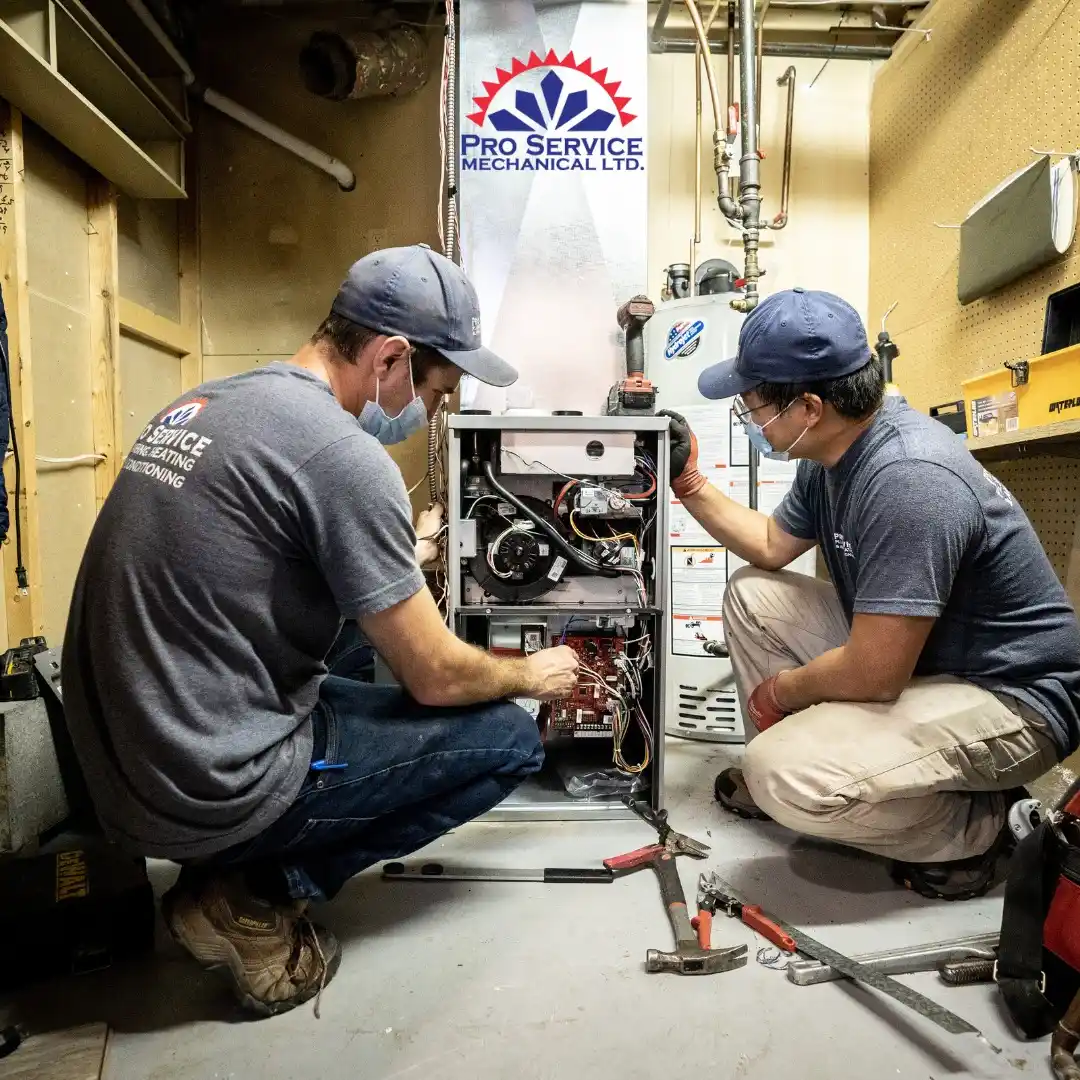
Pro Service Mechanical technicians are TSASK-certified gas fitters and hold refrigerant handling certification under federal regulations, meaning we are legally authorized to work with R-22, R-410A, and other regulated substances in your system. This matters in a neighbourhood where a significant portion of systems are still running legacy refrigerants. An unlicensed technician who tops up an R-22 system without finding and repairing the underlying leak is not just wasting your money, they are handling a regulated substance without legal authority.
We stock common repair parts, including capacitors, contactors, fan motors, and condenser fan blades, on our service vehicles, which is why we complete the majority of repairs in a single visit. There is no waiting a week for a part to be ordered when your house is sitting at 30°C. Our diagnostic fee of $75 to $200 is transparent and disclosed before we begin, and it is fully credited to any repair completed the same day.
Response times in normal summer conditions run one to two hours for City Park addresses. The neighbourhood’s central location near downtown Saskatoon means our technicians are rarely far away, and the compact geography between 25th Street and 33rd Street makes dispatching straightforward. For emergency AC repair during heat spikes, we operate a 24/7 line with real dispatchers, not voicemail. During extreme heat events response windows extend, but you will always speak to a person when you call 306-230-2442.
Beyond cooling, Pro Service Mechanical handles heating systems and full air conditioning maintenance, so we can address the complete mechanical picture of your home in a single relationship. City Park’s character homes often have heating and cooling systems that interact in ways that affect each other’s performance, and a technician who understands both is better equipped to diagnose the root cause of a failure rather than treating symptoms.
The 50% Rule and Repair-vs-Replace Decisions for City Park AC Systems
The industry standard for repair-versus-replace decisions is straightforward: multiply the age of the system in years by the estimated repair cost. If the result exceeds $5,000, replacement typically makes more financial sense than repair. A 20-year-old system facing a $300 capacitor repair scores $6,000 by this formula, but that does not mean replacement is the right call, because the formula is a starting point rather than a verdict. The condition of the compressor, the refrigerant type, and the history of prior repairs all feed into a complete picture.
For City Park specifically, the 50% rule becomes most relevant when a compressor failure appears in a system that is over 15 years old and still running R-22. In that scenario, even a successful compressor repair leaves you with an aging system dependent on a refrigerant that costs $180 to $300 per pound and will only become scarcer. Local technicians advise replacement in roughly 20% of legacy-system calls in City Park, particularly when the compressor has failed and R-22 recharging would be required repeatedly.
For the other 80% of calls, repair is the correct answer. A 15-year-old R-410A system with a failed fan motor has years of useful life remaining once that motor is replaced. A 25-year-old system with a refrigerant leak that can be properly brazed and sealed at the joint, without compressor damage, may run reliably for several more seasons with appropriate maintenance. The honest answer depends on a real diagnostic, not a rule of thumb applied over the phone.
We never recommend replacement before completing a proper diagnostic. Even when replacement ultimately makes sense, you deserve to know exactly what failed and why before making a decision that will cost thousands of dollars. If the diagnosis does point toward a new system, we can discuss AC installation services at that point, but we will not steer a conversation toward replacement when repair is the more sensible path. That is how Pro Service Mechanical has built its reputation across Saskatoon.
Same-Day Emergency AC Repair When City Park Summers Push Past 30°C
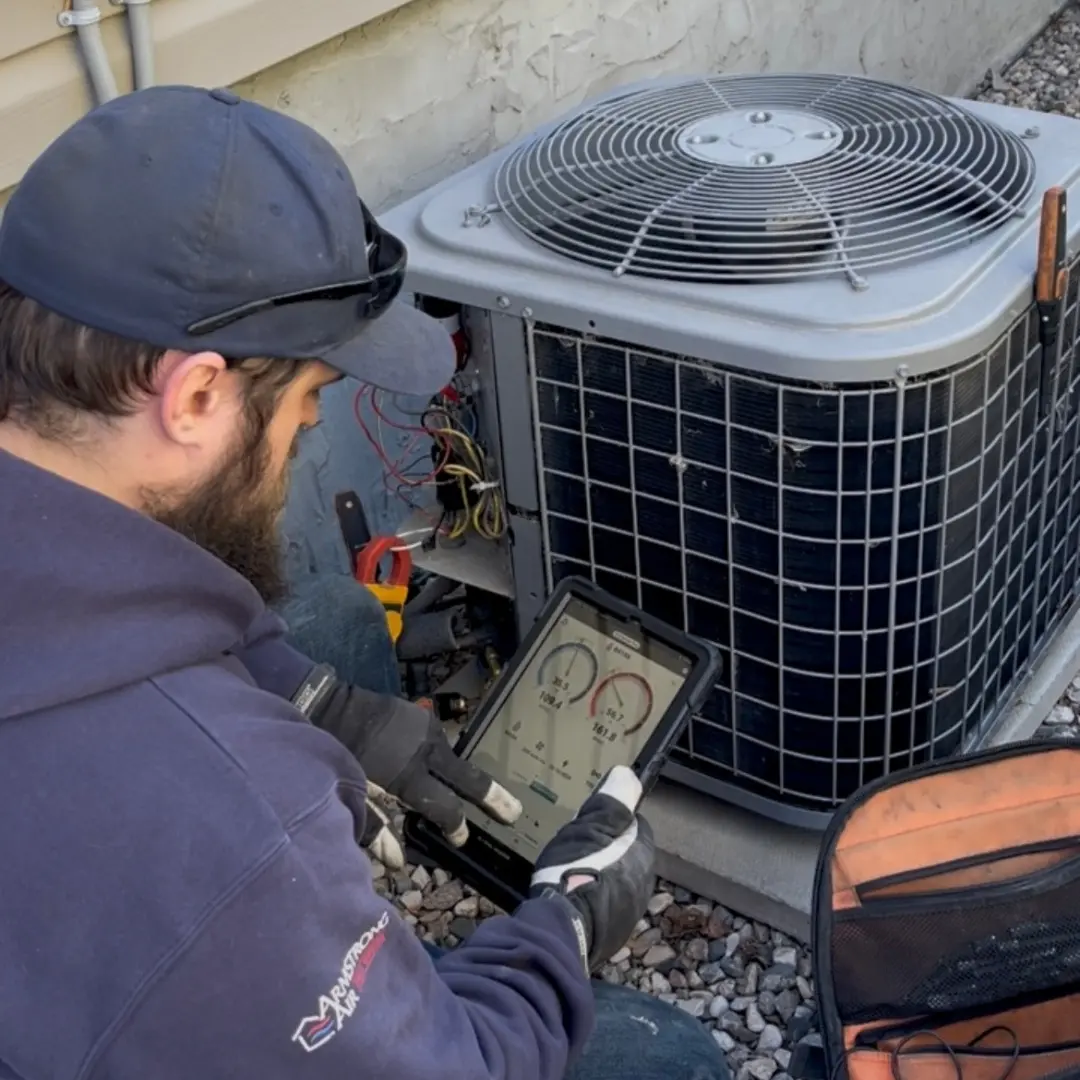
Saskatoon’s summer heat events are concentrated, intense, and often arrive with little warning. When outdoor temperatures reach 30°C or higher near the South Saskatchewan River, AC systems throughout City Park begin running continuously, and the units most likely to fail are the ones that have been carrying marginal components through several previous summers. Capacitors that were borderline in June quit in the third day of a July heat wave. Refrigerant systems that were slightly low in spring blow warm air when the outdoor coil temperature climbs past its design limit. These failures do not wait for business hours.
Pro Service Mechanical operates a 24/7 emergency line specifically for these situations. When you call 306-230-2442, a real dispatcher answers and begins coordinating a technician response. In normal summer conditions, City Park response times run one to two hours. During active heat events, demand across Saskatoon increases and response windows can extend, but we prioritize households with vulnerable residents including seniors, young children, and people with medical conditions. Describing your situation when you call helps our dispatcher triage accurately.
City Park sits centrally within Saskatoon’s older neighbourhoods, and many of our emergency calls come from this area and its surrounding communities. If you are in a nearby neighbourhood looking for the same fast repair response, we also serve residents in Fairhaven and Holliston. Whether you are dealing with a frozen coil at midnight or a compressor that quit at noon, submitting a Request for Service online or calling directly connects you to the same skilled team. Do not wait out a Saskatoon heat wave with a broken system; the compressor damage from running a low-refrigerant unit through a hot night costs far more than a same-day diagnostic.
Frequently Asked Questions About AC Repair in City Park
How much does an AC repair typically cost for a pre-1980 City Park home?
Repair costs in City Park vary widely depending on what has failed. Capacitor and contactor replacements, the most common repair in older homes, run $150 to $350 including parts and labour. Fan motor replacements cost $150 to $350. Refrigerant leak repairs on R-410A systems run $350 to $800 for the repair itself. R-22 refrigerant leaks are significantly more expensive because the refrigerant now costs $180 to $300 per pound; a system that needs four pounds to recharge can face $720 to $1,200 in refrigerant cost alone, pushing total bills to $1,200 to $1,800. Compressor repairs range from $350 to $800 for the part. The diagnostic fee of $75 to $200 is credited against the repair total on the same-day visit, so you are not paying for diagnosis separately when you proceed with the fix.
What is the deal with R-22 refrigerant in City Park’s older systems?
R-22 was the standard refrigerant for residential air conditioners installed before approximately 2010. Federal regulations in Canada phased out R-22 production and import as of 2020, meaning the only supply remaining is from recovered and reclaimed stock. This has driven the price to $180 to $300 per pound, compared to R-410A at roughly $20 to $50 per pound. Most pre-1990 systems in City Park were originally designed for or retrofitted with R-22, and any leak in those systems creates a difficult financial decision. A small leak that can be found and sealed at low refrigerant loss may still be worth repairing, but a system that leaks a pound or more per season is on a path to replacement regardless of what the compressor condition looks like. Our technicians will always tell you the actual refrigerant type and leak rate before recommending a course of action.
How quickly can Pro Service Mechanical respond to an AC emergency in City Park?
In normal summer conditions, we target a one-to-two-hour response window for City Park addresses, helped by the neighbourhood’s central location near downtown Saskatoon. During active heat waves, when system failures spike across the city simultaneously, response windows can extend, and we dispatch based on urgency, with households including vulnerable residents prioritized. Our emergency line at 306-230-2442 operates 24 hours a day, seven days a week, and is answered by a real dispatcher rather than voicemail. Describing your situation clearly, including whether anyone in the home has a medical vulnerability, helps us triage your call accurately. Submitting a Request for Service online also queues your call in our dispatch system immediately.
Is it worth repairing a 25-year-old AC system in a City Park character home?
It depends entirely on what has failed and what refrigerant the system runs on. A 25-year-old system with a failed capacitor, a clean compressor, and a solid refrigerant charge can run reliably for several more seasons after a $250 repair; the math firmly supports fixing it. The same system with a failed compressor and an R-22 leak is a different story: compressor replacement plus repeated R-22 recharging at $180 to $300 per pound will cost more over the next two to three years than a replacement system. The 50% rule, where age in years multiplied by repair cost exceeding $5,000 suggests replacement, provides a starting framework, but the refrigerant type and compressor condition are the real deciding factors for City Park’s older systems. A proper diagnostic is always the first step before any replacement conversation.
What is the most common AC failure in City Park’s 1960s and 1970s homes?
In City Park’s pre-1980 homes, refrigerant leaks and capacitor failures are the top two repair calls, with refrigerant leaks being the dominant complaint. Decades of Saskatchewan’s extreme thermal cycling, from -40°C winters to +35°C dry summers, cause micro-cracks at brazed copper joints in older line sets and at evaporator coil bends. These develop slowly and often show up first as the system blowing slightly warm air before becoming a full cooling failure. Capacitor failures are equally common because the dual-run capacitor, which starts and runs both the compressor and the condenser fan, weakens with every heat cycle over its 10-to-15-year service life. Both failures are highly fixable when caught early, which is why calling for a diagnostic at the first sign of warm air or slow start-up often saves City Park homeowners from a much larger repair bill later.