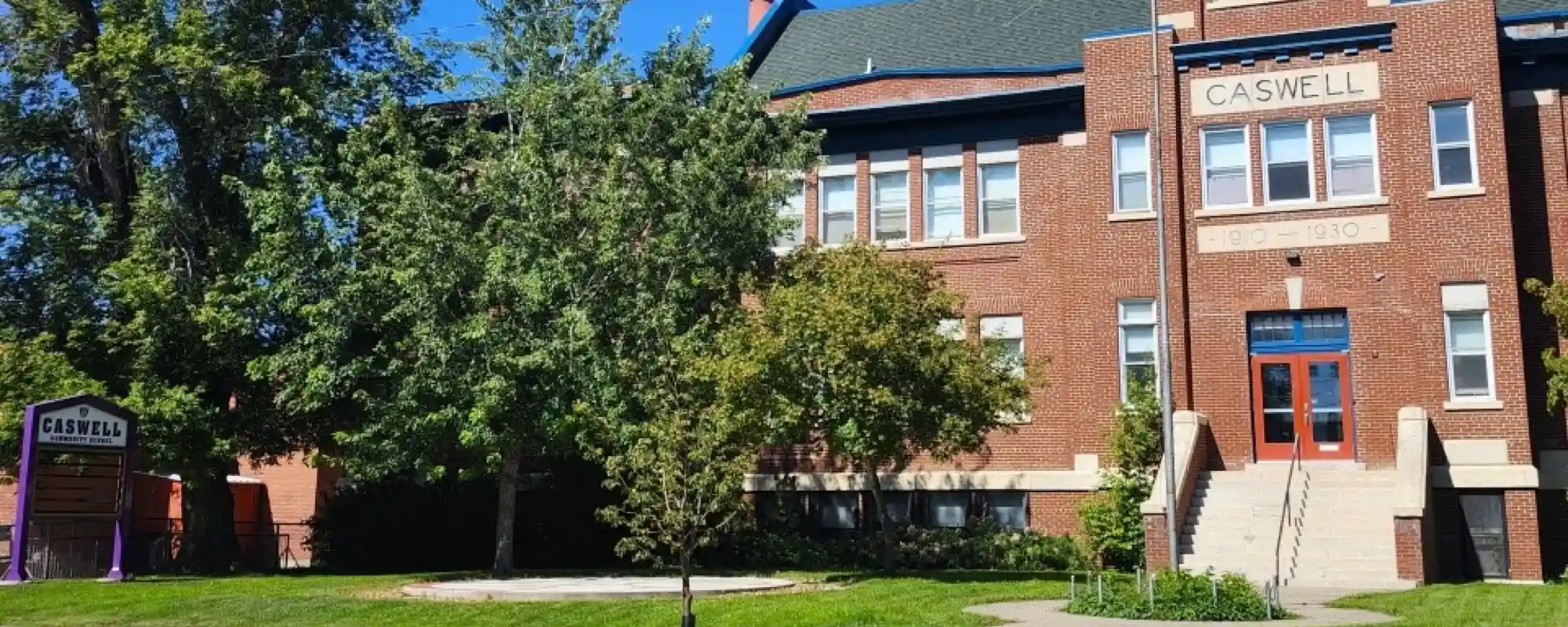
When temperatures climb past +30°C and your AC stops cooling somewhere between Willingdon Place and 30th Street West, the heat inside a Caswell Hill home can become genuinely oppressive within a few hours. These are century-old structures with thick plaster walls, original woodwork, and in many cases, HVAC equipment that has already seen decades of Saskatchewan extremes. A failed capacitor or a refrigerant leak on a July afternoon is not an inconvenience you can wait out. You need a technician on-site the same day, ideally within a couple of hours, not a booking window three days from now.
Caswell Hill is one of Saskatoon’s oldest neighbourhoods, developed from 1905 onward along tree-lined streets near Ashworth-Holmes Park and within walking distance of Bedford Road Collegiate. The character homes along Willingdon Road and 31st Street West are beautiful, but their age means the AC systems cooling them are often operating well past the point where component failures become routine. Whether your system is a retrofit added to an older home or a unit that came with a 1980s renovation, the repair patterns here follow a predictable sequence. Understanding what breaks first, what it costs to fix, and when to stop fixing is exactly what this page covers. For a broader overview of our services, visit Pro Service Mechanical.
Realities for Caswell Hill’s Pre-1960 Retrofit AC Systems
The single most consistent failure sign in a Caswell Hill home is simple: the air coming from your vents is warm, or barely cooler than the room itself. On a +32°C day, that is an unmistakable symptom. In homes this age, the most frequent cause is either a refrigerant leak, a failed capacitor preventing the compressor from starting, or a contactor that has burnt out under the electrical load. None of these announce themselves with dramatic noise. The system often runs, the fan often blows, but the cooling stops.
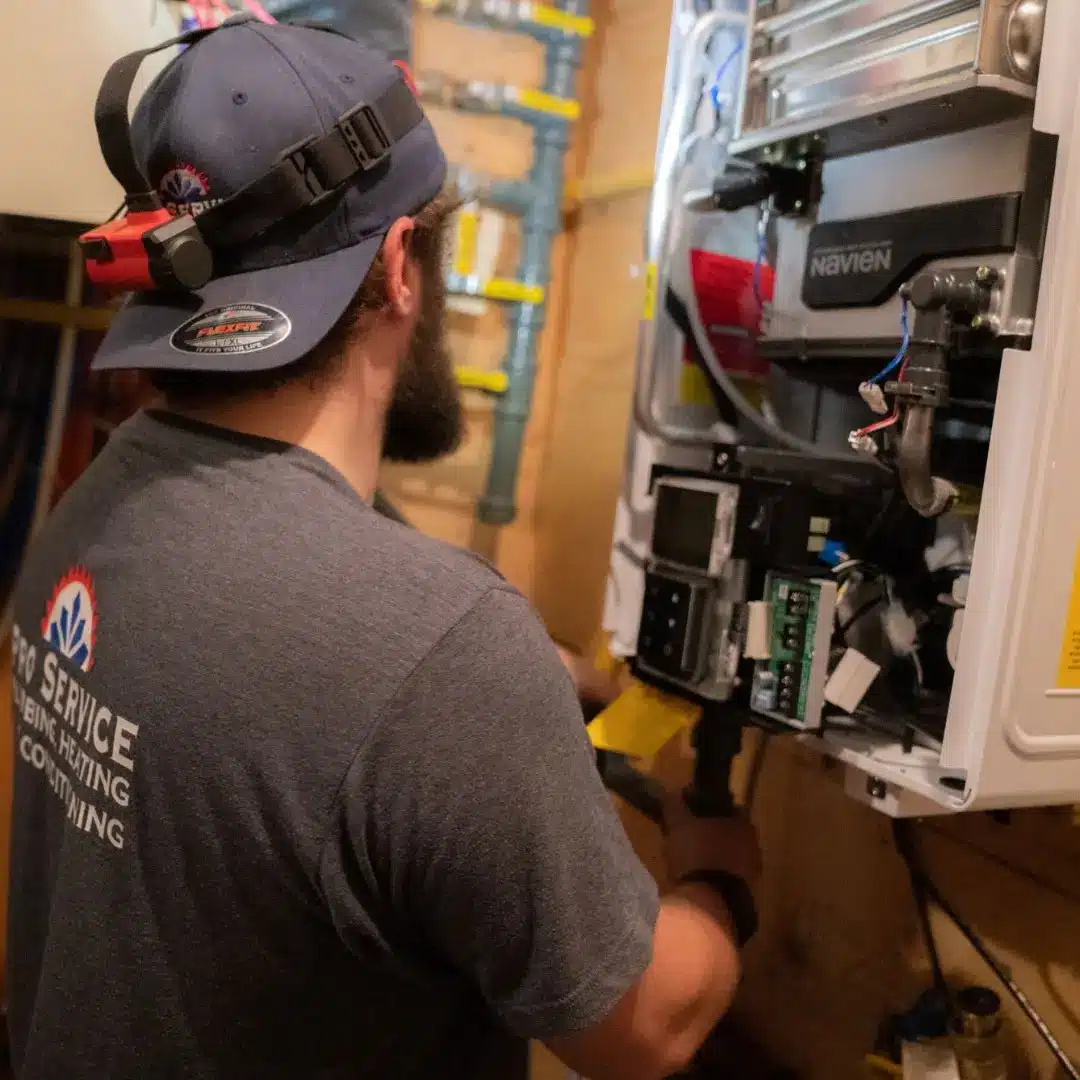
Ice forming on the refrigerant lines or on the evaporator coil is a second major warning sign. It sounds counterintuitive, but a frozen coil typically points to restricted airflow, a dirty filter left too long in an older duct system, or low refrigerant charge caused by a leak. In pre-1980 homes where ductwork was retrofitted rather than purpose-built, airflow restrictions are extremely common. The ducts were not designed for central air; they were adapted. That adaptation, over decades, creates pressure imbalances that stress components throughout the system.
Strange noises matter too. A grinding sound from the outdoor condenser unit usually means the fan motor bearings are failing. A clicking or chattering sound at startup often points to a contactor or capacitor issue. A high-pitched screeching during operation can indicate refrigerant pressure problems or a compressor under strain. Because Saskatoon’s summers swing rapidly from mild to intense heat, AC systems in Caswell Hill frequently go from dormant to full-demand overnight, and components that were marginal through the winter fail on the first genuinely hot week of the season. The best time to service your system is before that first heat spike, but if you missed that window, recognising these symptoms early limits how long you go without cooling.
High electricity bills with no obvious explanation are also a diagnostic signal worth taking seriously. When a system is losing refrigerant, running with a failing capacitor, or struggling through a partially seized fan motor, it draws more power to compensate. Homeowners sometimes attribute rising bills to rate increases before realising the AC is the source. If your bills have crept up over the past two summers and your home never quite reaches the set temperature, a diagnostic call is the right next step.
What Breaks First: AC Component Failures in Caswell Hill’s Older Homes
Capacitors are the single most common AC repair across all equipment vintages, accounting for roughly 30 to 40 percent of all service calls. In Caswell Hill, where many systems are between 15 and 30 years old, capacitor failure rates are at the higher end of that range. Capacitors store and release the electrical charge needed to start and run the compressor and fan motors. Saskatchewan’s temperature extremes, from -40°C winters where the equipment sits dormant to +35°C summers where it runs hard, are especially hard on capacitors. Replacement costs typically fall between $150 and $350 all-in, making this one of the most cost-effective repairs in the trade.
Refrigerant leaks are the second most common issue, responsible for roughly 25 percent of repair calls in systems over ten years old. This is where Caswell Hill’s housing era creates a specific complication. Any AC system installed before approximately 2010 may still use R-22 refrigerant, which was fully phased out of production in Canada as of January 1, 2020. R-22 still exists in the form of reclaimed stock, but it is expensive. Adding reclaimed R-22 to a leaking system without finding and repairing the leak can cost $400 to $800 or more and will only delay a return service call. Given that 76 percent of Caswell Hill homes were built before 1960, a large portion of the retrofit AC systems in this neighbourhood are old enough to have been installed during the R-22 era. If your system predates 2010, ask the technician to confirm your refrigerant type before any recharge begins. Our AC repair services always include refrigerant type identification as part of the initial diagnostic.
Fan motor failures account for around 15 percent of repairs. Both the condenser fan (outside) and the blower motor (inside) are vulnerable. Outdoor fan motors in Caswell Hill face an unusually wide temperature swing over the course of a year, and the dry prairie air is hard on motor bearings. Replacement costs range from $250 to $500 depending on the motor and the system’s age. Contactor failures are similarly common, around 10 to 15 percent of calls, and represent an inexpensive repair at $150 to $250. The contactor is essentially the high-voltage switch that tells the compressor and condenser fan to start. Heat and electrical cycling wear them out, and a burnt contactor is a routine finding in any system over ten years old.
Evaporator coil failures and compressor failures are at the more expensive end of the spectrum. A leaking or corroded evaporator coil, found inside the air handler, typically costs $600 to $1,200 to repair or replace. Compressor failures are the most expensive single-component repair, ranging from $1,200 to $2,500 or more depending on system size. Compressors in systems over fifteen years old are rarely worth replacing on their own, which is where the repair-versus-replace conversation begins. In Caswell Hill, where many systems are approaching or past that threshold, a compressor failure often triggers an honest discussion about system age rather than a straight repair quote.
On the refrigerant question specifically: if your system uses R-22 and has a confirmed leak, the repair decision becomes more complex. Leaking R-22 systems can still be repaired by fixing the leak and recharging with reclaimed refrigerant, but the cost is higher than an equivalent R-410A repair, and each recharge depletes a dwindling supply. For systems on R-22 that are also older than fifteen years, the economics shift toward considering an AC installation rather than continued repair. A technician can walk you through those numbers transparently after the diagnostic.
How Pro Service Mechanical Diagnoses an AC Repair in Caswell Hill
Our diagnostic process follows a consistent sequence designed to find the real cause of failure rather than guess at it. The technician starts at the thermostat and electrical panel, confirming the system is receiving proper power and control signals. They then move to the outdoor condenser unit, checking the capacitor, contactor, and refrigerant pressures with gauges. Static pressure and temperature differential across the evaporator coil are checked inside. If the unit is running but not cooling, refrigerant pressures tell the story immediately: low suction pressure points to a leak or a restriction; high head pressure suggests an airflow problem at the condenser or a refrigerant overcharge. The diagnostic fee for a Caswell Hill service call is transparent and disclosed before work begins, typically in the $75 to $200 range depending on the complexity of the assessment. That fee is applied to any repair approved on the same visit. Our full range of air conditioning diagnostic and repair capabilities is available to Caswell Hill residents year-round.
In homes where ductwork is a retrofit, the technician also checks static pressure in the supply and return ducts, since undersized or leaking ducts cause symptoms that look like refrigerant or component failures. Getting the diagnosis right the first time matters more in older homes, where one misread symptom can result in an unnecessary parts replacement that does not fix the actual problem.
A Repair Call on 31st Street West: Capacitor Swap Saves a Summer
“It was the third week of July and the house hadn’t cooled below 27 degrees in two days. I was sure the compressor was gone because the outdoor unit wasn’t running at all. The Pro Service Mechanical tech showed up the same afternoon, checked the capacitor in about five minutes, and told me that was it. One capacitor. He had the part on the truck, swapped it out, and the system was blowing cold within twenty minutes. Cost me just over $300 including the service call. I’d been convinced I was looking at a new unit.” Sandra K., 31st Street West, Caswell Hill.
This scenario, a capacitor failure presenting as a completely dead system, is one of the most common calls in Caswell Hill during July and August. Because the capacitor is required for compressor startup, when it fails the compressor simply will not engage, and the system appears completely dead. Many homeowners in this situation assume the worst. A proper diagnostic distinguishes a $300 capacitor repair from a $2,000 compressor misdiagnosis, and that distinction matters enormously when you’re weighing repair costs against a system’s remaining lifespan.
Certified, Stocked, and Ready: Why Caswell Hill Homeowners Call Pro Service Mechanical
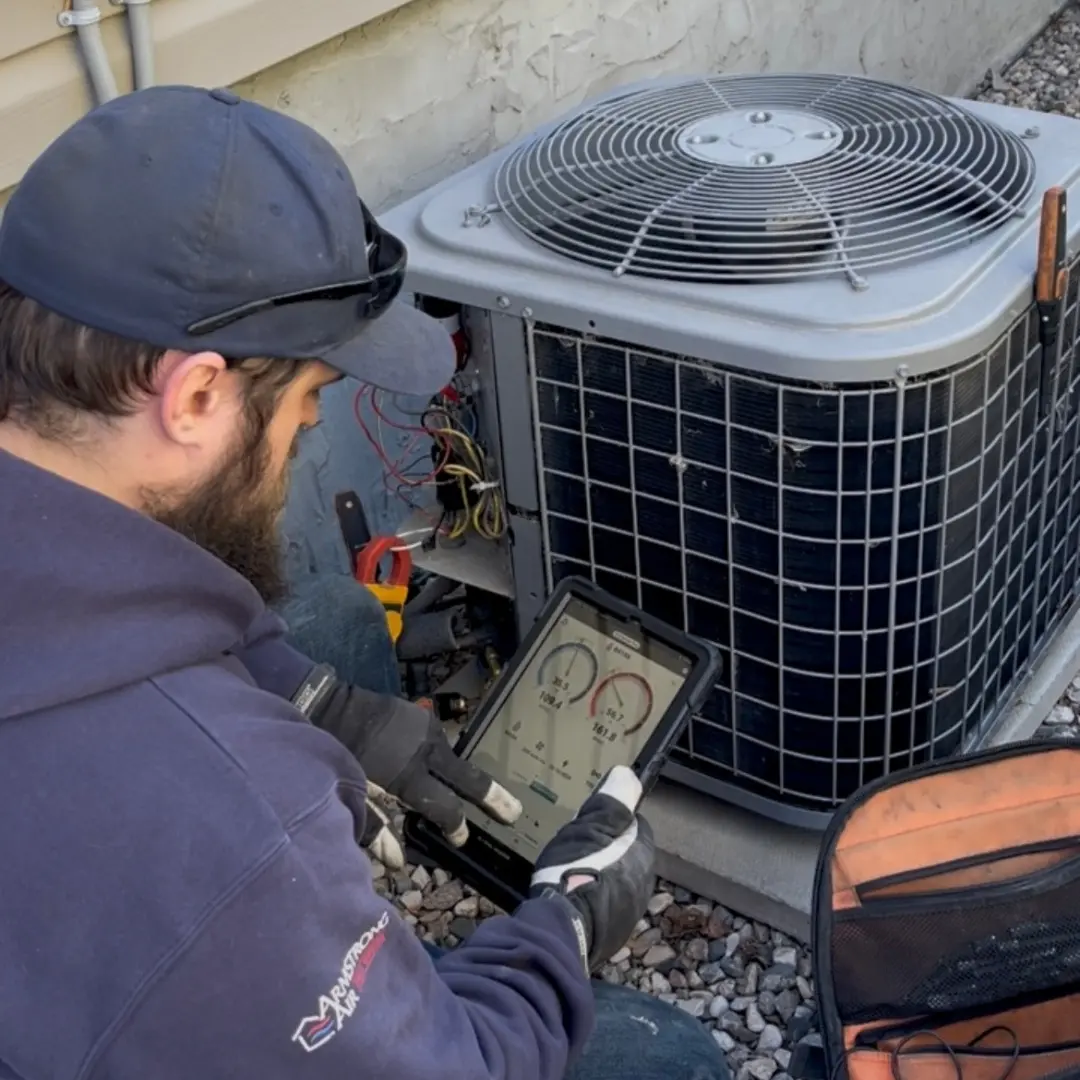
Pro Service Mechanical technicians hold TSASK gas fitter licensing and carry full refrigerant handling certification under Environment and Climate Change Canada’s regulations. That certification matters specifically for R-22 work. Reclaimed R-22 refrigerant can only be legally handled and recharged by certified technicians, and in a neighbourhood like Caswell Hill where a meaningful number of older systems are still running on R-22, that credential is not a formality. It is a requirement for a legal, safe repair.
Our service vehicles are stocked with the capacitors, contactors, fan motors, and refrigerant types most commonly needed in Caswell Hill’s equipment profile. The practical benefit is that most repairs do not require a return trip for parts. A same-day diagnostic that confirms a capacitor failure is typically also a same-day repair, not a two-visit job. For homeowners in the middle of a heat event, that difference is significant.
Transparent diagnostic fees, disclosed before the technician begins work, are a non-negotiable part of how we operate. The fee range for a Caswell Hill call is $75 to $200 depending on system complexity. There are no surprise charges for confirming the problem. If the repair is approved on the same visit, the diagnostic fee is applied to the repair total. If you decide not to proceed, you pay only for the diagnostic. No pressure, no inflated quotes designed to push a replacement.
Response times during normal summer conditions average one to two hours for Caswell Hill, which sits centrally within our Saskatoon service area. During heat waves when call volume spikes, we prioritise households with medical vulnerabilities. For true emergencies, our emergency AC repair line operates around the clock. Also, because your AC and your heating systems share components like the blower motor, electrical panel connections, and ductwork, any repair visit is a good time to flag concerns about both.
Applying the 50% Rule to Caswell Hill’s Aging AC Systems
The 50% rule is the standard industry benchmark for repair-versus-replace decisions: if the cost of a repair exceeds 50 percent of the value of the remaining system, replacement is the more economically sound choice. A practical version of this formula multiplies the system’s age in years by the repair cost. If that number exceeds $5,000, replacement typically makes more financial sense than repair. A fifteen-year-old system facing a $400 capacitor repair clears that threshold easily. The same fifteen-year-old system facing a $1,500 evaporator coil replacement is in a grey zone. A $2,000 compressor replacement on a system that age almost always fails the test.
In Caswell Hill, where the dominant housing cohort dates to before 1960 and where central air was most commonly added as a retrofit in the 1990s and early 2000s, many AC systems are now approaching or past the fifteen to twenty year mark. Saskatchewan’s climate accelerates wear relative to milder markets. Systems that see -40°C winters followed by +35°C summers cycle through thermal stress that significantly exceeds what the same equipment would experience in, say, a Vancouver basement. Compressor seals, motor windings, and refrigerant line connections all degrade faster under those conditions. A realistic remaining lifespan assessment is part of every Pro Service Mechanical repair quote for systems in this age range.
The most important thing to know is that even when the honest answer is replacement rather than repair, the right process still starts with a proper diagnostic. A technician who quotes compressor replacement without confirming that is the actual failed component is not serving your interests. The diagnostic comes first, the repair cost comes second, the system age and condition come third, and then the decision is yours to make with complete information.
For context, minor repairs like capacitor or contactor replacements typically cost $150 to $350. Mid-range repairs like refrigerant leak detection and recharge or fan motor replacements fall in the $350 to $800 range. Major repairs involving evaporator coils or compressors range from $800 to $2,500. Knowing where a specific repair lands relative to your system’s age allows you to make a genuinely informed decision rather than a pressured one. Submit a Request for Service and we will get a technician to your door for a transparent assessment.
Same-Day AC Repair When Caswell Hill’s Summer Heat Hits
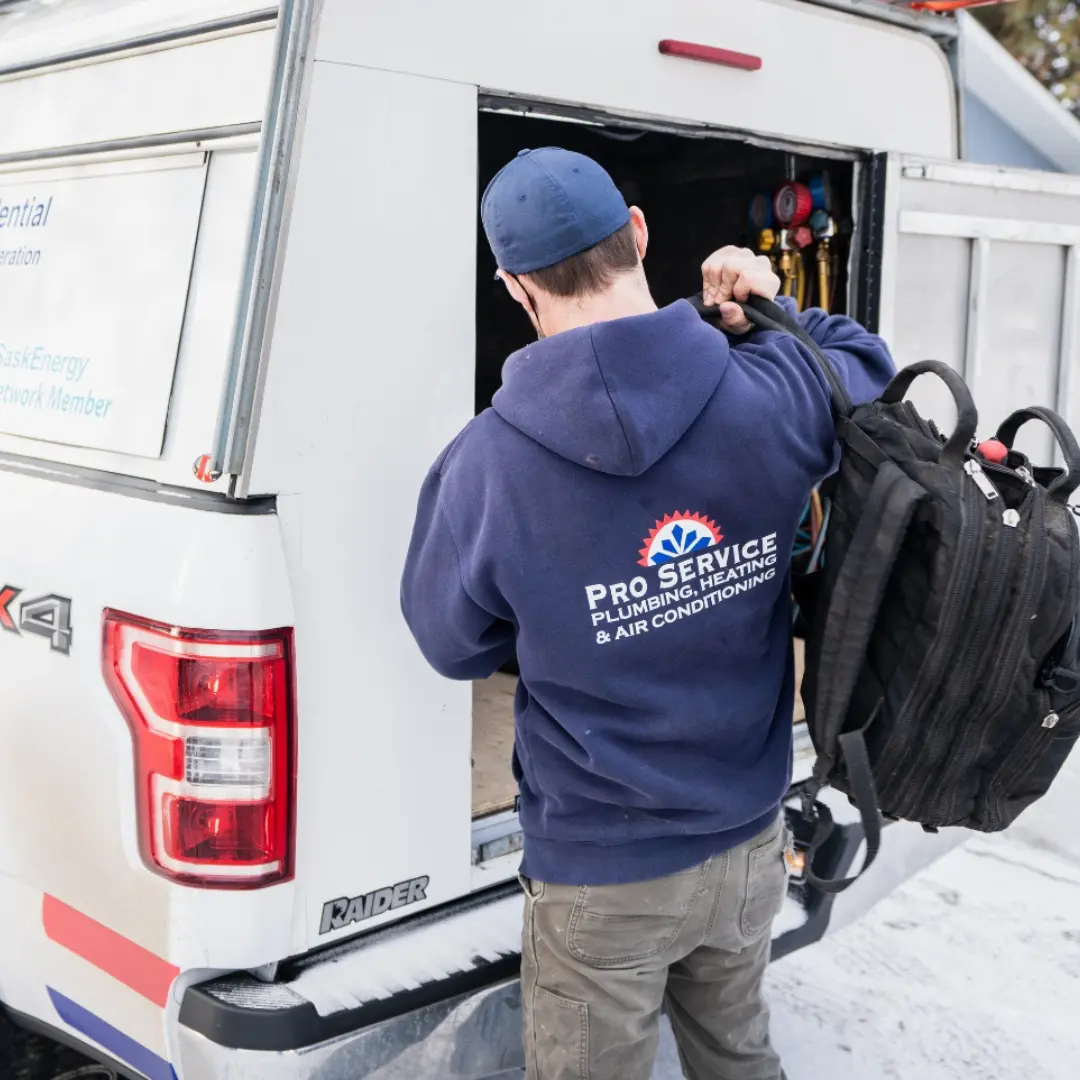
Saskatoon summer heat events tend to arrive quickly and peak for several consecutive days. When the forecast hits +33°C and your AC fails overnight, you are not dealing with a manageable inconvenience by morning. You are dealing with a home that will reach dangerous interior temperatures within hours, particularly in older Caswell Hill homes with limited insulation and original single-pane windows in some cases. Same-day response is not a premium add-on in that context; it is the baseline expectation. Call Pro Service Mechanical at 306-230-2442 and during normal summer conditions, expect a technician within one to two hours.
During declared heat events, call volume increases significantly across Saskatoon. During those periods, our dispatch prioritises households with elderly residents, infants, or medical conditions that make heat exposure dangerous. If your situation qualifies, mention it when you call. For all other calls during peak periods, we work through the queue as quickly as possible, and our stocked vehicles mean most calls remain same-day repairs rather than diagnostic-only visits. Our emergency AC repair line is staffed around the clock, seven days a week. For non-emergency scheduling, 306-230-2442 connects you with our dispatch team during regular business hours.
Caswell Hill sits alongside several other established central Saskatoon neighbourhoods that share similar housing eras and repair patterns. If you are in an adjacent area, our service coverage extends seamlessly across the region, including to nearby Dundonald. Regardless of which neighbourhood you’re in, the repair approach, the diagnostic process, and the transparent pricing structure remain consistent.
Frequently Asked Questions About AC Repair in Caswell Hill
My Caswell Hill home was built in the 1920s and the AC was retrofitted in the 1990s. Is that system likely on R-22?
Almost certainly yes. Any central AC system installed before approximately 2010 was installed using R-22 refrigerant, which was the industry standard at the time. R-22 production and import were banned in Canada as of January 1, 2020, so new R-22 is no longer available. Reclaimed R-22 still exists but is expensive, which means recharging a leaking R-22 system costs more than the equivalent work on a newer R-410A system. If your retrofitted system is from the 1990s and you have a confirmed refrigerant leak, the repair is still possible, but the cost will be higher and the case for eventual replacement becomes stronger. A technician can confirm your refrigerant type at the start of the diagnostic visit. Our AC repair services include refrigerant identification as a standard first step.
What does an AC repair typically cost in Caswell Hill, and what is included in the diagnostic fee?
Minor repairs such as capacitor or contactor replacements typically run $150 to $350. Mid-range repairs including refrigerant leak detection, leak repair, and recharge fall in the $350 to $800 range, with the higher end reflecting R-22 systems where reclaimed refrigerant costs more. Fan motor replacements are typically $250 to $500. Major repairs involving evaporator coils or compressors range from $800 to $2,500 depending on equipment size and component availability. The diagnostic fee is $75 to $200 depending on complexity, disclosed upfront before work begins, and applied against any repair approved on the same visit. There are no hidden charges for confirming a diagnosis. Submit a Request for Service to get a technician scheduled.
My AC in Caswell Hill is about 18 years old and just had a compressor fail. Is it worth repairing?
An 18-year-old system with a failed compressor is one of the clearest cases where the 50% rule points toward replacement rather than repair. Using the standard formula: 18 years multiplied by a $1,500 to $2,500 compressor repair cost lands between $27,000 and $45,000, well above the $5,000 threshold that guides the repair-versus-replace calculation. Saskatoon’s climate also accelerates component wear relative to milder markets, so a system that has survived eighteen prairie winters and summers has genuinely earned its retirement. That said, the right process still starts with a proper diagnostic to confirm the compressor is actually the failed component, not a capacitor presenting similar symptoms. Get the diagnosis first, then make the decision. See our air conditioning page for more on what to expect.
How quickly can Pro Service Mechanical respond to an emergency AC call in Caswell Hill on a hot day?
Under normal summer conditions, we typically reach Caswell Hill within one to two hours of a service call, given the neighbourhood’s central location within our Saskatoon coverage area. During heat events when call volume spikes, response times extend, but we prioritise households with medical vulnerabilities, elderly residents, or infants. Our emergency AC repair line operates 24 hours a day, seven days a week. For same-day emergency calls, reach us directly at 306-230-2442. Our service vehicles are stocked with the components most commonly needed in Caswell Hill’s equipment profile, so most calls remain same-day repairs rather than diagnostic-only visits followed by a parts order.
What is the most common AC failure in Caswell Hill homes, and can it be spotted before it causes a full breakdown?
Capacitor failure is the single most common repair across all equipment vintages, accounting for 30 to 40 percent of service calls, and it is even more prevalent in older systems. The signs before full failure include the compressor taking a few seconds to start, a low humming sound from the outdoor unit with no fan movement, or the system running but struggling to reach temperature on moderately hot days. In Caswell Hill, where systems regularly sit dormant through -40°C winters and then are called to full duty on the first hot week of summer, capacitors degrade faster than in moderate climates. Annual pre-season maintenance, ideally in May before the first heat spike, often catches a marginal capacitor before it fails completely. The best time to service your system is before that first heat event, not during it.