When Saskatoon temperatures climb past +30°C and your air conditioner stops cooling, every hour inside your home becomes a test of endurance. For residents along Broadway Avenue, Clarence Avenue, and the quiet streets surrounding John Lake Park, a failed AC on a July afternoon is not an abstract possibility, it is a real summer emergency. The heat radiates off the pavement, the dog park near Circle Drive empties out, and anyone without a working air conditioner starts looking for a fast, reliable fix. This page is for Avalon homeowners whose AC is already broken, struggling, or making sounds that keep them up at night.
Avalon is a mature neighbourhood in southeast Saskatoon, and its charm comes partly from its age. Roughly 58% of homes here were built before 1960, with another 25% constructed between 1961 and 1980. That means the overwhelming majority of properties on streets like Melrose Avenue and Lorne Avenue were built long before central air conditioning was standard equipment. Most systems running in Avalon today are retrofits, and many of those retrofits are themselves aging. Understanding what fails in older systems, and when it is worth repairing versus replacing, is the core of what Pro Service Mechanical does every summer in this neighbourhood.
Twice-Replaced AC Systems in Avalon Are Nearing Their Third Breaking Point
An AC system rarely fails without warning. The trouble is that the warnings are easy to dismiss when the weather is only mildly warm and the house is still somewhat tolerable. For Avalon homes, where systems are frequently in the 15-to-30-year age range, the early signals tend to arrive weeks before a complete breakdown. Warm air blowing from registers is the most common complaint we receive, and it almost always points to one of three causes: low refrigerant, a failing compressor, or a frozen evaporator coil that has restricted airflow entirely.
Ice forming on the indoor coil or on the refrigerant lines is a sign that should never be ignored. It typically means refrigerant is leaking and pressure has dropped, causing the coil temperature to fall below freezing even while the rest of your house is sweltering. Weak airflow through your vents, even if the air feels cool, points toward a clogged evaporator coil or a fan motor that is losing torque. In Avalon’s pre-1960 homes, ductwork was often added as a retrofit and routed through unconditioned attic spaces, which accelerates debris accumulation inside the coil.
Grinding, rattling, or high-pitched squealing from the outdoor condenser unit indicates bearing wear in the fan motor or early compressor stress. A burnt electrical smell near the indoor air handler, or a breaker that keeps tripping when the AC tries to start, almost always points to a failed capacitor or a worn contactor. These electrical components are the most common single point of failure in systems over 20 years old. Finally, a sharp increase in your electricity bill without any change in how you run the system is a reliable sign of compressor inefficiency: the unit is working harder to produce the same cooling output it used to deliver easily.
In Avalon specifically, the combination of dusty prairie summers and the extreme thermal cycling between Saskatoon’s -40°C winters and +35°C summers accelerates wear on seals, coil connections, and electrical terminals faster than in more temperate markets. Systems here age harder than their calendar age suggests. If you are noticing two or more of these symptoms at the same time, that is a strong signal to call for a diagnostic before the unit stops entirely on the hottest day of the year. Learn more about the best time to service your system before peak season heat arrives.
Component-by-Component: What Fails Most in Avalon’s Pre-1980 AC Systems
Because most Avalon properties were built before central air conditioning was common, the AC systems running in this neighbourhood are, at their youngest, retrofitted equipment. The current condensers and indoor coils on most Avalon properties are estimated to be between 10 and 30 years old, meaning many are at or past their 15-to-20 year design lifespan. That context shapes which components break down first and how much each repair realistically costs.
Capacitors and contactors are the leading cause of summer breakdowns in units over 20 years old, accounting for roughly 50 to 70 percent of no-cooling service calls in this age cohort. A capacitor is an inexpensive electrical component that provides the startup and run voltage for the compressor and fan motors. When it fails, the motors simply will not start. Capacitor replacement typically costs $150 to $350 including labour, making it one of the most cost-effective repairs on any system. Contactors, which are electrical switches that engage the compressor, fail from arcing and pitting over years of use. Contactor replacement runs a similar cost range and is often done at the same visit.
Fan motors are the next most frequent failure point. Dust infiltration, a particular concern in Saskatoon’s dry and occasionally dusty summers, clogs motor windings and accelerates bearing wear. A seized or sluggish condenser fan motor causes the entire system to overheat, which then risks damaging the compressor. Fan motor replacement ranges from $300 to $600 depending on the unit. Evaporator coil failures and refrigerant leaks are more common in older ducted systems, especially those routed through poorly insulated attic spaces. Leak repair costs vary widely based on where the leak is located, but refrigerant recharging alone can run $400 to $900 for R-410A systems.
Refrigerant type is a critical issue for Avalon homeowners with older systems. Any AC unit installed or last overhauled before approximately 2010 is likely still running on R-22, a refrigerant phased out in Canada as of 2020. R-22 is no longer manufactured domestically, and remaining stockpiles have pushed prices to $100 to $300 per pound, compared to $20 to $50 per pound before the phaseout. A significant R-22 refrigerant leak, combined with the cost of recovery and recharge, can easily exceed $1,500 for a single service call. At that cost, the economics of continued repair on an R-22 system deteriorate rapidly, and honest guidance about the 50% rule (covered in a later section) becomes essential.
Compressor failures are the costliest single repair, typically ranging from $1,500 to $3,000 for parts and labour. Compressors fail most often from prolonged operation with low refrigerant, overheating caused by a failed condenser fan, or from the stress of rapid thermal transitions. Saskatoon’s climate is particularly hard on compressors because the system may sit idle all winter, then face a +35°C startup demand in late June. Research suggests that thermal shock from these extreme transitions accelerates compressor and coil failures 20 to 30 percent faster than in milder markets. Exterior cabinet rust and pitting on Avalon condensers is also worth noting: visible corrosion is a diagnostic indicator of end-stage wear, not just cosmetic aging. For a full picture of what our AC repair services cover, including component diagnostics and refrigerant handling, visit the main repair page.
How We Diagnose Your AC Repair in Avalon
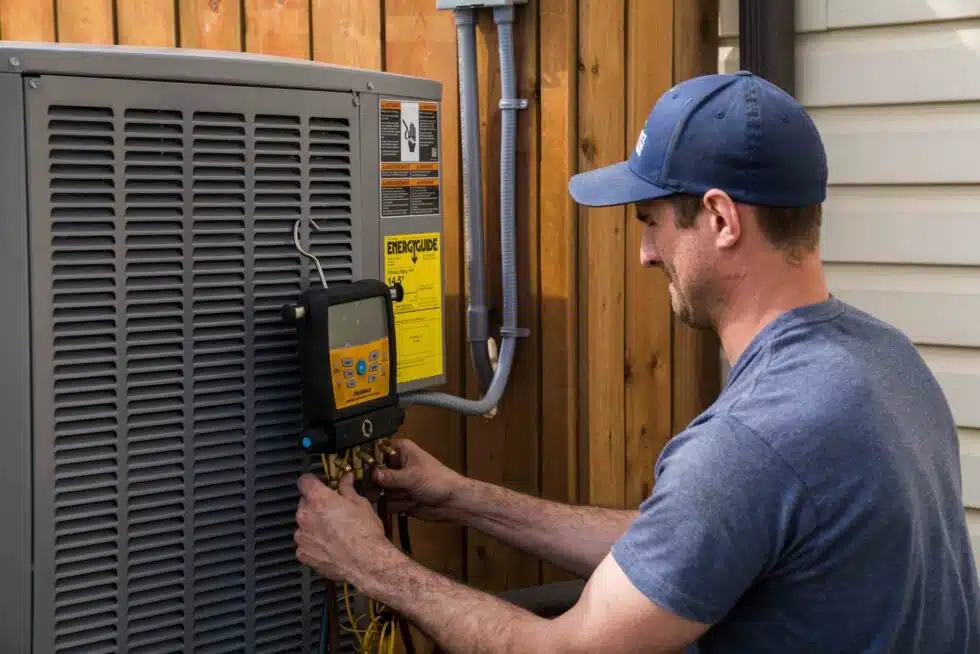
When a Pro Service Mechanical technician arrives at your Avalon home, the diagnostic follows a deliberate sequence designed to identify the root cause without guessing. The first check is always electrical: capacitor condition and contactor integrity are tested before anything else, because these components cause the majority of failures and are the fastest to verify. From there, the technician checks refrigerant pressure against manufacturer specifications, inspects the evaporator coil for ice, blockages, or corrosion, and tests fan motor amperage draw to detect bearing wear or winding damage. The outdoor condenser coil and cabinet are inspected for physical corrosion and airflow restriction. Only after this sequence is complete does the diagnostic picture become clear enough to provide an honest repair recommendation.
Our diagnostic fee ranges from $75 to $200 and is disclosed before any work begins. If the repair proceeds on the same visit, the diagnostic fee is applied toward the total cost. We carry a broad inventory of in-stock parts, including capacitors, contactors, and fan motors sized for common residential equipment, which means the most frequent repairs can be completed the same day your diagnostic takes place. No return trip required for parts in most cases. For complex repairs involving refrigerant handling, our technicians hold the certifications required under federal regulations for both R-22 recovery and R-410A servicing. Our air conditioning service overview explains the full scope of what we handle across Saskatoon.
A Capacitor Swap on Cascade Street: An Avalon Repair Story
Earlier this summer, we received a call from Karen M., whose home near Cascade Street had gone without cooling for two days during a stretch of high-pressure heat. She had already been quoted a compressor replacement by another company, with a price near the $2,500 mark. When our technician arrived and completed a full diagnostic, the compressor itself tested within normal operating parameters. The actual problem was a failed run capacitor that had caused the compressor to short-cycle and trip the system’s thermal overload protection repeatedly. The capacitor was replaced on the same visit for under $300. Karen’s system has been running without issue since. A proper diagnostic sequence, capacitor first, compressor last, prevented a costly and unnecessary component swap.
Why Avalon Homeowners Trust Pro Service Mechanical for Air Conditioner Repair
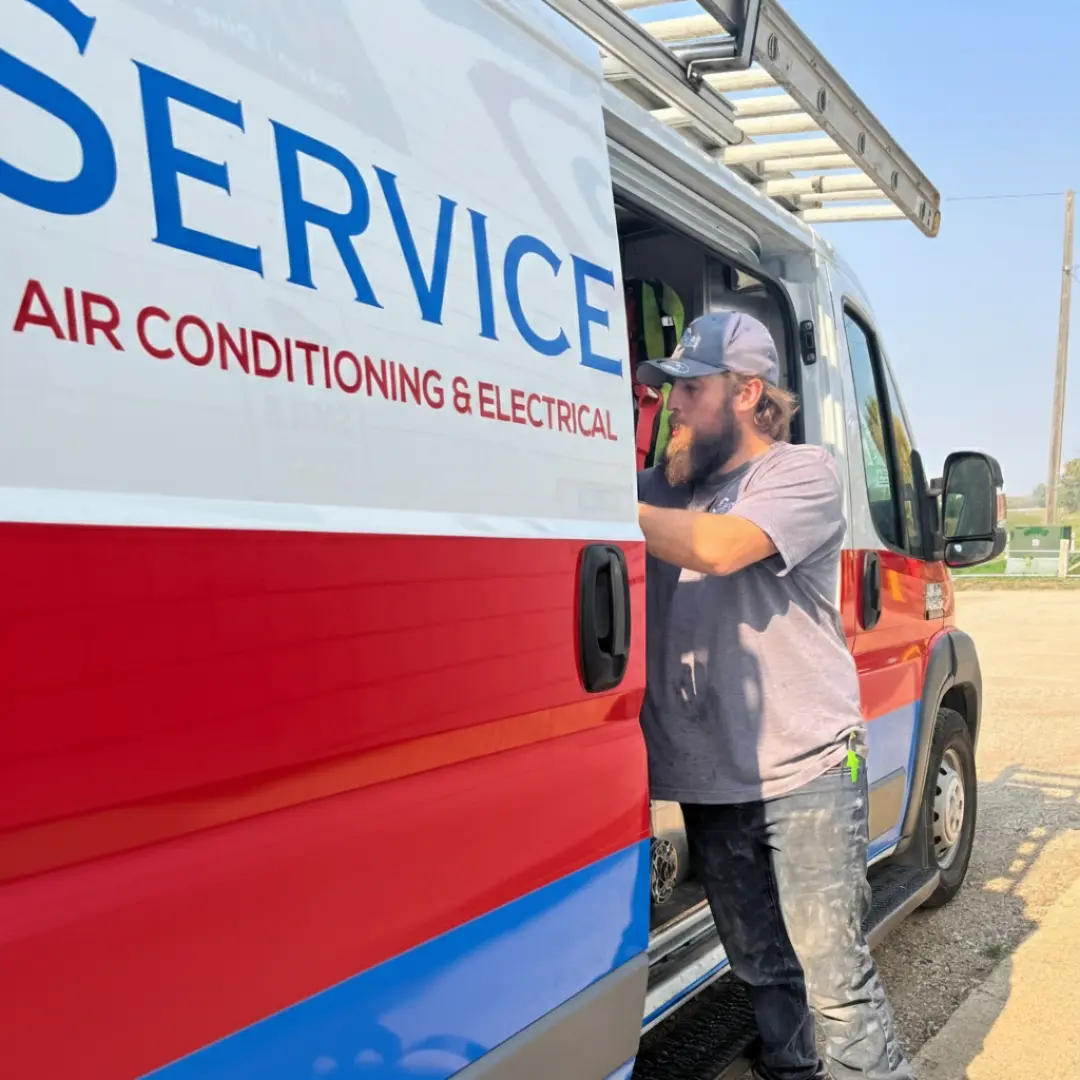
Avalon’s older homes demand technicians who understand the specific failure patterns of aging equipment, not just technicians who can swap modern components. Pro Service Mechanical holds TSASK gas fitter licensing and all federally required refrigerant handling certifications, including the credentials needed to legally recover and recharge R-22 systems. That matters for a neighbourhood where a significant share of systems still run on the phased-out refrigerant. Working with R-22 without proper certification is both illegal and dangerous; our team handles it correctly and transparently every time.
Our diagnostic pricing is disclosed upfront, always in the $75 to $200 range, and we do not upsell unnecessary repairs. If a capacitor fixes the problem, you pay for a capacitor repair. We do not recommend compressor replacements when capacitor or contactor swaps will solve the issue, and we do not recommend full system replacements when a targeted repair extends useful life at a cost that makes sense for your system’s age. Honest guidance on the 50% rule is part of every diagnostic we complete on older equipment.
Response time matters when your home is at +30°C indoors. During normal summer demand, Pro Service Mechanical targets a one-to-two hour response window for Avalon service calls. During peak heat events, when demand across Saskatoon spikes and every repair company in the city is dispatching simultaneously, we maintain priority scheduling for homes with elderly residents, young children, or documented medical conditions. Our dispatch operates a real human answering line, not an automated system, so your call is assessed and triaged immediately.
We stock the most common repair components for residential equipment in-house, which eliminates the multi-day wait that comes when a technician has to order parts after completing a diagnostic. For Avalon homes, where the most likely repairs involve capacitors, contactors, and fan motors, this in-stock inventory means most calls are resolved in a single visit. Request for Service online to start the process, or call us directly for same-day scheduling.
Using the 50% Rule: AC Repair vs. Replace for Avalon Systems
The 50% rule is the most practical framework for making repair-versus-replace decisions on aging equipment. The principle is straightforward: if the cost of a repair exceeds 50% of the replacement value of the system, replacement is the more economical long-term choice. A more specific version of this formula used by experienced technicians is: if the system’s age in years multiplied by the repair cost exceeds $5,000, replacement is generally the better decision. For a 20-year-old system facing a $300 capacitor repair, the calculation is $6,000, which pushes toward replacement territory. For a 10-year-old system with the same $300 repair, the result is $3,000, comfortably within repair range.
For Avalon homeowners, this framework lands differently depending on what era the current equipment was installed. Systems installed in the 1990s or early 2000s are likely approaching or past the 20-year mark, placing them in territory where a single moderate repair might still make sense, but a second failure within the same season tips the balance toward replacement. Systems on R-22 refrigerant present a harder calculation: even a single significant refrigerant leak can cost $1,500 or more to address, and the refrigerant will only become more expensive over time as remaining stockpiles deplete. R-22 systems that require anything beyond a minor top-up should be evaluated seriously for replacement, not because the repair is technically impossible, but because the economics rarely favour continued investment.
Not every aging system needs to be replaced. A 15-year-old unit with a clean coil, functioning compressor, and a straightforward capacitor failure has meaningful remaining life, particularly if it has been regularly maintained. The diagnostic process exists to determine exactly where the system stands before any recommendation is made. We do not approach service calls with a replacement agenda; our revenue from honest repair work is what sustains the business, and we protect that by giving accurate assessments rather than inflated replacement quotes.
If replacement does make sense after a thorough diagnostic, we will tell you clearly, explain why, and give you time to make the decision. The diagnostic fee is never contingent on accepting a replacement recommendation. For homes in Avalon that are weighing repair against replacement, our AC installation services page covers what the installation process looks like when the time genuinely comes. But that conversation starts with a repair diagnostic, not a sales call. Our heating systems team can also assess your furnace and ductwork at the same visit if relevant concerns arise.
Same-Day Emergency Air Conditioning Service When Avalon Homes Overheat
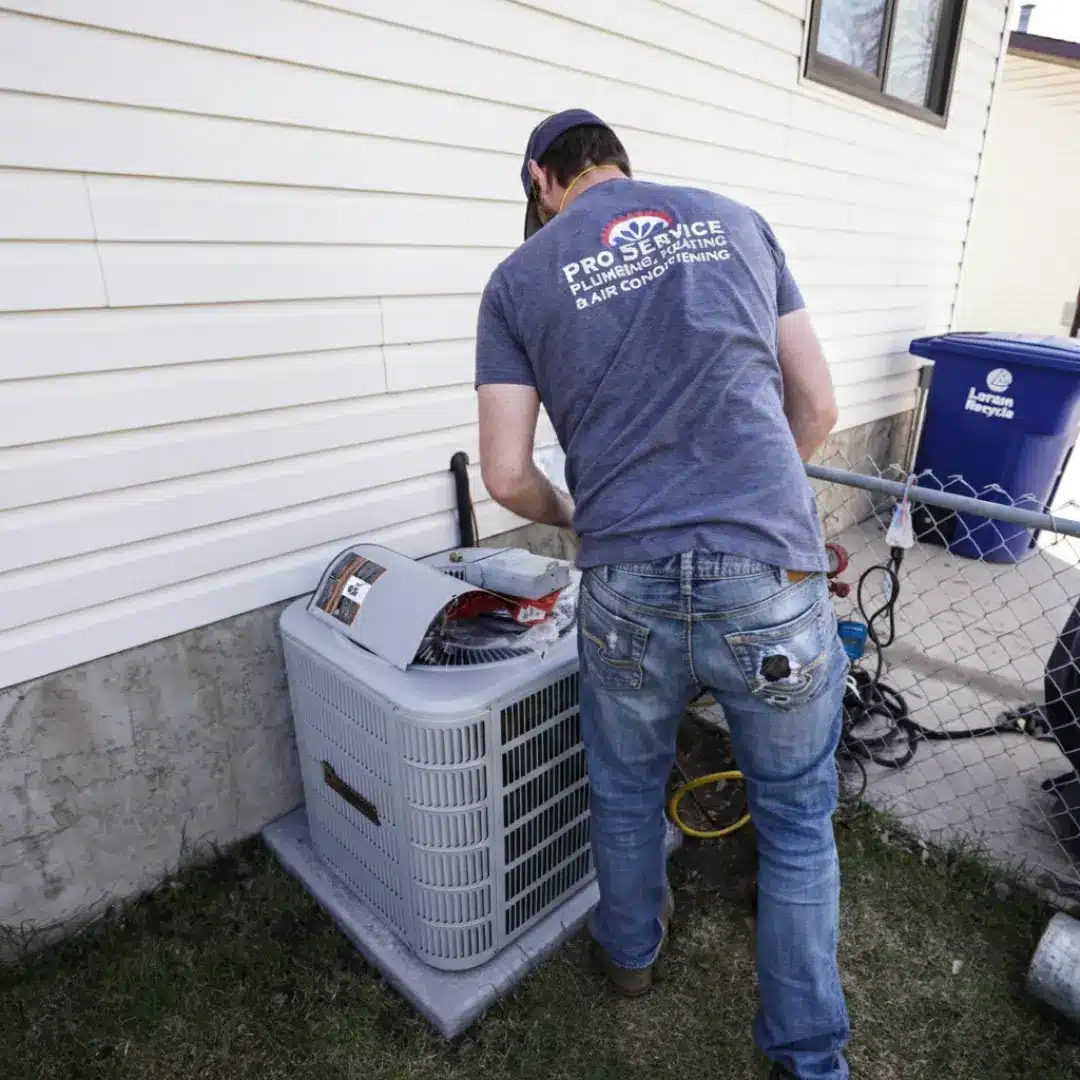
Saskatoon summers are compressed and intense. The stretch from late June through August regularly produces multi-day heat events where overnight lows stay above 20°C and daytime highs push into the low-to-mid 30s. For a neighbourhood like Avalon, where many homes were built before insulation standards improved and before air conditioning was part of the original design, heat accumulates quickly once the AC stops working. Indoor temperatures can reach 35°C within a few hours of system failure on a peak-summer day. This is not a situation that can wait three days for a scheduled appointment.
Pro Service Mechanical operates a 24-hour emergency line for exactly these situations. When you call 306-230-2442, a real dispatcher answers and assesses your situation immediately. During normal summer conditions, our response window in Avalon is one to two hours. During declared heat events or extended high-pressure systems when the entire city is calling at once, we are transparent about wait times but prioritise calls involving vulnerable residents. For urgent same-day requests, our emergency AC repair line is the fastest route to getting a technician dispatched.
Avalon sits in southeast Saskatoon with straightforward access via Circle Drive and Clarence Avenue, which means travel time from our dispatch point is minimal compared to outer-ring neighbourhoods. If your neighbours in nearby Queen Elizabeth or Parkridge are also dealing with cooling issues during the same heat event, our route efficiency means Avalon calls stay within our service window. Call 306-230-2442 the moment your system stops cooling, not after the second night without sleep.
Frequently Asked Questions About AC Repair in Avalon
How much does an AC repair typically cost for an older Avalon home?
Repair costs vary significantly by component. For the most common failures in Avalon’s older systems, capacitor and contactor repairs typically run $150 to $350 all-in. Fan motor replacements land in the $300 to $600 range. Refrigerant leak repairs on R-410A systems cost $400 to $900 depending on leak location and refrigerant volume required. R-22 refrigerant recharges, if the system still runs on the phased-out gas, can exceed $1,500 for a moderate leak due to current scarcity pricing of $100 to $300 per pound. Compressor replacements are the most expensive single repair at $1,500 to $3,000. Our diagnostic fee of $75 to $200 identifies exactly which component is the problem before any repair cost is committed.
Is it worth repairing a 20-year-old AC system in Avalon?
It depends on what failed and what the system’s overall condition looks like. A 20-year-old unit with a single capacitor or contactor failure, a clean coil, and no refrigerant leaks may still have several useful years remaining and is generally worth repairing. The 50% rule provides a practical benchmark: if the age in years multiplied by the repair cost exceeds $5,000, replacement becomes the more logical investment. A 20-year-old system with a $300 capacitor repair calculates to $6,000, which is borderline. A 20-year-old system facing a $2,500 compressor replacement calculates to $50,000, which clearly favours replacement. Our technicians will walk you through this calculation after completing the diagnostic, with no pressure attached.
What is the situation with R-22 refrigerant for homes in Avalon?
R-22 was phased out in Canada as of 2020 and is no longer manufactured domestically. Any system installed or last retrofitted before approximately 2010 in Avalon may still be operating on R-22. The remaining stockpile of reclaimed R-22 has pushed prices to $100 to $300 per pound, compared to $20 to $50 before the phaseout. A refrigerant leak on an R-22 system, even a moderate one, can cost over $1,500 to properly recover, evacuate, and recharge. That cost, combined with the scarcity trajectory, means that R-22 systems with leaks are rarely economical to repair beyond emergency measures. Our technicians hold the certifications required to legally handle R-22 recovery, which is mandatory under federal regulations, and will give you an honest assessment of whether repair or replacement makes more sense for your specific unit.
How quickly can Pro Service Mechanical respond to an AC emergency in Avalon?
Under normal summer demand, our target response window for Avalon is one to two hours from your initial call. Avalon’s location in southeast Saskatoon, with direct access via Circle Drive and Clarence Avenue, keeps travel time short from our dispatch point. During peak heat events when volume across the city surges, wait times can extend, but we maintain a live human dispatch line at 306-230-2442 so your situation is assessed immediately rather than dropped into a queue. Priority is given to households with documented medical vulnerabilities during extended heat events. We are transparent about current wait times when you call; there are no automated systems or callback forms between you and our dispatch team during emergencies.
What is the most common AC failure in Avalon’s pre-1980 homes?
Capacitor and contactor failures account for an estimated 50 to 70 percent of summer no-cooling service calls in AC systems over 20 years old, making them by far the most frequent single point of failure in Avalon’s older homes. These electrical components wear through years of startup current surges and thermal cycling, and they often fail suddenly with no gradual warning. The good news is that capacitor and contactor replacements are among the least expensive repairs on any system, typically resolving the immediate problem in under an hour on a same-day visit. Fan motor seizure is the second most common failure in this age cohort, driven by Saskatoon’s dusty summers. Compressor failures are less frequent but costliest, and they are almost always preceded by other signs: low refrigerant, a failed fan motor left unaddressed, or repeated thermal stress from Saskatoon’s extreme seasonal temperature swings.