
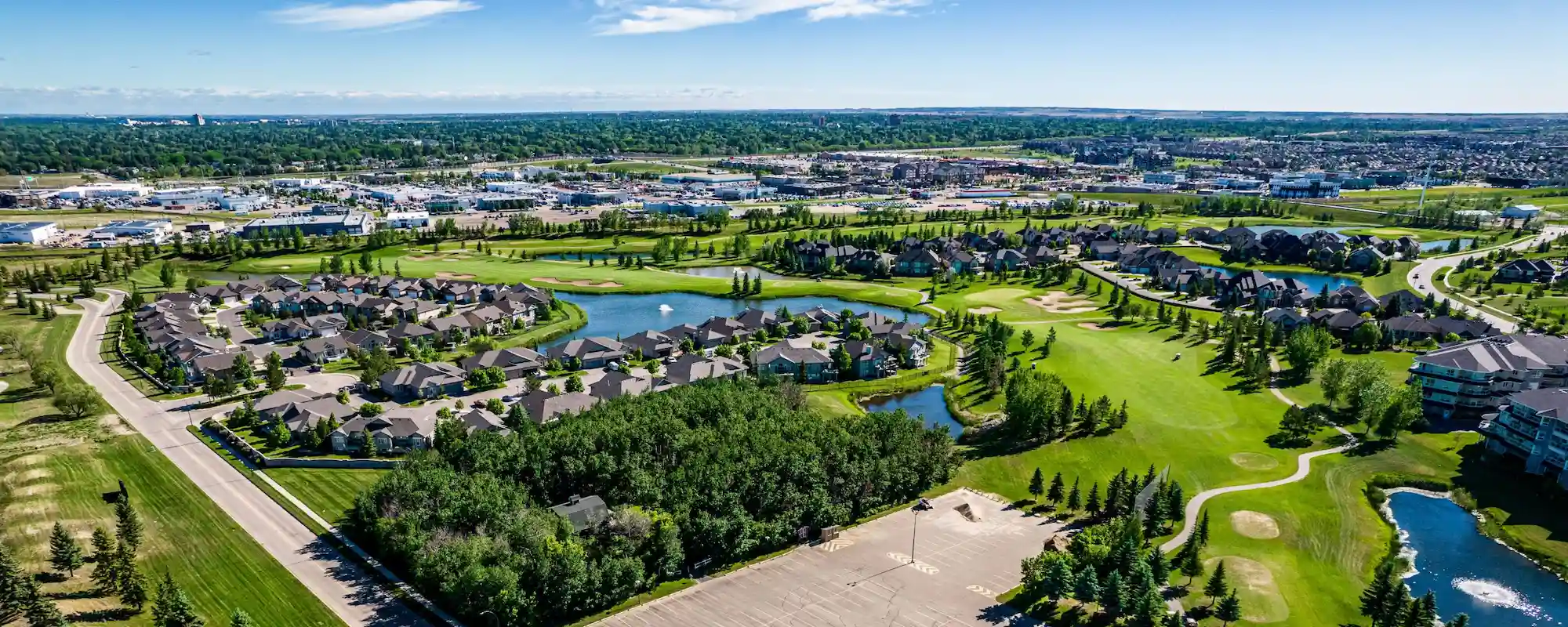
When the temperature climbs past +30°C in The Willows and your AC stops keeping up, the situation becomes urgent fast. This is a community built around outdoor living, with homes backing onto the fairways of the Willows Golf & Country Club and open prairie sky pressing heat down from every direction. A broken air conditioner here is not a minor inconvenience, it is a genuine emergency, especially for families in larger single-family homes where interior temperatures can rise dramatically within hours of the system going down.
The Willows is a relatively young neighbourhood by Saskatoon standards, with development beginning in 2004 along Cartwright Street between Lorne Avenue and Clarence Avenue. The post-2004 build era means most homes here carry AC systems that are now 10 to 22 years old, a range that puts many units squarely in the zone where component failures start accelerating. Understanding what breaks, why it breaks, and whether repair or replacement makes more sense is exactly what this page covers. For a broader look at what we do, visit Pro Service Mechanical or explore our full range of air conditioning services.
The Willows’ 2006–2016 Systems Are Crossing the 12–15 Year Harsh-Climate Limit
The open terrain around the Willows Golf & Country Club creates a particular set of conditions for AC systems. Dust migrates freely across fairways and into outdoor condenser units, fine prairie particulate settles on coil fins, and the neighbourhood’s rolling topography channels wind that carries debris directly into condensers. The first sign of trouble is often subtle: the system is running but the air coming from vents feels lukewarm rather than cool. That warm-air symptom points to either low refrigerant, a failing compressor, or dirty coils reducing heat transfer, all common failure modes in systems installed during The Willows’s original development phase.
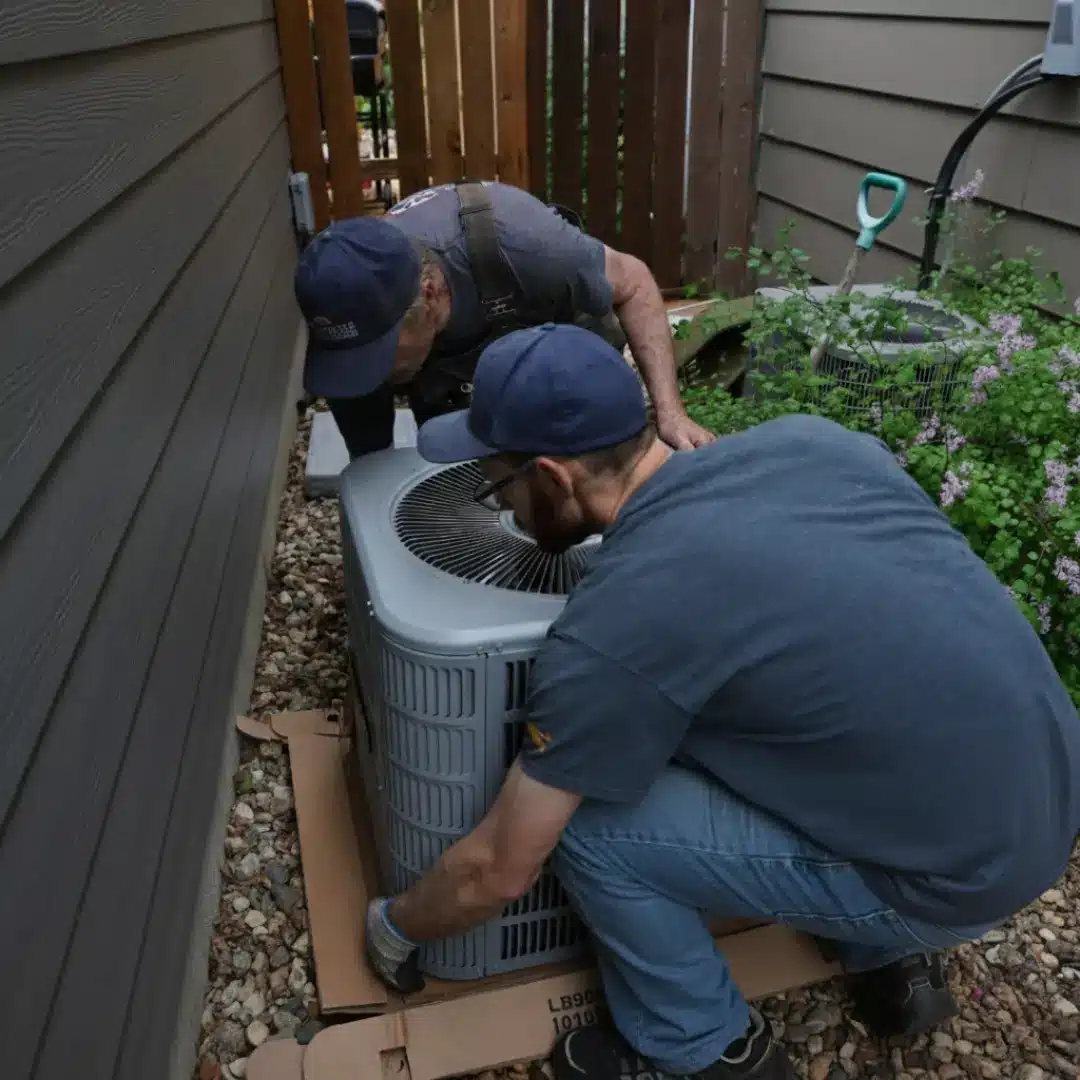
Weak or uneven airflow is another early indicator. If some rooms feel comfortable while others stay stuffy, the problem is usually a failing blower motor, a partially blocked evaporator coil, or ductwork pressure imbalances that have developed over years of use. In The Willows’s larger single-family homes, many over 2,000 square feet, airflow imbalances become noticeable much sooner than in compact builds because the system is working harder to distribute conditioned air across more square footage.
Ice forming on the refrigerant lines or on the evaporator coil is a symptom homeowners often misread as a sign the system is “working too hard.” It is actually a sign of restricted airflow or low refrigerant charge, and running a frozen system causes cascading damage to the compressor. If you see frost anywhere on the indoor unit or the copper lines, shut the system off immediately and call for service. Continuing to run a frozen coil is one of the fastest ways to turn a $300 repair into a $2,000 compressor replacement.
Unusual noises deserve particular attention in homes of this vintage. A grinding or squealing sound from the outdoor unit typically indicates a failing condenser fan motor, a bearing giving way under thermal stress. A clicking sound on startup that does not lead to the compressor running often points to a failed capacitor or a burned contactor. High utility bills without an obvious explanation are also a meaningful signal; a system working twice as hard to maintain temperature is consuming significantly more power and approaching a tipping point. Knowing when to call for AC repair services before a partial failure becomes a total shutdown can save hundreds of dollars.
Component-by-Component: What Fails Most Often in The Willows AC Systems
Because The Willows developed entirely after 2004, the neighbourhood has a distinct repair profile compared to older Saskatoon areas. There are no pre-2000 systems here grappling with R-22 phaseout in the same numbers. However, the oldest systems in The Willows, those installed during the 2004 to 2008 construction wave, are now 18 to 22 years old, which is at or past the 12-to-15-year typical lifespan for central AC in Saskatchewan’s harsh climate. The majority of units fall in the 10-to-20-year band, and that is precisely the range where component failures start to compound.
Capacitors are the most frequent repair call in systems of this age, and for good reason. Saskatoon’s extreme temperature swings, from -40°C winters to +35°C summers, subject capacitors to thermal cycling stress that shortens their functional life well below manufacturer ratings. A capacitor failure typically costs $150 to $350 to repair, including parts and labour, and is one of the best-value fixes available because a healthy capacitor allows the compressor and fan motors to start and run efficiently. When a capacitor fails, the compressor often attempts to start and cannot, drawing excessive amperage and risking far more expensive damage downstream.
Refrigerant leaks are the second most common issue in The Willows systems. Homes built between 2001 and 2010 may still be running on R-22 refrigerant, which was phased out of production in Canada in 2020. If your system was installed before roughly 2009 and has never had a refrigerant-related service call, it is worth asking your technician to confirm which refrigerant type it uses. R-22 is now expensive and scarce, a recharge can run $350 to $800 or more depending on the volume needed, and a system with a persistent R-22 leak is a strong candidate for the repair-versus-replace conversation. Homes built from 2010 onward almost certainly use R-410A, where leak repairs remain more affordable, though still requiring licensed refrigerant handling under federal regulations.
Contactor and fan motor failures round out the most common repair calls in this era. Contactors, the electrical switches that engage the compressor and condenser fan, wear out through repeated switching cycles and can be damaged by power surges. A contactor replacement runs $150 to $300. Fan motor failures, whether in the condenser unit or the air handler, typically cost $300 to $600 depending on the motor type. The dry, dusty environment around The Willows accelerates bearing wear in fan motors, since dust infiltrates motor housings and acts as an abrasive over time.
Compressor failures represent the most serious and expensive scenario, with replacement costs ranging from $800 to over $2,000 depending on the unit. In The Willows systems that are 15 years or older, a failed compressor almost always triggers the 50% rule conversation rather than a straight repair authorization, more on that in the repair-versus-replace section below. Evaporator coil fouling and refrigerant leak damage to coil surfaces are also increasingly common in older units, with coil cleaning running $250 to $400 and coil replacement significantly more. Saskatoon’s dry summers accelerate dust accumulation on coil fins, and if annual maintenance has been deferred, coil efficiency drops sharply.
How We Diagnose Your Air Conditioner: What Technicians Check First in The Willows
When a Pro Service Mechanical technician arrives at a home in The Willows, the diagnostic process follows a consistent sequence designed to identify the root cause, not just treat symptoms. The first checks are electrical: inspecting the breaker panel, testing capacitor capacitance with a meter, checking the contactor for pitting or burnout, and confirming proper voltage at the disconnect. These checks take roughly 10 to 15 minutes and frequently identify the problem right there. Capacitors and contactors are inexpensive parts that cause dramatic failures, so ruling them out first is efficient triage.
If electrical components check out, the technician moves to refrigerant pressure testing using manifold gauges to measure suction and discharge pressures against the manufacturer’s specifications for the ambient temperature. Low suction pressure combined with frost on the evaporator coil confirms a refrigerant charge issue; the next step is a leak search using electronic detection equipment. Airflow is measured at the register and across the coil, and the evaporator and condenser coils are inspected for fouling. Compressor amperage draw is tested against the nameplate rating to assess compressor health. Our diagnostic fee ranges from $75 to $200 depending on the complexity of the call, and that fee is disclosed upfront before work begins. Nothing is a surprise on your invoice.
A Repair Call on Cartwright Street: When a Capacitor Saved the Summer
Earlier this season, Sandra K. on Cartwright Street called us on a Thursday afternoon when her AC had stopped producing cold air. She had noticed the outdoor unit running but the house climbing to 28°C inside. Our technician arrived within two hours, ran through the electrical diagnostic, and found a blown dual-run capacitor, a $189 part that had finally given out after 16 years of Saskatchewan summers. The compressor and fan motors were both healthy; they simply could not start without the capacitor doing its job. The repair was completed the same afternoon, total cost under $350, and Sandra’s system was cooling again before dinner.
“I was convinced I needed a whole new unit,” she told us afterward. “The technician showed me exactly what had failed, explained why it happens in older systems, and had the part on the truck. I was relieved it was that straightforward.” That is the outcome we aim for on every call: an accurate diagnosis, a clear explanation, and a repair that restores comfort without an unnecessary sales pitch for equipment you may not need.
Why The Willows Homeowners Rely on Pro Service Mechanical for AC Repairs
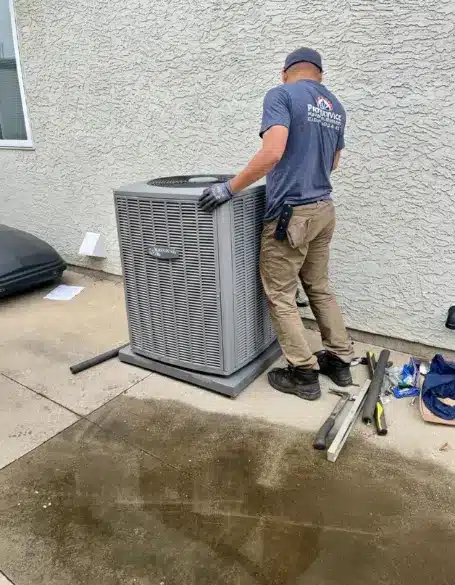
Pro Service Mechanical technicians hold TSASK gas fitter licences and carry federal refrigerant handling certification, which is required by law for any work involving R-22 or R-410A systems. This is not a minor credential, improper refrigerant handling can damage a system permanently and carries regulatory penalties. When you call us for a refrigerant leak diagnosis on your Willows home’s AC, you are getting a certified technician who follows proper recovery and recharge procedures, not a shortcut that voids your remaining warranty or damages the compressor through improper charge levels.
We stock the most common repair parts on our service vehicles: dual-run capacitors, contactors, fan motors in common frame sizes, and refrigerant for both R-22 and R-410A systems. For The Willows, where most homes are 10 to 22 years old, the probability that a capacitor or contactor on the truck matches your system is very high. That parts inventory is what makes same-day repair possible on the majority of calls rather than a scheduling callback after the part arrives from a supplier.
Our diagnostic fees are transparent and communicated before work begins. You will know the cost of the service call before we start, and if a repair is recommended, you will receive a written estimate with parts and labour broken out separately. There is no pressure to approve a repair on the spot; the diagnostic finding is yours to keep regardless of what you decide. We think that transparency is the foundation of a repair relationship that lasts, and it is why many Willows homeowners call us year after year rather than starting from scratch with a new company each season.
Scheduling is straightforward: call 306-230-2442, describe what the system is doing, and we will get a technician to you. In normal summer conditions, response times are typically one to two hours for non-emergency calls. We also recommend reviewing our guidance on the best time to service your AC each year, spring diagnostics catch the small failures before they become mid-July emergencies.
The 50% Rule Applied to The Willows’s 2004-2016 AC Systems
The 50% rule is the most widely used framework for repair-versus-replace decisions in residential AC: if the cost of a repair exceeds 50% of the replacement value of the system, replacement is generally the more sensible long-term investment. A practical version of this threshold uses a formula: multiply the system’s age by the quoted repair cost; if that figure exceeds $5,000, replacement tends to make more financial sense than repair. This formula is not a rigid cutoff, but it provides a useful starting point for the conversation.
Applying this to The Willows’s housing era: a system installed in 2006 is now 20 years old. If that system needs a compressor replacement at $1,800, the formula gives 20 × $1,800 = $36,000, well above the $5,000 threshold, which strongly suggests replacement. Contrast that with a 2014 system needing a capacitor at $250: 12 × $250 = $3,000, below the threshold, clearly worth repairing. The age of the system is the multiplier that changes everything, which is why The Willows’s oldest homes, the 2004 to 2008 builds, face much harder decisions than the 2012-and-newer properties.
R-22 refrigerant status adds another dimension for the earliest Willows builds. If a system installed before 2009 has a refrigerant leak that requires multiple pounds of R-22 to correct, the repair cost can climb rapidly. R-22 is no longer manufactured in Canada and must be sourced from recovered or reclaimed stock, pushing per-pound costs well above R-410A equivalents. A refrigerant-related repair on an R-22 system over 18 years old may cross the 50% threshold even without a compressor issue.
The important point is that the 50% rule is a decision tool, not a sales script. When our technician completes the diagnostic and presents findings, the recommendation to repair or replace is grounded in the actual condition of your equipment, not a predetermined outcome. If repair is the right answer, we say so. If the numbers point to replacement, we explain why honestly and can refer you to our AC installation services team, but that conversation only happens after a fair diagnostic, not before it.
Same-Day AC Repair When The Willows Heats Up: Emergency Response
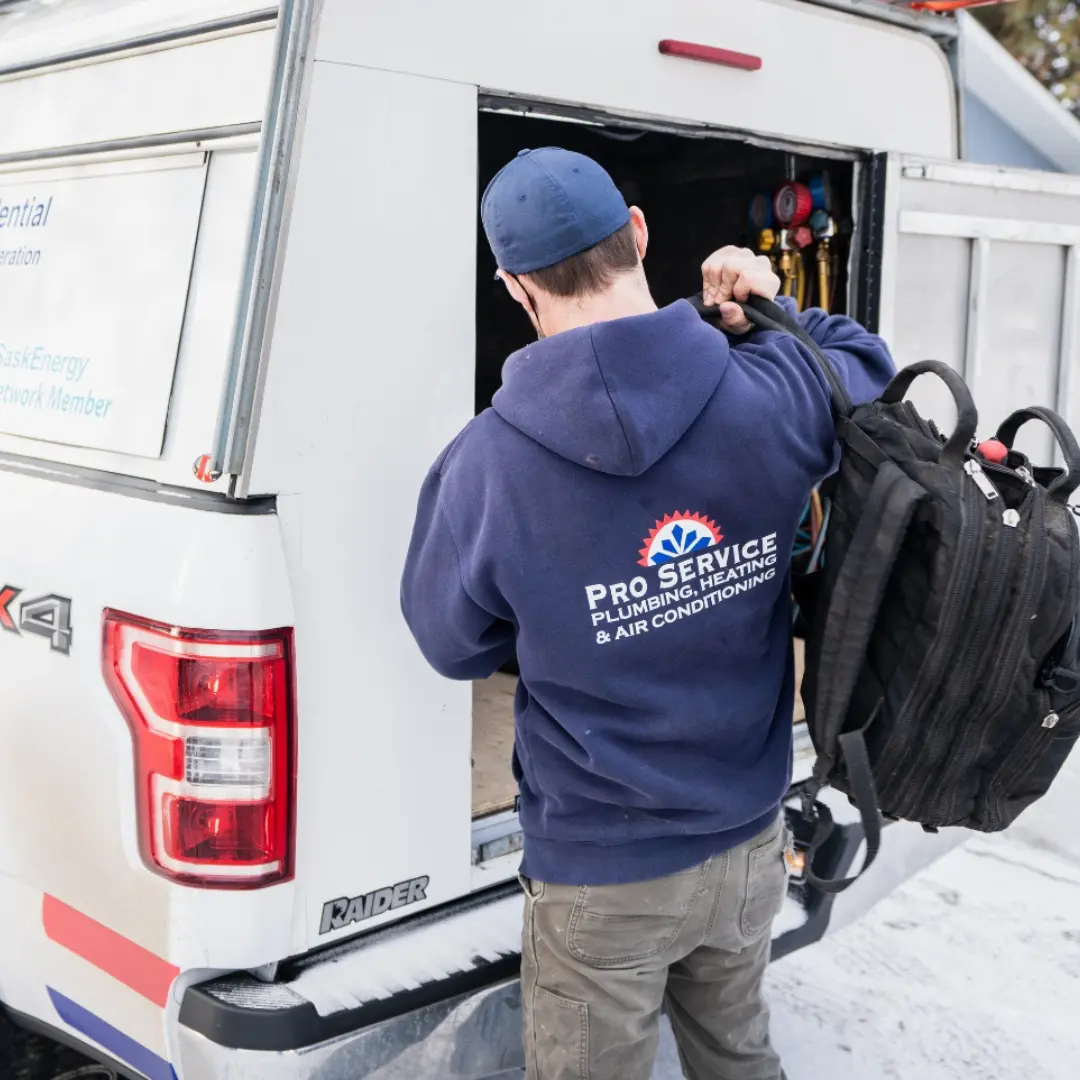
Saskatoon’s summer heat events are compressing into shorter, more intense periods, and The Willows, with its open south Saskatoon exposure and limited tree shade in many sections, feels those heat spikes acutely. When the forecast shows consecutive days above +30°C, AC repair demand across the city spikes within hours of the first forecast. Booking a repair call during a heat wave means competing with every other household whose system chose that week to fail. The practical advice: do not wait for a total shutdown. If your system is showing any of the warning signs described above, call before it fails completely.
For total breakdowns, emergency AC repair is available around the clock. Call 306-230-2442 and a real person answers, not a voicemail system, not an answering service that takes a message and calls back the next morning. During heat waves, response times extend from the usual one to two hours toward two to four hours as call volume rises, but we are transparent about current wait times when you call. We prioritize households with medical vulnerabilities and will let you know your place in the queue honestly. Pro Service Mechanical has served south Saskatoon neighbourhoods for years, and The Willows is well within our core service area, our technicians know the access routes via Cartwright Street and Clarence Avenue.
The Willows sits alongside several other Saskatoon communities where we provide regular AC service. If you have family or friends in neighbouring areas, they can also reach us for the same fast response, including residents near Nutana and Holiday Park. Our heating systems work is equally active through the fall and winter, so we are a year-round resource for mechanical service in this part of the city. For non-emergency bookings and general inquiries, the easiest path is our Request for Service page, where you can describe the issue and a technician will confirm your appointment within a few hours.
Frequently Asked Questions About Air Conditioner Repair in The Willows
How much does a typical AC repair cost for a home built in The Willows after 2004?
Repair costs in The Willows vary significantly by component. Capacitor replacements, the most common repair in 10-to-20-year-old systems, typically run $150 to $350 including parts and labour. Contactor replacements fall in a similar range, $150 to $300. Refrigerant leak repairs involve diagnostic time, leak detection, and recharge, often totalling $350 to $700 depending on how much refrigerant is needed and whether the leak point requires a parts repair as well. Fan motor replacements run $300 to $600. Compressor failures are the most expensive scenario at $800 to over $2,000, and at that cost level the 50% rule conversation becomes important. Our technicians provide a written estimate after completing the diagnostic, before any repair work begins.
My system was installed around 2007 or 2008. Is it still on R-22 refrigerant, and does that affect my repair cost?
Quite possibly, yes. Systems manufactured and installed before approximately 2009 were typically designed for R-22 refrigerant. Some manufacturers began transitioning product lines to R-410A before the regulatory phaseout, so the exact transition year depends on the brand and model. Our technician can confirm which refrigerant your system uses within the first few minutes of a diagnostic call by checking the nameplate and running a pressure test. If your system is R-22 and has a refrigerant leak, repair costs are higher than R-410A equivalents because R-22 is no longer manufactured in Canada and must come from recovered stock. For a significant R-22 leak on a system 17 or more years old, that cost differential frequently tips the repair-versus-replace calculation toward replacement. It is worth knowing before you commit to a repair.
What is the most common AC failure in homes built during The Willows’s 2004 to 2010 development phase?
For systems now 16 to 22 years old, capacitor failure is the most frequent single repair call. Capacitors degrade through thermal cycling stress, the brutal shift between Saskatchewan’s -40°C winters and +35°C summers subjects them to conditions far more demanding than in milder climates, shortening their effective service life. The good news is that capacitor failure is among the least expensive repairs, and catching it early (before the failed capacitor damages the compressor through repeated hard-start attempts) saves considerably. Refrigerant leaks are the second most common issue in this age cohort, followed by contactor burnout and fan motor bearing failure. Compressor failures are less frequent by count but represent the highest cost category when they do occur.
How quickly can Pro Service Mechanical respond to an AC breakdown in The Willows on a hot day?
Under normal summer conditions, our typical response time in The Willows is one to two hours from the time you call. The neighbourhood’s access via Cartwright Street and Clarence Avenue is straightforward, and it falls well within our core south Saskatoon service zone. During Saskatoon heat waves, when call volume across the city spikes sharply, response times extend to two to four hours, and we communicate current wait times honestly when you call. For emergency breakdowns at any hour, call 306-230-2442 and a person will answer. We do not route emergency calls to voicemail. If you have a medical vulnerability in the household, let us know when you call, we account for that in how calls are prioritized during high-demand periods.
Is it worth repairing my AC system if it is 15 years old, or should I just replace it?
The answer depends entirely on what has failed and what the repair cost is relative to system value. A 15-year-old system with a blown capacitor ($250 repair) is absolutely worth repairing, that is a small fraction of replacement cost, and the compressor and coils may well have years of service remaining. The same 15-year-old system with a failed compressor ($1,500 to $2,000 repair) is a much harder call. Using the age-times-repair-cost formula, 15 × $1,800 = $27,000, well above the $5,000 threshold that typically points toward replacement. Our approach is always to complete a thorough diagnostic first, present the findings honestly, and give you the numbers to make an informed decision. We do not recommend replacement to avoid a repair we could competently perform, but we also will not recommend an expensive repair on a system that is likely to fail again within a season.