
A SaskPower outage that lasts two hours in January can mean spoiled inventory in a restaurant walk-in cooler, a dental clinic that cannot complete procedures, or a warehouse security system that goes dark. For Saskatoon commercial property managers and business owners, a UPS buys minutes, a properly sized standby generator buys the operational continuity your tenants and your insurance policy both expect. The decision to install a commercial backup generator is rarely urgent until the moment it becomes critical, and that is exactly the wrong time to start planning.
Pro Service Mechanical’s licensed electrical team handles commercial electrical services across Saskatoon, including the full scope of commercial generator installation: load studies, automatic transfer switch installation, SaskPower coordination, TSASK permits, and ongoing preventative maintenance programs. If you are managing a strip mall, running a medical clinic, or operating a cold-storage facility, we can design a backup power system that keeps your operations running and your documentation clean for audits and lease renewals. Call us at (306) 230-2442 to schedule a site assessment.
Why a SaskPower Outage Hits Commercial Properties Harder Than You Expect
Saskatchewan’s grid is reliable by most measures, but Saskatoon commercial properties sit on a distribution network that faces serious seasonal stress. SaskPower acknowledges that winter cold snaps push provincial demand past 3,500 MW, and summer thunderstorms regularly cause line faults, recloser operations, and momentary voltage dips that reset POS systems, lock up industrial controls, and trip sensitive medical equipment. The outage itself may last only seconds, but the downstream disruption, lost transactions, spoiled product, interrupted procedures, can run into thousands of dollars.
A UPS protects against those brief events, but it cannot carry a dental chair, a commercial kitchen, or a warehouse heating system through an extended outage. The Canadian Electrical Code also draws a clear distinction between emergency power (required for life-safety loads like egress lighting and fire pumps) and standby power (protecting business operations). Many Saskatoon commercial properties are obligated by building and fire code to have code-compliant emergency systems in place, and insurers are increasingly asking for documented proof at renewal time.
For multi-tenant properties, the stakes are compounded. A tenant whose refrigerated inventory is lost during a three-hour outage may have grounds for a lease dispute, and a property manager who cannot demonstrate a reasonable emergency power plan is in a difficult position. Our 24/7 emergency electrician in Saskatoon team responds to faults, but the better outcome is a system that means your tenants never need to make that call in the first place.
Sizing a Standby Generator: Critical Loads, Transfer Switches, and What Actually Matters
The most common sizing mistake is trying to back up everything. Most Saskatoon commercial properties get better value from a selective-load strategy: identify the circuits that must stay on, walk-in coolers, IT infrastructure, egress lighting, security, key HVAC, and size the generator to carry those loads reliably. A load study reviews your SaskPower billing data, panel schedules, and motor starting requirements to arrive at a realistic kW and kVA figure. For most strip mall bays and small clinics, that lands somewhere in the 40,80 kW range for natural gas standby units.
The automatic transfer switch is the operational heart of the system. It monitors incoming SaskPower voltage and frequency continuously, starts the generator within seconds of detecting a failure, and transfers your selected loads automatically, typically within 10 to 30 seconds for commercial applications. When SaskPower is restored and stable, the ATS transfers loads back and runs the generator through a cool-down cycle before shutting it down. The Canadian Electrical Code requires proper interlocking to prevent backfeed onto the SaskPower grid, and any transfer scheme that does not meet that standard will not pass TSASK inspection or SaskPower review.
Motor-starting loads deserve particular attention in Saskatoon commercial buildings. Rooftop HVAC units, compressors, and sump pumps all draw significantly more current on startup than during steady-state operation. A generator sized only for running watts can stall when a compressor kicks in, and that kind of nuisance failure is exactly what you do not want to discover during an actual outage. Our team accounts for starting kVA, demand factors, and load sequencing during the design phase so the system performs when it matters. For larger or more complex facilities, we work alongside our industrial electrician services team to handle three-phase distribution and motor control requirements.
Installation, Fuel Options, Permits, and SaskPower Coordination in Saskatoon
Natural gas is the standard choice for most Saskatoon commercial standby installations. SaskEnergy supply is reliable, there is no fuel to order and store, and operating costs are predictable, which matters when you are trying to hold a maintenance budget. Diesel remains the right answer for larger critical facilities, industrial warehouses, and situations where starting performance under heavy motor loads is the priority, but it brings fuel storage requirements, winter gelling concerns, and spill containment obligations under the National Fire Code. Propane is typically reserved for sites without access to a natural gas line.
Every commercial generator installation in Saskatoon requires an electrical permit from TSASK (Technical Safety Authority of Saskatchewan), a TSASK inspection upon completion, and coordination with SaskPower if the service entrance or metering arrangement is being modified. If the generator ties in on the line side of the main service, or if there is any possibility of parallel generation, SaskPower must review and approve the connection arrangement before commissioning. City of Saskatoon building permits may also be required for the concrete pad and any screening structure, and if natural gas is involved, a separate gas permit is required for the fuel piping work. Pro Service Mechanical manages the electrical permitting and SaskPower coordination directly; we work alongside licensed gas contractors for fuel connections and coordinate with the City’s building department when structural permits are needed.
Location and siting have more practical implications than most property managers initially expect. The generator enclosure must maintain clearances from building openings, fresh air intakes, and property lines per manufacturer specifications and City of Saskatoon zoning. Sound-attenuated commercial units typically produce 65,75 dB(A) at seven metres, comparable to heavy traffic, which is manageable in most commercial zones but worth discussing early if you have neighbouring tenants in a spa, dental suite, or recording environment. Snow drifting patterns and spring drainage also affect pad placement in Saskatoon’s climate; a unit that becomes inaccessible after a February blizzard is not providing reliable comfort when you need it.
Mark T., a property manager overseeing a mid-size medical and professional services building in the Blairmore area, approached Pro Service Mechanical after his insurer flagged the absence of documented emergency power as a gap at renewal. “We had an old manual transfer switch that hadn’t been tested in years,” he said. “Pro Service handled the permits, coordinated with SaskPower, and scheduled the panel shutdown on a Saturday so our Monday tenants saw nothing.” His building now runs on a 60 kW natural gas standby unit with a service contract that includes annual load-bank testing and documented records for his next insurance review.
Preventative Maintenance and Load Testing: Keeping the System Ready
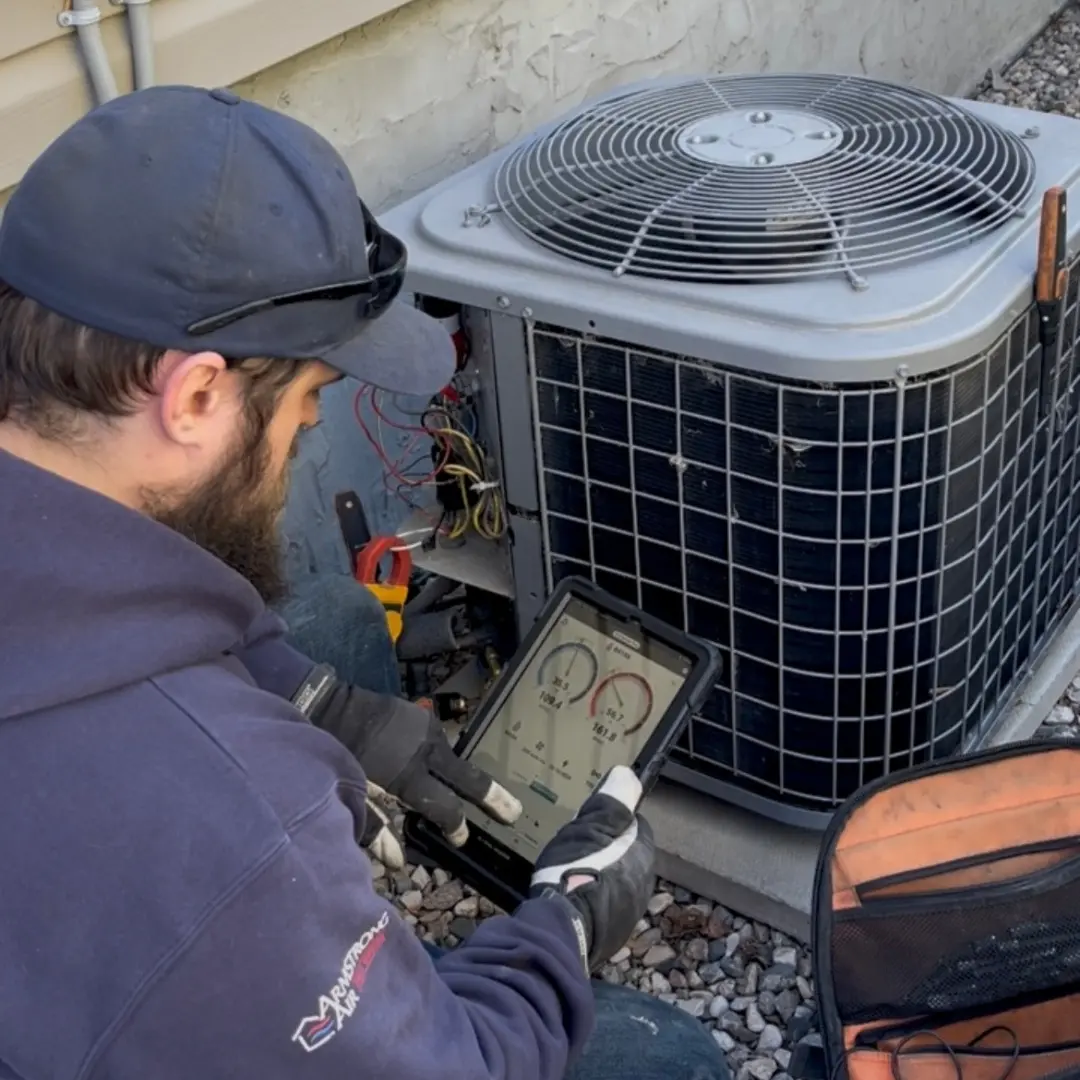
A generator that has not been properly maintained will not start reliably when SaskPower goes down. Battery failure is the single most common cause of non-start events in commercial standby systems, and it is entirely preventable. A well-structured preventative maintenance program includes monthly automatic exercise runs, quarterly inspections of fluid levels, battery condition, and fuel system integrity, and at least one annual load test, ideally under resistive load to verify the generator can actually carry its rated capacity without overheating or dropping frequency.
Diesel units require particular attention to wet-stacking, a condition where unburned fuel accumulates in the exhaust system during light-load or no-load test runs. Load-bank testing at or near rated capacity clears wet-stacking and confirms real-world performance. For natural gas units, the maintenance focus shifts to governor calibration, spark plug condition, air-fuel mixture, and coolant system integrity through Saskatchewan winters. Pro Service Mechanical offers scheduled maintenance contracts that include documented visit reports, which matter when your insurance broker or a national tenant asks for maintenance records during a lease renewal or audit.
Our broader electrical services in Saskatoon include commercial electrical panel upgrades, commercial lighting upgrades, network and computer cabling, and commercial electrical construction, so if a generator installation surfaces the need for a panel rework or a feeder upgrade to separate critical loads, we handle it in the same project rather than leaving you to coordinate a second contractor. Reach out through our Request for Service page or call Pro Service Mechanical at (306) 230-2442 to discuss a maintenance contract or schedule your initial load study.
Frequently Asked Questions
What is a realistic installed cost for a commercial backup generator in Saskatoon?
For a small commercial site, a restaurant bay, dental clinic, or single-tenant retail unit, a 40,80 kW natural gas standby system with an automatic transfer switch, concrete pad, wiring, and permits typically falls in the $35,000,$70,000 CAD range. Mid-size multi-tenant buildings or facilities needing 100,200 kW of coverage generally land between $80,000 and $180,000 CAD, depending on distribution rework and engineering requirements. Larger cold-storage or data-critical facilities can exceed $250,000 CAD once custom engineering, paralleling schemes, and civil work are included. Ongoing maintenance contracts typically run $1,000,$3,000 CAD per year for small-to-medium commercial units.
Natural gas, diesel, or propane, which is right for a Saskatoon commercial property?
Natural gas is the most practical choice for the majority of Saskatoon commercial properties connected to the SaskEnergy distribution system: no fuel deliveries, no winter gelling, and predictable operating costs. Diesel is preferred for larger critical facilities and industrial sites where heavy motor starting performance matters, but it requires fuel storage that meets National Fire Code containment and separation requirements. Propane is generally reserved for rural or semi-rural sites without a natural gas service. Your fuel choice should be confirmed during the design phase so the permit package and siting plan account for the right storage and venting requirements from the start.
How does an automatic transfer switch work, and will my tenants notice the outage?
An ATS continuously monitors incoming SaskPower voltage and frequency and automatically starts the generator when it detects a failure. Selected loads are transferred to generator power typically within 10 to 30 seconds for commercial systems, tenants will notice a brief interruption but operations resume without manual intervention. When SaskPower is restored and stable, the ATS transfers loads back and the generator runs a cool-down cycle before shutting down. The Canadian Electrical Code requires proper interlocking to prevent backfeed onto SaskPower’s grid, and any transfer scheme must be reviewed and approved by SaskPower if it involves the service entrance or metering.
What permits and inspections are required for a commercial generator installation in Saskatoon?
A TSASK electrical permit is required for all generator, ATS, and panel wiring work, and a TSASK inspection must be completed before the system is commissioned. If the service entrance or metering arrangement is modified, SaskPower must review and approve the connection. Natural gas fuel piping requires a separate gas permit and must comply with CSA B149 as adopted in Saskatchewan. A City of Saskatoon building permit may be required for the pad and any screening structure, and the fire department may have input on exhaust routing and fuel storage clearances if diesel is used.
How often should a commercial standby generator be load-tested?
Best practice for commercial standby systems is monthly no-load or light-load exercise runs, quarterly inspections covering batteries, fluids, and fuel system integrity, and at least one annual load test under resistive or resistive-reactive load to verify the generator can carry its rated capacity. Diesel units particularly benefit from annual load-bank testing to prevent wet-stacking caused by light-load exercise runs. Insurance policies and national tenant leases increasingly specify minimum testing and documentation intervals, so keeping a maintenance log is as important as performing the test itself.
What are the noise and siting requirements for an outdoor generator in Saskatoon?
Most commercial standby generators in sound-attenuated enclosures operate in the 65,75 dB(A) range at seven metres, roughly equivalent to heavy road traffic. City of Saskatoon zoning bylaws govern setbacks from property lines and building openings, and placement must respect clearances from fresh air intakes and exhaust paths per manufacturer specifications and fire code. In Saskatoon’s climate, pad placement must also account for snow drifting patterns, spring drainage, and winter accessibility so the unit can be serviced through a February cold snap. Early discussion with your electrician and, if needed, the City’s development office avoids costly relocations after permits are issued.
Do I need a service contract, or is on-call service sufficient for a commercial property?
For revenue-generating commercial properties and multi-tenant buildings, a service contract is strongly recommended: it locks in scheduled preventative maintenance, documented testing records, and priority response at predictable annual costs, typically $1,000,$3,000 CAD per year for small-to-medium commercial units. On-call-only service may appear cheaper, but emergency callout rates and unplanned parts costs can quickly exceed the contract cost, and you lose the maintenance documentation that insurers and auditors increasingly expect. Many national tenants and insurance underwriters require proof of a documented preventative maintenance program as a condition of coverage or lease compliance.
What is a realistic timeline from initial quote to a commissioned system?
A straightforward commercial installation with no major service changes typically takes eight to fourteen weeks from go-ahead to commissioning: two to three weeks for design, load study, and permit applications; four to eight weeks for equipment lead time on the generator and ATS; and three to seven days of on-site work for pad, wiring, gas, and testing. Complex projects involving SaskPower service entrance changes, rooftop placement, or engineering review can stretch to three to six months. Electrical tie-ins and planned panel outages can almost always be scheduled after-hours or on weekends to avoid disrupting tenant operations, and Pro Service Mechanical plans those windows in advance so tenants receive proper notice.