Energy-efficient tankless water heater installation, repair, and maintenance services in Saskatoon. Enjoy reliable, on-demand hot water with Pro Service Mechanical.
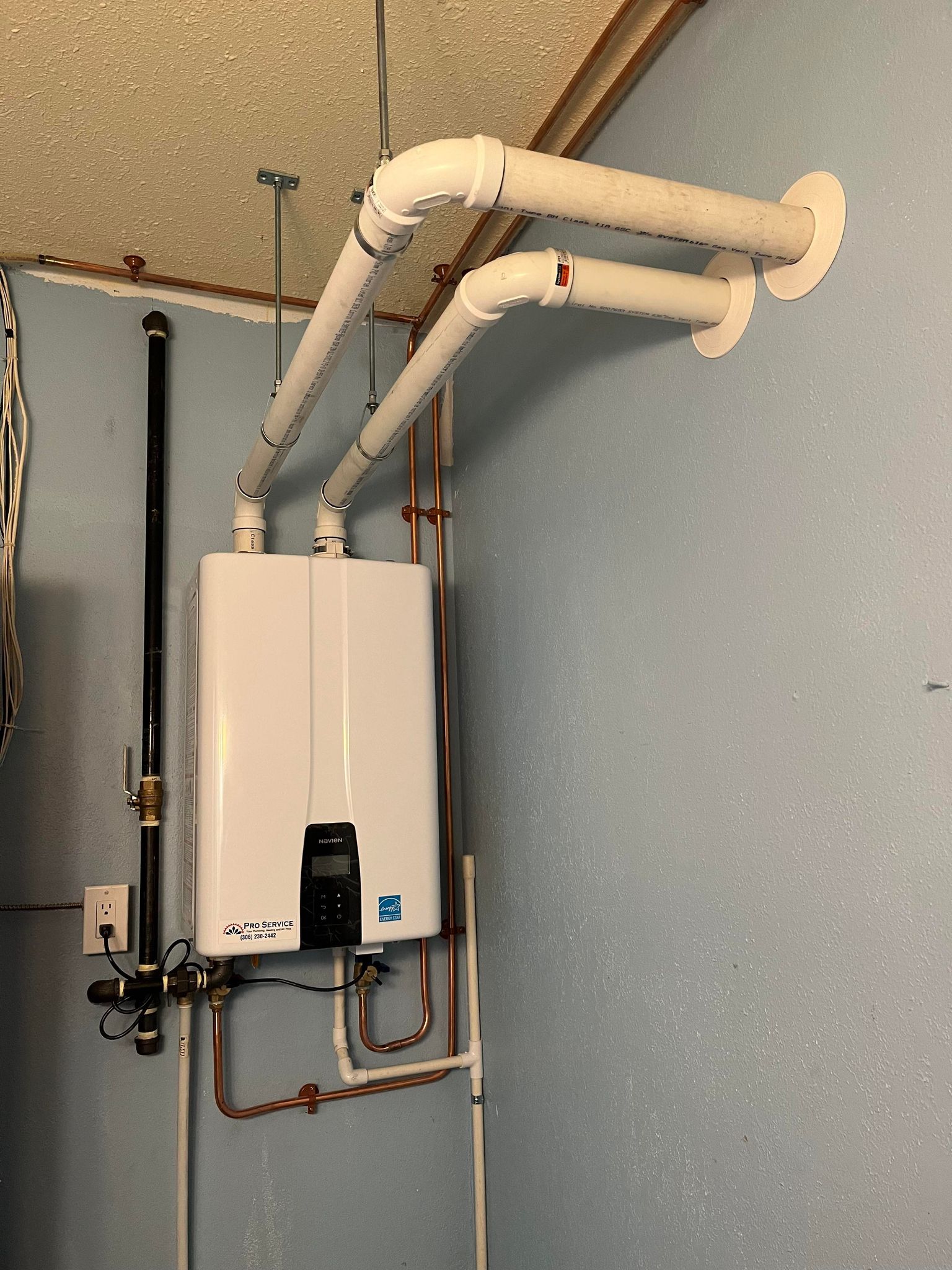
Tired of running out of hot water halfway through a shower or waiting for your water heater to recover? A tankless water heater offers a modern, energy-efficient alternative to traditional storage tank systems, heating water only when you need it.
At Pro Service Mechanical, we provide professional tankless water heater services in Saskatoon, including installation, repair, replacement, and preventative maintenance. Whether you're upgrading from a conventional hot water tank, installing a new tankless system, or experiencing problems with your existing equipment, our experienced technicians can help.
Unlike traditional water heaters that continuously maintain a stored supply of hot water, tankless systems heat water on demand. This reduces standby energy losses, helps manage utility costs, and provides a continuous flow of hot water within the system's rated capacity.
Our team helps homeowners and businesses choose appropriately sized equipment, complete professional installations, and maintain their systems for dependable long-term performance.
Tankless water heaters provide a continuous supply of hot water without relying on a storage tank. When properly sized, they can meet your household's hot water needs without the recovery time associated with conventional tanks.
By heating water only when needed, tankless systems reduce the standby energy losses associated with traditional storage water heaters, potentially lowering your household's energy consumption and operating costs.
Tankless water heaters offer several advantages over conventional systems, but proper equipment selection, installation, and maintenance are essential for reliable performance. Pro Service Mechanical provides tankless water heater services designed to help you get the most from your equipment.
Installing a tankless water heater starts with choosing a system that can meet your property’s hot water requirements.
Unlike conventional storage tanks, tankless water heaters are primarily sized according to water flow rate and the temperature increase required to deliver hot water.
Our technicians consider several factors when recommending a system:
Household size and daily hot water usage
Number of bathrooms and plumbing fixtures
Simultaneous use of showers, laundry, and appliances
Incoming water temperature during Saskatoon’s colder months
Available natural gas or electrical capacity
Venting and installation requirements
Available space and equipment placement
Proper installation is particularly important for gas-powered tankless water heaters, which may require specific venting arrangements and gas supply capacity. Electric tankless models can also have significant electrical requirements.
Our team can assess your existing setup and help determine which type of tankless water heater is appropriate for your property.
Like any mechanical system, tankless water heaters can experience problems over time. Mineral buildup, worn components, temperature sensors, ignition problems, and water flow restrictions can all affect performance.
Common signs that your tankless water heater may need repair include:
Water temperatures that fluctuate unexpectedly
Hot water that takes longer than normal to arrive
Insufficient hot water during simultaneous use
Error codes appearing on the control panel
Reduced water flow
Unexpected system shutdowns
Unusual operating noises
A complete loss of hot water
Our technicians can inspect your tankless system, identify the source of the problem, and recommend the appropriate repairs.
If you’re experiencing problems with your existing equipment, contact Pro Service Mechanical to arrange a professional assessment.
Regular maintenance is important for keeping tankless water heaters operating efficiently and reliably.
In areas with mineral-rich water, scale can accumulate inside the heat exchanger and other components. Over time, this buildup can restrict water flow, reduce heating efficiency, and contribute to equipment problems.
Professional tankless water heater maintenance may include:
Flushing and descaling the heat exchanger
Inspecting and cleaning water inlet filters
Checking for leaks or damaged connections
Inspecting heating and ignition components
Checking temperature controls and system operation
Examining venting and combustion components on gas models
Reviewing error codes and system performance
Many tankless systems benefit from annual maintenance, although service requirements depend on the manufacturer’s recommendations, water quality, and usage.
Routine servicing can help prevent mineral buildup, identify developing problems, and extend the useful life of your equipment.
Replacing a conventional storage tank with a tankless water heater can be a practical option for homeowners interested in improved energy efficiency, space savings, and on-demand hot water.
However, switching to a tankless system isn’t always a straightforward equipment swap.
Depending on your property’s existing setup, installation may require modifications to gas lines, electrical connections, plumbing, or venting systems.
Pro Service Mechanical can assess your current water heater and explain what would be involved in upgrading to a tankless system.
For information about conventional water heater replacements, visit our Water Heater Installation & Replacement in Saskatoon page.
Tankless water heaters, also known as on-demand or instantaneous water heaters, heat water as it passes through the equipment rather than storing it in a large insulated tank.
When you turn on a hot water tap, cold water enters the tankless unit. A flow sensor detects the demand and activates the heating system.
Depending on the model, a gas burner or electric heating element heats the water as it travels through a heat exchanger. The heated water then flows to the fixture or appliance being used.
When you turn off the tap, the system stops heating water.
This process eliminates the need to continuously maintain a large volume of stored hot water, reducing standby energy consumption.
Gas-powered tankless water heaters use natural gas to heat water as it moves through the system.
These units can provide substantial heating capacity, making them suitable for many households with higher hot water demands.
However, installation requires appropriate gas supply capacity, venting, and combustion safety considerations.
Electric tankless water heaters use electrical heating elements to heat water on demand.
They don’t require gas connections or combustion venting, but whole-home electric models can require considerable electrical capacity.
The suitability of an electric tankless system depends on your property’s electrical infrastructure and hot water requirements.
Tankless water heaters offer several advantages that make them attractive to homeowners looking for a modern hot water solution.
One of the biggest advantages of a tankless water heater is its ability to produce hot water continuously without relying on a limited storage tank.
Instead of waiting for a tank to recover after its hot water supply is depleted, a properly sized tankless system continues heating water as long as demand remains within its capacity.
This can be particularly useful for households with frequent showers, laundry loads, or other hot water requirements.
However, every tankless water heater has a maximum flow rate. Using too many fixtures simultaneously can exceed that capacity, which is why correct sizing matters.
Traditional storage tank water heaters consume energy to maintain the temperature of stored water, even when nobody is using hot water.
Tankless water heaters avoid much of this standby energy loss by heating water only when a fixture calls for it.
Depending on your household’s usage patterns and existing equipment, this improved efficiency may help reduce monthly utility costs.
Tankless water heaters can offer a longer service life than conventional storage tank systems.
Some tankless models may last 20 years or more with appropriate maintenance, although actual lifespan depends on equipment quality, water conditions, usage, and servicing.
Routine maintenance, particularly descaling and component inspections, helps protect the system’s performance over time.
Traditional hot water tanks require floor space for a large storage cylinder.
Tankless water heaters are typically compact, wall-mounted units that can free up space in mechanical rooms, basements, and utility areas.
Their smaller size can provide more flexibility when planning equipment placement, subject to manufacturer clearances and installation requirements.
Many modern tankless water heaters feature electronic temperature controls that allow users to select their desired hot water temperature.
Properly configured systems can help maintain consistent water temperatures during normal operation, improving comfort and convenience.
By reducing unnecessary energy consumption, tankless water heaters can help lower the amount of energy used for household water heating.
The environmental benefit depends on the equipment’s efficiency, fuel source, and household usage, but reducing standby heating losses can make tankless systems an attractive option for energy-conscious homeowners.
Both tankless and conventional storage water heaters can provide reliable hot water. The best choice depends on your household’s requirements, installation conditions, and budget.
| Feature | Tankless Water Heater | Traditional Tank Water Heater |
|---|---|---|
| Water Heating | Heats water on demand | Stores and heats water in a tank |
| Hot Water Supply | Continuous within rated flow capacity | Limited by storage capacity and recovery rate |
| Energy Efficiency | Reduced standby energy losses | Standby energy losses vary by model |
| Space Requirements | Compact, often wall-mounted | Requires space for storage tank |
| Installation Cost | Generally higher | Generally lower |
| Lifespan | Some models last 20+ years | Commonly around 8–12 years |
| Maintenance | Periodic descaling and inspections | Tank flushing and component inspections |
| Best Suited For | Homes prioritizing efficiency and on-demand heating | Homes seeking a conventional, often lower-cost installation |
For many homeowners, the decision comes down to balancing upfront installation costs with long-term operating expenses and convenience.
Tankless water heaters generally cost more to purchase and install than conventional storage tank systems. However, their reduced standby energy consumption, compact design, and potentially longer equipment lifespan may provide long-term benefits.
The financial return depends on factors such as energy prices, household hot water usage, maintenance requirements, and the cost of any installation modifications.
Our team can help you compare the available options and determine whether a tankless water heater makes sense for your property.
For a more detailed comparison, read our Tankless vs. Traditional Water Heaters Guide.
Selecting the right tankless water heater is important for ensuring consistent performance, particularly during Saskatchewan’s colder months.
A system that is too small may struggle to meet simultaneous hot water demands, while choosing equipment without considering existing utility connections can lead to unnecessary installation costs.
The number of people living in your home and the fixtures used simultaneously will influence the required water heating capacity.
For example, a household that regularly operates multiple showers, a dishwasher, and laundry equipment may require a higher-capacity system than a smaller home with limited simultaneous usage.
Tankless water heaters are rated according to the volume of hot water they can produce per minute under specified conditions.
The required flow rate depends on the number of fixtures you expect to use simultaneously.
Choosing a system with adequate capacity helps maintain reliable hot water delivery during peak demand.
Saskatoon’s cold winters can affect the temperature of incoming water.
When incoming water is colder, the tankless heater must produce a greater temperature increase to deliver comfortable hot water.
This can reduce the maximum flow rate available from a given unit, making local climate conditions an important part of equipment selection.
Gas tankless water heaters may require sufficient gas supply capacity and suitable venting.
Electric tankless units may require substantial electrical capacity, depending on the model and intended usage.
Professional assessment helps determine whether your property’s existing systems can support the equipment or whether modifications are necessary.
Mineral content in your water supply can affect tankless water heater performance over time.
Proper filtration, water treatment where appropriate, and routine descaling can help protect the heat exchanger and maintain efficient operation.
Pro Service Mechanical can help evaluate these considerations when recommending a tankless water heater for your home.
Tankless water heater installation requires careful attention to equipment sizing, water flow requirements, energy supply, and safety.
Improper installation can cause inconsistent water temperatures, reduced efficiency, premature component wear, and equipment malfunctions.
Professional installation helps ensure that the system is appropriate for the property and installed according to applicable requirements.
An appropriately sized tankless water heater can meet your household’s hot water requirements without unnecessary oversizing or performance limitations.
Tankless systems require suitable plumbing connections and, depending on the model, properly configured gas or electrical infrastructure.
Gas-powered tankless water heaters require appropriate combustion air and exhaust venting arrangements according to the equipment and installation conditions.
After installation, the system should be tested for proper operation, water temperature, flow performance, and potential connection problems.
Professional installation provides a foundation for reliable operation and ongoing equipment maintenance.
Tankless water heater installation costs vary depending on the equipment selected, your property’s existing infrastructure, and the complexity of the installation.
Tankless systems typically have a higher initial cost than conventional storage tank water heaters, particularly when upgrading an existing home.
Factors that affect installation pricing include:
Type of system: Gas and electric tankless water heaters have different installation requirements.
Heating capacity: Higher-capacity equipment may have a higher purchase price.
Existing infrastructure: Gas line, electrical, plumbing, or venting upgrades can increase installation costs.
Equipment location: Accessibility and available installation space can affect labour requirements.
Removal of the existing water heater: Converting from a storage tank may involve removing older equipment and modifying connections.
Additional equipment: Certain installations may require water treatment, filtration, or other compatible components.
Pro Service Mechanical can assess your property, explain the available equipment options, and provide installation pricing based on your specific requirements.
For information about payment options, visit our Financing Page.
Choosing the right installation and service provider helps ensure your tankless water heater is properly selected, installed, and maintained.
Our team has experience working with plumbing and mechanical systems, helping homeowners and businesses evaluate their water heating requirements and address equipment problems.
We provide comprehensive tankless water heater services, from new installations and system upgrades to troubleshooting, repairs, and preventative maintenance.
We help customers compare tankless water heating options and understand the potential benefits of reducing standby energy consumption.
Our technicians focus on appropriate equipment selection, safe connections, proper system setup, and reliable performance.
Unexpected water heater problems can disrupt your household’s routine. Pro Service Mechanical offers 24/7 emergency services for urgent plumbing and water heating concerns.
We prioritize dependable service, clear communication, and professional workmanship to help customers maintain reliable hot water throughout the year.
Pro Service Mechanical provides tankless water heater installation, repair, and maintenance services throughout Saskatoon and surrounding communities, including Warman and Martensville.
Whether you’re upgrading an older water heater, installing a tankless system in a new property, or arranging maintenance for existing equipment, our team can help you find a practical solution.
We work with homeowners and businesses to provide water heating systems suited to their hot water needs, property requirements, and budget.
Ready to upgrade to a tankless water heater or need professional service for your existing system?
Pro Service Mechanical provides tankless water heater installation, repair, replacement, and maintenance services to help keep your home supplied with reliable hot water.
Our technicians can assess your existing equipment, recommend appropriate options, and help you understand the installation or repair process.
Call (306) 230-2442 or complete our online service booking form to schedule tankless water heater service in Saskatoon.
Our licensed professionals have years of experience in HVAC, plumbing, and electrical services, ensuring top-tier workmanship every time.
We’re here when you need us most. Our emergency response team is ready around the clock to handle urgent repairs and restore comfort fast.
We stand behind our work with industry-leading warranties and a commitment to customer satisfaction. Your comfort is our priority.
Pro Service Mechanical provides comprehensive HVAC, plumbing, heating, air conditioning, and electrical services for both residential and commercial clients. This includes repairs, installations, maintenance, drain cleaning, furnace and air conditioner services, water heater solutions, and 24/7 emergency support.