Key Takeaways
A fall HVAC tune-up catches problems before winter demand hits: small issues become bigger when the system runs continuously, so inspecting early improves reliability and efficiency before the coldest weather arrives.
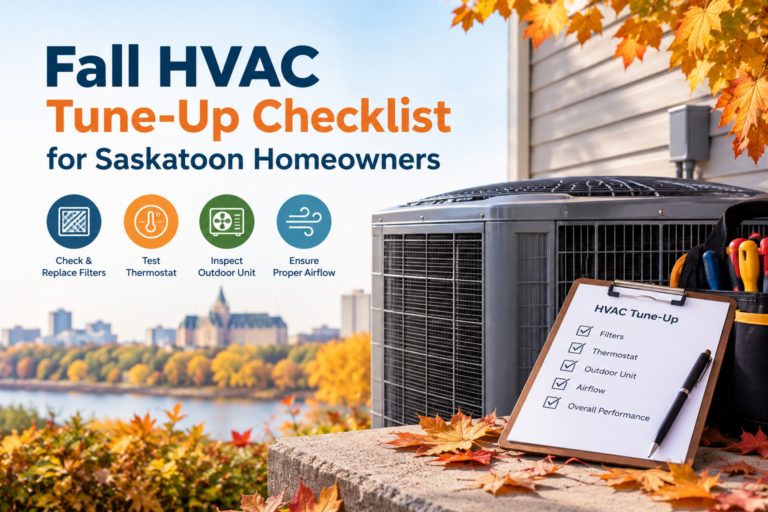
Start with simple homeowner tasks: check and replace the furnace filter, ensure all vents and registers are open and unobstructed, verify the thermostat responds and is positioned away from drafts or heat sources, and keep the furnace area clean and accessible.
Don’t ignore unusual furnace noises: grinding, scraping, rattling, banging, clicking, or buzzing can signal mechanical, electrical, or combustion problems; don’t dismantle the furnace yourself; these components require qualified expertise.
Safety checks are essential: test carbon monoxide detectors and replace batteries as needed, and watch for electrical warning signs (breaker trips, burning smells, flickering) that require professional electrical repair; never attempt DIY electrical or combustion work.
As summer comes to an end and temperatures begin to drop, Saskatoon homeowners have an important opportunity to prepare their heating systems for the colder months ahead. A fall HVAC tune-up can help identify developing problems, improve system reliability, and ensure your home is ready when heating becomes a daily necessity.
Pro Service Mechanical provides professional furnace inspection and heating services in Saskatoon to help homeowners stay comfortable and prepared throughout the winter season.
A proper fall checklist should cover more than simply turning the thermostat from cooling to heating. Filters, vents, electrical components, ductwork, controls, humidification equipment, and the heating system itself all contribute to indoor comfort.
Before winter arrives, schedule a professional HVAC inspection if your system is showing unusual symptoms or has not been maintained recently. Early attention can help you address potential problems before Saskatoon’s coldest weather arrives.
Why Is a Fall HVAC Tune-Up Important in Saskatoon?
Your HVAC system may operate for long periods during winter, meaning small problems can become more significant when equipment is under continuous demand.
A fall inspection provides an opportunity to evaluate how the system is performing before it has to work at maximum capacity.
Homeowners can also use this time to identify efficiency issues. A heating system that is struggling to maintain the desired temperature may consume more energy than necessary, while restricted airflow can place additional strain on components.
Seasonal maintenance does not guarantee that equipment will never fail, but it can help identify conditions that deserve attention.
For homeowners who have experienced repeated problems, professional HVAC repair services in Saskatoon can also help determine whether a system needs a specific repair, more extensive maintenance, or eventual replacement.
Check and Replace the Furnace Filter
The furnace filter is one of the simplest components homeowners can inspect.
A dirty filter can restrict airflow, making the heating system work harder to circulate air throughout the home. Depending on the system and filter type, homeowners may need to replace or clean the filter at different intervals.
Do not assume that every filter has the same replacement schedule.
Check the manufacturer’s instructions and inspect the filter regularly, particularly if the home has pets, renovations are underway, or there are other sources of airborne particles.
A clean filter supports proper airflow and can help maintain indoor air quality.
Inspect Air Vents and Registers
Walk through the house and check that supply vents and return-air registers are open and unobstructed.
Furniture, rugs, boxes, curtains, and other household items can accidentally block airflow.
Blocked vents can affect how effectively heated air circulates through the home.
Also pay attention to rooms that consistently feel colder than others. Uneven temperatures can sometimes indicate airflow issues, insulation concerns, duct problems, thermostat placement, or equipment performance issues.
Examine the Thermostat
The thermostat controls when your heating system turns on and off, so it should be included in your fall checklist.
Check that the thermostat responds correctly when you adjust the temperature. If it uses batteries, replace them according to the manufacturer’s recommendations.
You should also consider whether your thermostat is appropriately located.
A thermostat exposed to drafts, direct sunlight, heat-producing appliances, or other unusual temperature influences may not accurately represent the home’s overall indoor conditions.
Not sure whether your thermostat is working properly or positioned correctly? Pro Service Mechanical can help inspect your HVAC system and identify potential issues before the next season. Learn how a spring HVAC inspection can help get your system ready for summer.
Listen for Unusual Furnace Noises
Your heating system will naturally make some sound while operating, but new or unusual noises should not be ignored.
Listen for:
Grinding or scraping
Persistent rattling
Loud banging
Repeated clicking
Buzzing or humming
Unusual vibration
The type and location of a noise can provide a technician with useful clues about the problem.
Do not attempt to dismantle the furnace to investigate unfamiliar sounds yourself. HVAC systems contain mechanical, electrical, and combustion-related components that require appropriate expertise.
Check the Furnace Area
Keep the area surrounding your furnace clean and unobstructed.
Storage boxes, cleaning supplies, household items, and other materials should not interfere with access or airflow around the equipment.
Keeping the area accessible also makes it easier for technicians to inspect the system and perform maintenance.
If your furnace is located in a utility room, avoid using the space as general storage without considering the manufacturer’s clearance and safety requirements.
Check Your Carbon Monoxide Detectors
Homes with fuel-burning heating equipment should have appropriate carbon monoxide detection.
Carbon monoxide is an odourless and potentially dangerous gas, so homeowners should not rely on their senses to identify a problem.
Test your carbon monoxide detectors according to the manufacturer’s instructions and replace batteries or the detector itself when required.
If a carbon monoxide alarm activates, follow the manufacturer’s emergency instructions and leave the area if directed. Contact the appropriate emergency services or qualified professionals rather than attempting to investigate a suspected combustion problem yourself.
Inspect Electrical Components Professionally
Modern HVAC systems depend on electrical components to control motors, ignition systems, blowers, thermostats, and other equipment.
Homeowners should not attempt to open electrical panels or repair wiring themselves.
Instead, watch for warning signs such as repeated breaker trips, burning smells, flickering electrical components, or unexpected shutdowns.
Qualified electrical repair services may be necessary when an electrical fault is identified.
Electrical issues should be treated seriously because they can affect both equipment operation and household safety.
Review Emergency Plans
Even with regular maintenance, HVAC equipment can occasionally fail.
Every homeowner should know what to do if the heating system stops working during severe weather.
Keep the contact information for your HVAC provider accessible. If the furnace suddenly stops operating, first check simple homeowner-level issues such as thermostat settings and whether the system has power, provided it is safe to do so.
Do not repeatedly reset equipment when you suspect a serious malfunction.
If immediate cooling is required during warmer weather, an emergency AC service may be appropriate. During winter, a heating failure may require urgent professional attention, especially when indoor temperatures are falling rapidly.
When Should You Schedule a Fall Tune-Up?
It is generally better to schedule maintenance before the heating season becomes busy.
Waiting until the first major cold spell can mean more homeowners are requesting service at the same time.
An early appointment provides an opportunity to address problems before your system is under significant winter demand.
This is particularly important if your heating equipment is older, has a history of breakdowns, or has not been professionally inspected recently.
Final Thoughts
A fall HVAC tune-up is a practical part of preparing a Saskatoon home for winter.
The checklist starts with simple homeowner tasks such as replacing the filter, checking vents, testing thermostats, inspecting accessible ductwork, and keeping the furnace area clear. It should also include professional evaluation of components that require qualified HVAC expertise.
Pay attention to warning signs rather than waiting for a complete breakdown. Unusual noises, uneven heating, repeated repairs, rising energy use, electrical problems, and inconsistent system performance all deserve attention.
Frequently Asked Questions
1. Why is a fall HVAC tune-up important in Saskatoon?
A fall HVAC tune-up helps prepare your heating system for Saskatoon’s long, cold winter. It can identify developing issues before the furnace operates under heavy demand, improve reliability, support efficient airflow, and reduce the chance of discovering a problem during the first major cold spell.
2. When should I schedule a fall furnace tune-up?
Schedule your furnace tune-up before the regular heating season begins, ideally in early fall. Booking early gives technicians time to inspect the system, address concerns, and complete repairs before colder weather increases demand for HVAC services and makes heating reliability more important.
3. How often should I replace my furnace filter?
Filter replacement frequency depends on the filter type, HVAC system, household conditions, and manufacturer guidance. Inspect it regularly, particularly if you have pets, allergies, renovations, or high dust levels. A dirty filter restricts airflow and can make your furnace work harder.
4. Why are some rooms colder than others in winter?
Uneven temperatures can result from blocked vents, restricted airflow, ductwork problems, insulation gaps, thermostat placement, or furnace performance issues. Start by ensuring vents and return-air registers are open and unobstructed. If the problem continues, arrange a professional HVAC inspection.
5. What furnace noises should homeowners be concerned about?
New or unusual sounds, including grinding, scraping, loud banging, persistent rattling, repeated clicking, buzzing, or strong vibration, should be inspected. These noises can indicate mechanical or electrical concerns. Do not dismantle the furnace yourself; contact a qualified HVAC technician for diagnosis.
6. Should I keep the area around my furnace clear?
Yes. Keep the furnace area clean, accessible, and free from boxes, cleaning products, clutter, and stored materials. This supports airflow, helps technicians perform maintenance safely, and reduces potential safety concerns. Always follow the equipment manufacturer’s clearance and storage recommendations.
7. Why should I test carbon monoxide detectors before winter?
Fuel-burning heating equipment can create carbon monoxide risks if a combustion or venting problem occurs. Carbon monoxide has no reliable smell, so detectors are essential. Test alarms as directed by the manufacturer, replace batteries when needed, and follow emergency instructions immediately if an alarm sounds.
8. Can I inspect my furnace’s electrical components myself?
No. Homeowners should not open electrical panels, repair wiring, or attempt to service furnace electrical components. Warning signs such as burning smells, repeated breaker trips, flickering components, or unexpected shutdowns should be evaluated by a qualified HVAC or electrical professional.
9. What should I do if my furnace stops working in winter?
First, safely check basic issues such as thermostat settings, power supply, and the furnace filter. Avoid repeatedly resetting the system if it appears to have a serious fault. If indoor temperatures are falling, contact an emergency heating professional for prompt assistance.
10. Can HVAC maintenance lower winter energy costs?
Maintenance can help identify airflow restrictions, dirty filters, worn components, and efficiency problems that may increase energy use. While a tune-up cannot guarantee specific savings, keeping equipment clean, adjusted, and properly inspected can support more reliable and efficient winter heating performance.
11. What does a professional fall HVAC inspection include?
A professional inspection may assess furnace operation, filters, airflow, vents, thermostat performance, electrical components, safety controls, and overall system condition. The exact service varies by equipment and provider, but the goal is to identify issues that may affect comfort, efficiency, or safety.